How Smart Call Routing Is Changing Customer Service Operations
There is a familiar problem at the heart of contact centre operations: a customer calls with a billing query, navigates a phone menu, reaches the wrong agent, gets transferred and has to explain themselves all over again. By the third agent, frustration has taken hold. Within modern Call Center Software, Call Routing Software is technology that uses Artificial Intelligence, including NLP (Natural Language Processing), LLMs, machine learning and predictive AI analytics, to understand incoming enquiries and direct customers to the most appropriate agent, team or automated resolution path in real time.
By replacing static menus and rigid routing rules with more intelligent decision-making, it helps customers reach the right destination first time, reducing unnecessary transfers and repeated explanations. This is the central purpose of modern Call Center Call Routing: to make each hand-off more relevant, using customer intent and operational context to guide the interaction.
For organisations moving to Cloud Based Call Routing, these decisions can also be managed across distributed teams and channels through a connected platform. A Cloud Based Call Routing model can be particularly useful for businesses operating across multiple sites or relying on a mix of office-based and remote agents. A well-designed Call Center Call Routing strategy also gives operations teams greater control over queue design, escalation rules and service priorities. With Cloud Based Call Routing, those configurations can be managed centrally and adapted as teams, locations and call volumes change.
The business case for improving call routing is clear. According to PwC's Customer Loyalty Survey, 32% of customers would stop buying from a brand they love after just a single bad experience. Misrouting can contribute directly to these experiences, particularly when customers have to repeat themselves or wait to reach someone who can actually help. Meanwhile, pressure to improve service is growing. A Gartner survey of 321 customer service and support leaders found that 91% are under executive pressure to implement AI, with priorities increasingly extending beyond cost reduction to customer satisfaction and first-contact resolution. Looking further ahead, Gartner predicts that by 2029, Agentic AI systems will autonomously resolve 80% of common customer service issues without human intervention, generating a 30% reduction in operational costs.
This article explores what Call Routing Software is, how it works, the benefits it can deliver, the different types of solution available and what to consider when implementing it. Whether you are evaluating your first AI deployment or looking to improve an existing operation, you will find a practical guide to making the right choice.
What Exactly Is AI Call Routing Software And How Does It Actually Work?
Call Routing Software uses machine intelligence to direct incoming customer interactions, including phone calls, chats and emails, towards the resolution path most likely to meet each customer's needs. This form of Smart Call Routing can account for intent, customer history, agent skills and availability when selecting the next step. It represents a significant step beyond the rule-based routing systems traditionally used by contact centres and legacy Customer Service Software. In practice, Smart Call Routing can also use service-level priorities and queue conditions to decide whether a caller should wait, move to another team or receive an automated response.
AI Call Routing vs IVR and Virtual Agents
It is worth clearing up a common misconception. Many operations teams use "Call Routing Software" and "IVR" interchangeably, but they are not the same thing.
Interactive Voice Response (IVR) is a telephony system that presents callers with a predefined menu and routes them according to their selections, such as "Press 1 for billing, press 2 for technical support". It is deterministic, meaning each input maps to a fixed output.
AI call routing, by contrast, is probabilistic and adaptive. It interprets what a caller actually means, rather than simply registering which button they press, and uses that understanding to make data-informed routing decisions. This enables Automated Call Routing to respond to the substance of an enquiry, rather than relying solely on a caller's ability to navigate a fixed menu. Automated Call Routing can also apply business rules consistently across queues, helping ensure that priority customers, urgent issues and specialist enquiries follow the correct handling path.
Smart Call Routing Software should also be distinguished from Chatbot tools, a conversational AI Voice Assistant, or a dedicated AI Voice Agent, which are designed to hold conversations and attempt to resolve enquiries directly. Routing software operates at the triage stage, deciding where a contact should go. An autonomous AI Agent, AI Phone Agent, or AI Virtual Assistant, meanwhile, may be the destination itself. The two technologies are often deployed together, but they perform different functions.
How Does Call Center Call Routing Software Work?
The process typically involves several stages, each contributing to the routing decision.
1. Speech recognition and transcription
When a call arrives, the AI system begins processing it almost immediately. The telephony layer must first handle Call Audio Routing, ensuring the incoming audio is captured and passed to the appropriate speech-processing components. Reliable Call Audio Routing is important here because delays, poor audio quality or incorrect stream handling can affect transcription and the intent classification that follows. An Automatic Speech Recognition engine converts the caller's words into text, whether they are speaking freely ("I need to cancel my subscription") or responding to an open-ended prompt ("How can I help you today?").
2. Intent and sentiment analysis
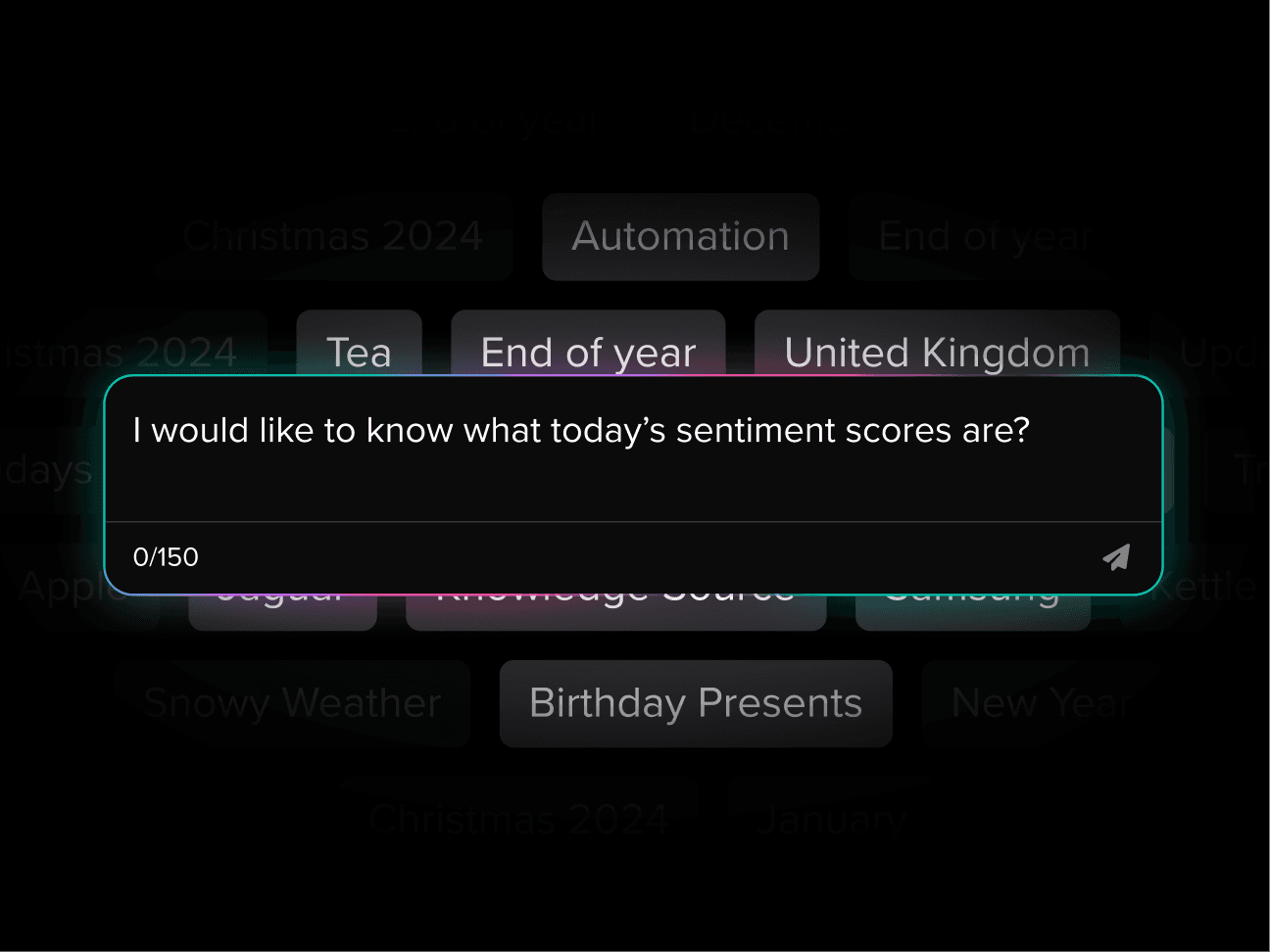
A Natural Language Understanding (NLU) model then classifies the caller's intent, identifying what they want to achieve. More sophisticated implementations can also assess sentiment using Sentiment Analysis, providing an indication of how the customer feels.
Together, intent and sentiment give the system a more complete understanding of the interaction than a traditional menu selection could provide.
3. Customer context and data retrieval
Alongside this analysis, the system may retrieve information from integrated data sources, including the caller's CRM record, previous interactions, account tier and recent service events associated with their number.
This contextual information allows the routing engine to consider not only what the customer is asking, but also who they are and whether they have contacted the business about the same issue before.
4. Routing and channel selection
Using the information gathered, the routing engine determines the most appropriate next step. This is where Call Center Intelligent Routing turns analysis into an operational decision, taking account of both the customer's needs and the resources available. Effective Call Center Intelligent Routing should also account for queue capacity and service-level commitments, rather than treating agent suitability as the only factor:
Direct the call to a human agent with the relevant skills and expertise.
Route the customer to an automated self-service flow, an autonomous AI Agent, or an AI Call Answering Service backed by AI Voice Automation.
Identify signs of customer distress and escalate the interaction to a senior resolution specialist.
Redirect the contact to a more suitable digital channel, such as live chat. This is known as channel steering.
Deployment and Performance Considerations
Not all implementations of smart call routing software work in the same way. Some operate as an intelligence layer on top of existing telephony infrastructure, while others provide a broader Call Routing Service built directly into comprehensive Contact Centre Software, Cloud Contact Center Solutions, or CCaaS platforms.
Several factors influence how well the technology performs in practice, including the sophistication of the NLU engine, the quality of its training data and the depth of its CRM integration. These determine how accurately and consistently the system can interpret customer needs and make appropriate routing decisions. They also affect how well Cloud Based Call Routing can coordinate calls across locations, queues and remote teams.
What is AI call routing software?
How is AI call routing different from traditional IVR?
Can AI call routing software recognise customer intent?
Can AI call routing software transfer calls to human agents?
Can AI call routing software support channels other than phone calls?
Summary
AI call routing software uses natural language processing, intent detection, and real-time customer data to direct each incoming contact to the most appropriate resolution path. It is not IVR (it does not rely on menu selections) and it is not a chatbot. It is the intelligence layer that decides where every contact goes, and why, before a human agent ever picks up.

What Does AI Call Routing Software Actually Do For Your Business?
Understanding what Call Routing Software can do only matters if it translates into measurable results. Research and real-world deployments show that, when implemented effectively, AI routing can improve several key contact centre performance metrics.
First-Call Resolution Improves Substantially
First-call resolution (FCR), the rate at which customer issues are resolved on first contact without a transfer or callback, is one of the clearest indicators of routing effectiveness.
McKinsey documented a telecommunications provider that integrated generative AI across its contact centre and increased FCR by 10 to 20 percentage points, while reducing total call volumes by approximately 30% and average handle time by more than 25%. This demonstrates how service quality and operational efficiency can improve simultaneously. Matching customers with the right resources first time also reduces unnecessary transfers and repeat contacts.
Reduced Handling Costs
Poor routing generates avoidable costs. Customers sent to the wrong department or an agent without the right expertise often face transfers, repeated explanations, and longer resolution times.
Research published in Manufacturing & Service Operations Management by UCL researchers highlights the importance of balancing waiting times with successful resolution. Rather than simply selecting the fastest available agent, effective routing considers who is best equipped to resolve the enquiry. Smart call routing software can therefore reduce unnecessary handling, improve agent utilisation, and help contact centres manage demand more efficiently. A well-configured Call Routing Service can also reduce avoidable transfers by making the initial match more accurately, rather than passing calls between departments until the right expertise is found. When assessing a Call Routing Service, businesses should check how easily routing rules can be changed and whether reporting makes the reasons for each routing decision visible.
Improved Service Performance Under Heavy Demand
AI routing becomes particularly valuable when contact volumes fluctuate and agent availability is limited. Unlike conventional first-come, first-served queues, machine-learning-based systems can consider predicted outcomes, agent availability, and expected handling times. This gives Smart Call Routing an advantage when demand changes quickly, because routing decisions can reflect current operating conditions rather than static queue priorities. It also allows Smart Call Routing strategies to balance speed, agent capability and the likelihood of resolving an issue at the first point of contact.
A 2022 study published in the Israel Journal of Health Policy Research evaluated an AI routing system developed using data from more than 35,000 conversations handled by an Israeli mental health support service. Simulations showed that average caller feedback improved by 24% under heavy demand compared with conventional routing, and by 12% under standard demand. The findings demonstrate how Customer Service AI can improve resource allocation by considering predicted interaction quality rather than simply connecting callers to the next available agent.
Customer Satisfaction Rises
Deloitte Digital found that organisations classified as service innovators, with more advanced AI and omnichannel capabilities, achieved customer satisfaction scores 4.6 times higher than less advanced peers. While this reflects multiple capabilities rather than routing alone, effective routing contributes by helping customers reach the right resolution more quickly and with fewer transfers.
Agents Are Less Overwhelmed
Three out of four respondents in Deloitte Digital's 2024 Global Contact Center Survey reported that agents were overwhelmed by too many systems and too much information during calls. Organisations already deploying generative Call Center AI were 35% less likely to experience this problem. AI routing helps by matching agents with suitable enquiries and surfacing relevant customer information, reducing the cognitive burden before conversations even begin.
Self-Service Deflection Becomes Systematic
Gartner found that 60% of human agents fail to actively promote self-service options to customers. AI routing addresses this dependency by automatically directing suitable enquiries towards self-service channels through Customer Service Automation.
Using intent classification and interaction history, the system can identify which queries are suitable for automated resolution without relying on agents to recommend digital alternatives during calls.
Employee Experience Improves Alongside Customer Experience
The benefits of better routing extend beyond customer satisfaction. Deloitte Digital found that service innovators also recorded employee satisfaction scores 2.5 times higher than less advanced organisations. By reducing mismatched interactions and ensuring agents receive enquiries suited to their capabilities, AI routing can improve the working experience and support retention.
What Are the Different Types of AI Call Routing Software And Which Is Right for Your Operation?
Smart Call Routing Software covers several distinct approaches, each with different strengths and limitations. Understanding these differences helps businesses identify the right solution for their contact centre, whether handling high-volume retail enquiries or complex financial services interactions.
1. Natural Language Processing (NLP) Routing
What it is: NLP routing uses Speech Analytics and natural language understanding to interpret callers' requests, classify their intent, and direct them without requiring numbered menu selections.
How it works: The system prompts callers to describe their needs, transcribes their responses, and uses an NLU model to identify the relevant intent (billing, cancellations, technical support, etc.) and select a routing destination. Advanced systems can recognise multiple intents within one utterance.
Advantages and limitations: NLP routing reduces misrouting compared to traditional IVR by understanding natural speech rather than relying on fixed menus. It is often a key component of Automated Call Routing, particularly when callers describe their needs in their own words. For contact centres with several service lines, Automated Call Routing can apply different intent categories and destination rules without requiring customers to navigate a long sequence of menu options. However, accuracy depends on model quality and training data. Accents, background noise, and ambiguous phrasing can affect performance.
What businesses should use NLP routing? Organisations experiencing high IVR drop-off or misrouting, particularly those handling diverse enquiries that do not fit neatly into static menu structures.
2. Skills-Based AI Routing
What it is: Skills-based routing matches callers with agents whose capabilities best suit their requirements, considering availability, expertise, and interaction context. In a broader Call Center Intelligent Routing strategy, skills-based matching can work alongside intent and sentiment analysis to select the most appropriate destination. This makes Call Center Intelligent Routing useful when a business needs to balance specialist knowledge, language coverage and agent availability across multiple teams.
How it works: The system maintains profiles of agents' skills, languages, product knowledge, and performance. Once a call is classified by intent, the routing engine identifies the most suitable available agent. AI-enhanced systems may also consider recent performance on similar queries and predicted interaction complexity.
Advantages and limitations: Matching callers with relevant expertise can reduce transfers and improve resolution rates. However, effectiveness depends on accurate, regularly maintained agent profiles.
What businesses should use skills-based AI routing? Organisations with diverse agent teams, multiple languages, specialist product lines, or tiered support models. It is particularly valuable in financial services, healthcare, and B2B support.
3. Predictive Behavioural Routing
What it is: Predictive behavioural routing uses historical data from a Contact Center Analytics Platform to identify the agent-customer pairing most likely to produce a positive outcome.
How it works: The system analyses Customer Interaction Analytics, including interaction history, purchase behaviour, account value, and complaint patterns, alongside agent performance data. Predictive models then identify the best match against objectives such as FCR, CSAT, average handle time, or retention.
Advantages and limitations: Predictive routing can improve customer and commercial outcomes by optimising for results rather than availability alone. However, reliable predictions require substantial historical data, which can be a challenge for newer operations or those experiencing frequent workforce changes.
What businesses should use predictive behavioural routing? High-volume consumer-facing organisations in retail, telecoms, and financial services, particularly those focused on retention and upselling.
4. Sentiment-Based Routing
What it is: Sentiment-based routing analyses the emotional tone of incoming interactions in real time, adjusting routing decisions when customers show signs of distress, frustration, or urgency.
How it works: Acoustic or text-based Sentiment Analysis detects emotional signals in a caller's voice or message. When predefined thresholds are reached, the system can redirect the interaction to a specialist escalation agent, retention team, or senior handler.
Advantages and limitations: Early intervention can prevent difficult interactions from escalating into complaints or churn events. However, calibration is important: overly sensitive systems create unnecessary escalations, while conservative thresholds risk missing customers who need additional support.
What businesses should use sentiment-based routing? Organisations with high-value customer relationships, particularly in regulated industries, subscription services, and premium product markets. It is also useful for complaint-handling workflows.
5. Omnichannel AI Routing
What it is: An Omnichannel Contact Center extends AI triage across voice, chat, email, social messaging, and SMS, managing interactions through a unified Customer Journey Mapping strategy.
How it works: The routing engine maintains a consistent customer profile across channels. If someone emails about a billing issue before calling, for example, the system recognises the previous interaction and can route them to an agent with access to that context, avoiding the need to repeat information.
Advantages and limitations: Omnichannel routing addresses a major source of customer friction: having to explain the same problem across multiple channels. However, it requires clean, unified data and integrations across existing systems, creating additional implementation and maintenance demands.
What businesses should use omnichannel routing? Organisations operating across multiple customer contact channels. Platforms like ConnexAI provide native omnichannel capabilities, unifying customer data and routing across voice, digital, and messaging channels within a single environment.
6. Agentic AI Routing
What it is:AgenticAI(https://connex.ai/resources/agentic-ai) routing takes the technology further, enabling systems to move beyond directing interactions and autonomously execute multi-step resolution workflows.
How it works: An autonomous AI Agent interprets customer intent, breaks requests into tasks, queries relevant systems (such as account databases, order management platforms, and knowledge bases), and executes authorised actions. It effectively combines routing and resolution, operating as Workflow Automation Software.
Advantages and limitations: The potential is significant. Gartner predicts that by 2029, agentic AI will autonomously resolve 80% of common customer service issues without human intervention, reducing operational costs by 30%. However, agentic systems currently work best with well-defined tasks. Complex or emotionally sensitive interactions still require human oversight, alongside appropriate audit trails, escalation protocols, and action authorisation controls.
What businesses should use agentic routing? Organisations handling high volumes of repetitive, clearly defined requests, such as password resets, order tracking, and standard refund processing. A phased rollout allows businesses to build confidence in accuracy, reliability, and governance before expanding deployment.
What Other Technologies Make AI Call Routing Software More Powerful?
Call Routing Software becomes significantly more valuable when integrated with complementary tools and data sources that extend the intelligence available during triage and support resolution afterwards. These integrations help a Call Routing Service draw on the information needed to make and act on routing decisions. Here are the integrations that matter most.
CRM Integration
CRM systems hold valuable routing data: who the customer is, what they have purchased, how long they have been a client, and their previous issues. When integrated with smart call routing software, this context enables more precise decisions, such as escalating a long-standing customer who has contacted the organisation three times in a week or routing an at-risk account to a retention specialist. Without this integration, routing decisions rely on partial information and real-time intent detection alone. ConnexAI integrates natively with leading CRM systems, including Salesforce and HubSpot, allowing routing logic to draw on live customer data at the point of triage.
Workflow Orchestration with ConnexAI Flow
Intelligent call routing is only one part of managing a customer interaction. Once an enquiry has been classified, businesses also need to coordinate the actions, systems, and follow-up processes required to move it towards resolution. This is particularly important in Cloud Based Call Routing environments, where the routing layer may need to coordinate activity across several teams, applications and communication channels. ConnexAI Flow supports this through intelligent journey automation, connecting AI Agents across channels and applying configurable routing rules to coordinate workflows and data.
For example, a billing enquiry could trigger an automated journey that retrieves account information, directs the customer to the appropriate AI Agent or specialist, and coordinates the necessary follow-up actions. Flow also integrates with CRM systems, databases, and the wider ConnexAI platform, helping businesses maintain continuity as customers move between voice, chat, email, and other digital channels.
This extends smart call routing beyond the initial triage decision, connecting customer journeys with the workflows needed to support consistent, end-to-end service delivery.
Real-Time Agent Assist
Once a call reaches a human agent, real-time AI assist tools extend routing intelligence throughout the conversation. They surface relevant knowledge base articles, suggest responses, and flag compliance requirements, reducing the time agents spend searching across systems. McKinsey's study of 5,000 agents found that generative AI assistance reduced average handle time by 9%, largely by reducing time spent navigating systems. ConnexAI's Agent Assist supports the full conversation lifecycle, from call connection to post-call summarisation, helping agents move from triage through to resolution.
Conversation Analytics and Reporting
Routing needs a feedback loop to improve over time. AI Call Analytics, Customer Analytics software and Call Center Monitoring Software analyse interaction transcripts and audio to identify patterns, recurring intents, and resolution outcomes. These insights help refine routing logic and maintain AI Quality Assurance. For example, if many calls classified as billing queries actually concern a new product feature, that signal should inform the routing model. Customer Experience Analytics also helps leaders identify misrouting, intent categories with low FCR, and skills that are frequently in demand but undersupplied. Without this feedback, routing models risk becoming less effective as customer contact patterns evolve.
Workforce Management Integration
Routing decisions are only effective when appropriately skilled agents are available to receive calls. Effective Call Center Call Routing therefore needs to reflect live workforce conditions, not just the skills recorded in an agent profile. Workforce Management Solutions, which handle scheduling, shift planning, and real-time adherence, should integrate with AI routing to account for actual agent availability and skill coverage. This allows the routing engine to adjust its matching logic as staffing levels fluctuate, avoiding situations where calls are directed towards temporarily unstaffed skill sets. The most effective implementations treat routing optimisation and workforce planning as parts of one integrated operational system rather than separate tools managed in silos.
Can AI call routing software adapt to changes in business priorities?
Can AI call routing software work with legacy CRM and contact centre systems?
How does AI call routing software handle conflicting customer information across different systems?
How can businesses tell whether their AI call routing integrations are actually improving performance?
Which Industries Are Getting the Most From AI Call Routing Software?
Smart Call Routing Software delivers different benefits depending on the industry. Its greatest impact is typically seen in sectors with high contact volumes, diverse enquiry types, cost pressures, and significant regulatory or reputational risks when interactions are mishandled.
Telecommunications
Telecoms providers handle large volumes of routine enquiries, from billing and plan changes to technical faults and cancellations. Effective routing helps match these interactions to the right resources, reducing unnecessary transfers and freeing specialist agents to focus on complex issues and retention.
McKinsey's August 2024 report documented a telecoms provider that integrated generative AI into its contact centre, increasing first-call resolution by 10 to 20 percentage points, reducing call volumes by approximately 30%, and cutting average handle time by more than 25%. Across the sector, McKinsey estimates that up to 50% of customer care activity could be automated, with potential productivity improvements of 30 to 45%.
Financial Services
Banks, insurers, investment platforms and other financial services providers operate under strict regulatory requirements, making routing accuracy a compliance consideration as well as an operational one. Complaints, routine enquiries, and sensitive financial matters require different handling and escalation procedures.
Integrated with CRM and compliance systems, smart call routing software can apply these distinctions automatically and record routing decisions for audit purposes, reducing manual compliance workloads.
There are also significant productivity opportunities. McKinsey estimates that generative AI could deliver productivity gains equivalent to 30 to 45% of current customer care function costs, with financial services among the sectors best positioned to benefit.
Healthcare
Patient-facing healthcare contact centres handle enquiries ranging from appointment scheduling and prescription queries to urgent clinical escalations. Misrouting can therefore have consequences beyond operational efficiency, potentially affecting patient safety.
Sentiment-based routing can help identify distress or urgency and direct callers towards appropriate clinical or pastoral support. Healthcare deployments must also meet strict data governance requirements and comply with relevant health information regulations.
Retail and E-Commerce
Retail contact centres face significant fluctuations in demand, particularly during seasonal peaks, promotions, and post-event complaint surges.
Call Routing Software helps manage these volumes through automated handling and self-service deflection. Where Call Audio Routing and speech recognition are integrated effectively, callers can describe an issue naturally before the system directs them to the right service or self-service option. Consistent Call Audio Routing also helps preserve the audio stream when calls are transferred or escalated, supporting continuity for downstream analytics and quality processes. Routine enquiries about order status, returns, and delivery tracking can be resolved through Customer Experience Automation, preserving agent capacity for more complex interactions.
Predictive behavioural routing offers another advantage. Customers at risk of churning or considering an upgrade can be matched with agents equipped to handle retention or sales conversations, making routing a potential revenue management tool as well as an operational one.
Utilities
Utilities providers handle time-sensitive enquiries about outages, billing disputes, and smart meter issues. Major outages can generate thousands of simultaneous calls, many requiring the same information.
Call Routing Software can recognise outage-related enquiries and redirect callers to automated status updates or digital channels, preserving agent capacity for cases requiring human intervention. This is one practical application of Smart Call Routing during sudden demand spikes.
Research from Deloitte Digital found that four in five companies had formally activated channel steering strategies, highlighting the growing role of intelligent deflection in managing contact volumes.
Insurance
In the insurance sector, claims handling often involves emotionally sensitive interactions. Customers reporting stolen vehicles, flood damage, or serious health events may need urgent assistance and a different level of support from routine callers.
Combining sentiment detection, intent classification, and account data allows Call Routing Software to consider not only why someone is calling, but also their emotional state and policy relationship. This helps insurers prioritise sensitive cases and direct customers to appropriately equipped claims specialists, supporting better complaint handling and customer retention.

How Do You Actually Implement AI Call Routing Software? A Practical Step-by-Step Guide
Understanding the benefits of Call Routing Software is one thing; implementing it successfully is another. Many deployments underdeliver not because the technology fails, but because organisations overlook the groundwork needed to make it effective.
The following six steps provide a practical framework for getting implementation right.
Step 1: Audit Your Existing Routing Architecture
Start by establishing an accurate operational baseline. Collect data on misrouting rates, transfer volumes, first-call resolution (FCR), average handle time, and abandon rates by intent category.
Identify which enquiries generate the most transfers and lowest FCR, then map your existing IVR structure to pinpoint where callers drop off or request a live agent. This reveals where routing improvements will have the greatest impact and gives you meaningful benchmarks for measuring progress.
Step 2: Align Stakeholders on Business Outcomes
Successful implementations start with clear business objectives, not technology features. Before selecting a vendor, agree on the metrics you want to improve, whether FCR, CSAT, cost per contact, or agent utilisation, and define what success looks like.
Involve HR and workforce management teams early, particularly around agent skills profiling, staffing integration, and change management. Deloitte's research highlights that AI investment alone is insufficient: organisations must also scale solutions and integrate them into existing processes to realise customer experience and cost-saving benefits.
Step 3: Assess and Prepare Your Data Infrastructure
Call Routing Software depends on the quality of the data available to it. This is true whether the organisation is introducing a new Automated Call Routing platform or adding intelligence to an established telephony estate. Before deployment, assess whether your CRM records are complete, up to date, and accessible through APIs. Check that agent skill profiles are accurate and consistently structured, and that you have sufficient historical interaction data, including transcripts, recordings, and routing outcomes, to support intent classification.
Treat data readiness as a deployment prerequisite. Poor-quality or incomplete data can undermine routing accuracy regardless of the sophistication of the underlying AI.
Step 4: Choose the Right Routing Architecture
Different operations require different routing configurations. As covered in Chapter 4, Call Center Call Routing should be configured around the enquiry mix, service model and level of automation each operation requires. The right AI Call Routing configuration will also reflect opening hours, specialist queue coverage and the escalation routes available outside standard service periods. A high-volume consumer operation may prioritise NLP routing and self-service through an autonomous AI Agent. A regulated financial services organisation may need skills-based routing with audit-trail integration, while a premium subscription business could benefit from predictive routing combined with sentiment detection.
Define your priority outcomes before selecting the configuration and platform. ConnexAI supports configurable NLP, skills-based, sentiment-based, and omnichannel routing, allowing businesses to adapt their approach as customer needs and operational priorities evolve. When comparing providers, assess whether the Call Routing Service can support these configurations within the same operating environment. These capabilities support Call Center Intelligent Routing across different interaction types and operational requirements.
Step 5: Test Before Full Deployment
Introducing Call Routing Software across your entire contact volume immediately can undermine customer trust and internal confidence. Instead, start with a defined subset of interactions or intent categories, prioritising those with clear classification boundaries and low escalation risk.
This allows you to validate accuracy, identify edge cases, and refine the system before expanding deployment. Establish minimum performance thresholds for each phase.
According to Gartner, 64% of customers would prefer companies not to use AI in customer service. A disciplined rollout helps avoid the poor experiences that can reinforce this resistance.
Step 6: Establish Continuous Improvement
Call Routing Software requires ongoing maintenance. Contact patterns evolve, products change, seasonal demand fluctuates, and customer language shifts. Models must therefore be updated with new data, monitored against live performance metrics, and adjusted when classification accuracy begins to drift.
Assign clear ownership for this process, whether within a CX analytics team, a dedicated Customer Interaction Management function, or a joint operations and technology team. The strongest long-term results come from treating routing optimization as an ongoing operational discipline rather than a one-off implementation project.
Conclusion
Cloud call routing software helps contact centres make better decisions at the first point of contact. Whether delivered through a dedicated Call Routing Service or as part of a wider contact centre platform, its value comes from connecting each enquiry with an appropriate next step. By combining intent detection, customer context, agent skills, and real-time operational data, it can reduce unnecessary transfers, improve access to the right expertise, and direct suitable enquiries towards automated resolution.
As this guide has explored, the technology can take several forms, from natural-language and skills-based routing to predictive, sentiment-based, omnichannel, and agentic approaches. Its effectiveness depends on more than the routing model itself. A reliable Call Audio Routing setup, accurate customer data and well-maintained agent profiles all contribute to consistent performance, alongside CRM and workforce integrations, clear escalation paths, and continuous performance monitoring.
The opportunity is becoming harder for contact centre leaders to ignore. Gartner found that 91% of customer service and support leaders are under executive pressure to implement AI, while it predicts that agentic AI could autonomously resolve 80% of common customer service issues by 2029. These projections point to a growing role for AI across customer operations, but the practical priority is choosing applications that solve identifiable problems and can be measured against meaningful service outcomes.
ConnexAI brings intelligent cloud call routing across voice, chat, and digital channels together with native CRM integrations, real-time agent assist, Customer Analytics Software, and Omnichannel Customer Experience orchestration in one configurable environment for contact centre operations teams.
Ready to improve how customer enquiries are handled? Book a demo with one of our contact centre specialists to explore how ConnexAI can support your routing requirements and operational priorities.