Understanding Sentiment Analysis: AI-Powered Insight for Customer Experience
El Análisis de Sentimientos, un campo en auge dentro de la Inteligencia Artificial (IA), ha estado causando sensación en varias industrias. El análisis de sentimientos, o minería de opiniones, utiliza IA y PNL para interpretar emociones, actitudes y opiniones en texto. Identifica si el texto transmite un sentimiento positivo, negativo o neutral, con aplicaciones significativas en el servicio al cliente.
Las funcionalidades de IA en el Servicio al Cliente están liderando cambios significativos en la forma en que las empresas se relacionan con sus clientes. En particular, el Análisis de Sentimientos, una modalidad avanzada de Analítica de IA, permite a las empresas obtener valiosos conocimientos sobre las emociones y opiniones expresadas por sus clientes, allanando el camino para mejorar el servicio al cliente y tomar decisiones más informadas.
Este artículo profundiza en las sutilezas del Análisis de Sentimientos, explorando las aplicaciones de esta función de Analítica de Interacción con el Cliente de Inteligencia Artificial y dedicando una parte sustancial a su impacto transformador en el servicio al cliente.
What Is Sentiment Analysis? How AI Interprets Customer Feelings in Text
El análisis de sentimientos, también conocido como minería de opiniones, es el proceso de aprovechar los algoritmos de IA y el procesamiento del lenguaje natural (PLN) para analizar e interpretar emociones, actitudes y opiniones humanas expresadas en datos textuales. El objetivo es discernir si un texto transmite un sentimiento positivo, negativo o neutral. Esta poderosa herramienta ha encontrado aplicaciones en sectores diversos, con un impacto que resuena fuertemente en el ámbito del servicio al cliente.
Una funcionalidad líder en Analítica de IA, el Análisis de Sentimientos emplea sofisticados algoritmos para descifrar el sentimiento detrás de comentarios de clientes, reseñas, publicaciones en redes sociales y otros datos textuales. Al comprender el tono emocional de estas interacciones, las empresas pueden obtener valiosas ideas sobre la satisfacción del cliente, identificar puntos de dolor y adaptar sus estrategias en consecuencia.
Las aplicaciones de esta tecnología se extienden mucho más allá del servicio al cliente, llegando a marketing, desarrollo de productos y gestión de marcas. Pero, ¿cómo funciona? Lo veremos en la siguiente sección.

How does Sentiment Analysis work?
The process of Sentiment Analysis involves several key steps, each designed to decipher the emotional context within text. Here’s a breakdown of how Sentiment Analysis works:
1. Text Preprocessing
Before Sentiment Analysis can begin, the text undergoes preprocessing to remove irrelevant information, such as stop words or special characters. This step helps streamline the analysis process and enhance the accuracy of sentiment classification.
2. Feature Extraction
Sentiment analysis relies on identifying relevant features within the text that contribute to the overall sentiment. These features may include individual words, phrases, or even syntactic structures that carry emotional weight.
3. Sentiment Classification
Once the features are extracted, the model classifies the text into predefined categories such as positive, negative, or neutral. This classification is determined by the model’s ability to recognize patterns and associations between the extracted features and the corresponding emotional tone.
4. Model Training (for Machine Learning approaches)
In the case of machine learning-based Sentiment Analysis, the model undergoes training using labeled datasets. These datasets consist of examples of text with associated sentiment labels, allowing the model to learn and generalize patterns in the data. The trained model can then be applied to analyze new, unseen text.
5. Evaluation and Fine-Tuning
The performance of Sentiment Analysis models is continually evaluated and fine-tuned to ensure optimal accuracy. This iterative process involves adjusting parameters, incorporating new data, and refining the model’s ability to adapt to evolving language and context.
Hopefully, by now you’ll have a better understanding of what goes on behind the scenes of a Sentiment Analysis model. Now, let’s look at what businesses use this technological functionality for, after which we’ll consider the benefits that implementing Sentiment Analysis can bring to your company’s relationship with its customers.
What is Sentiment Analysis, and how does it work?
Why is Sentiment Analysis important for customer service?
How does machine learning improve Sentiment Analysis?
What are the challenges of implementing Sentiment Analysis?
Summary
Sentiment Analysis, a key branch of AI and natural language processing (NLP), enables businesses to interpret the emotions, attitudes, and opinions expressed in text, classifying them as positive, negative, or neutral. Widely applied in customer service, it allows companies to understand customer satisfaction, identify pain points, and tailor responses or strategies accordingly. The process involves preprocessing text, extracting emotionally relevant features, classifying sentiment, and, in machine learning approaches, training and fine-tuning models for accuracy. Beyond customer service, Sentiment Analysis also supports marketing, product development, and brand management, providing actionable insights that help businesses improve interactions, make data-driven decisions, and enhance overall customer experience.

Applications of Sentiment Analysis; Improving Service, Brand, and Product Development
Esta tecnología ha encontrado aplicaciones generalizadas en diversas industrias, pero quizás su uso más impactante sea en el ámbito del servicio al cliente. Las plataformas de software de atención al cliente aprovechan esta herramienta de IA para obtener una comprensión más profunda de las experiencias de los clientes, mejorar la comunicación y abordar proactivamente los problemas. Aquí están algunas de sus aplicaciones clave:
Análisis en Tiempo Real de Comentarios de Clientes
Esta tecnología, integrada en las plataformas de software de centros de contacto, permite a las empresas monitorizar y analizar comentarios de clientes en tiempo real. Al categorizar automáticamente los comentarios como positivos, negativos o neutrales, las empresas pueden identificar rápidamente las áreas que requieren atención inmediata. Esto permite una solución proactiva de problemas y ayuda a mantener relaciones positivas con los clientes.
Escucha en Redes Sociales
Las plataformas de redes sociales sirven como canales valiosos para que los clientes expresen sus opiniones y experiencias. Las herramientas de análisis de sentimientos pueden examinar grandes cantidades de datos de redes sociales, proporcionando a las empresas una comprensión completa del sentimiento del cliente. Esta información es crucial para la gestión de la reputación, ya que permite a las empresas abordar problemas de manera rápida y interactuar eficazmente con su audiencia.
Encuestas de Satisfacción del Cliente
Las encuestas tradicionales de satisfacción del cliente pueden consumir mucho tiempo y pueden no captar las sutilezas del sentimiento del cliente. El análisis de sentimientos simplifica este proceso al analizar automáticamente las respuestas abiertas y extraer información. Las empresas pueden entonces priorizar las áreas de mejora y adaptar sus estrategias para cumplir con las expectativas del cliente.
Optimización de Chatbots
Muchas empresas utilizan Chatbots de IA para manejar consultas de clientes y brindar soporte. El análisis de sentimientos se puede implementar junto con Modelos de IA Conversacional o Agentes de IA, permitiéndoles entender y responder al tono emocional de las consultas de los clientes. Esto mejora las capacidades de los Agentes de IA, garantizando interacciones más empáticas, personalizadas e inteligentes, contribuyendo a una experiencia del cliente positiva en general.
Mejora de Productos y Servicios
Al analizar el sentimiento en torno a productos o servicios específicos, las empresas pueden identificar fortalezas y debilidades. El sentimiento positivo destaca aspectos que resuenan bien con los clientes, mientras que el sentimiento negativo señala áreas para mejorar. Esta información es invaluable para refinar productos y servicios para alinearlos con las preferencias del cliente.
Monitorización de Marca
El análisis de sentimientos permite a las empresas monitorear las menciones de su marca en varias plataformas en línea. Esto no solo proporciona información sobre la percepción de la marca, sino que también permite a las empresas abordar posibles crisis de relaciones públicas y mantener una imagen de marca positiva.
Análisis de Tendencias
Analizar el sentimiento del cliente a lo largo del tiempo ayuda a las empresas a identificar tendencias emergentes y cambios en las preferencias del consumidor. Este enfoque proactivo permite a las empresas anticiparse a las tendencias, adaptar sus estrategias y capitalizar oportunidades en el mercado.
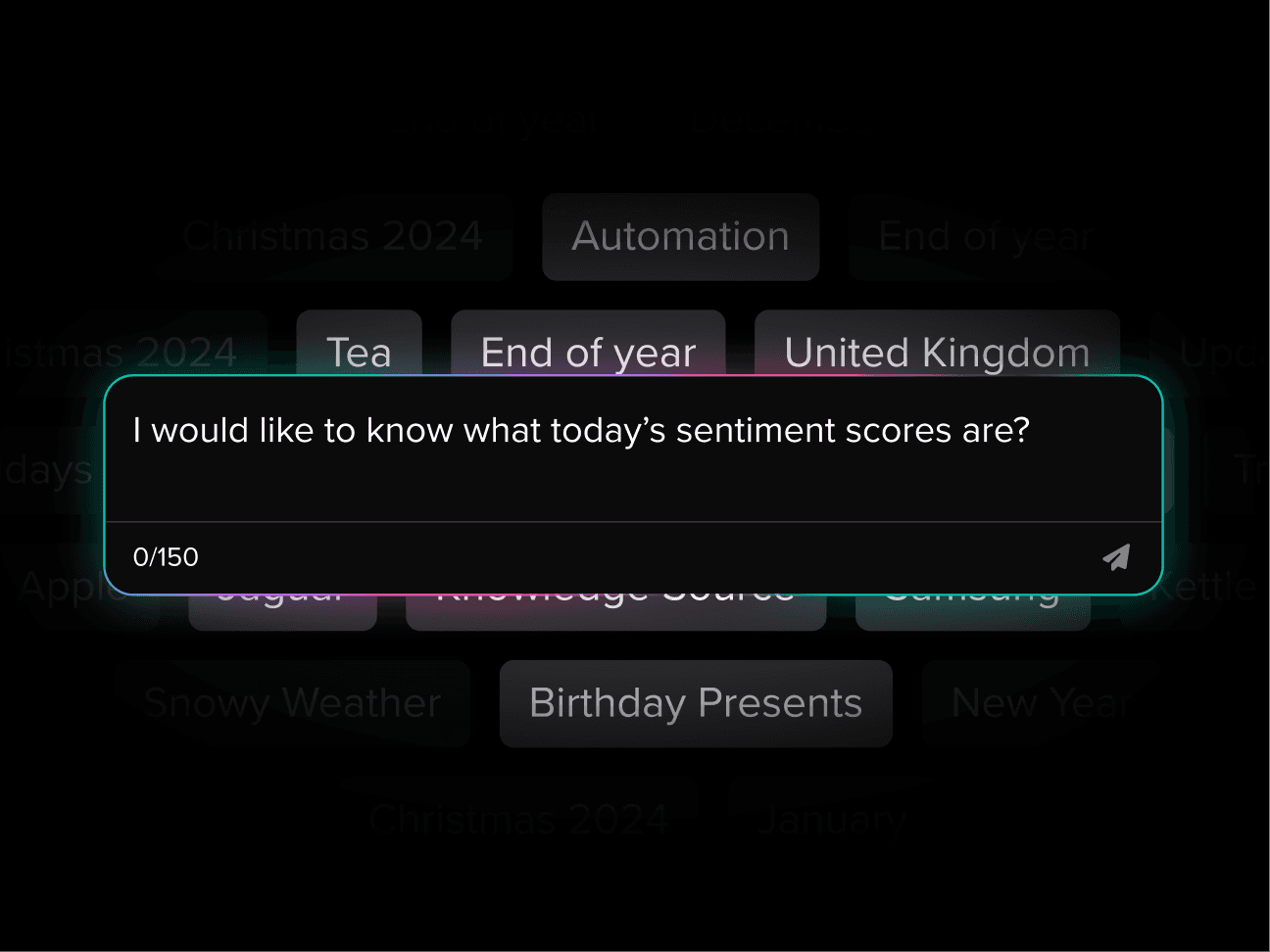
How Sentiment Analysis Contributes to Proactive and Personalised Customer Support
Enhancing Customer Experience Management (CXM)
Sentiment analysis tools integrated within call centre software solutions or customer service software platforms empower businesses to gauge the overall sentiment of their customer base. By monitoring social media, reviews, and direct customer interactions, companies can identify trends in sentiment and proactively engage with customers. Responding promptly to positive sentiments reinforces customer loyalty, while addressing negative sentiments allows for swift problem resolution, showcasing a commitment to customer satisfaction.
Real-Time Issue Resolution
In customer service, timely issue resolution is paramount. However, AI tools can automatically categorise and prioritise customer queries based on sentiment. This enables customer service teams to identify and address negative sentiments promptly, preventing potential escalations. Real-time issue resolution contributes to improved customer experience and a positive brand perception.
Personalised Customer Interactions
Sentiment analysis helps businesses understand the preferences and emotions of individual customers, contributing to customer interaction management tailored to each customer. By delving into past conversations with Customer Interaction Analytics, feedback, and reviews, companies can tailor their responses and communication to align with the customer’s sentiment. A Customer Interaction Management System that accounts for all customer preferences and keeps an ear on what they like, what they don’t like, and what they want from their interactions will foster a stronger connection between the customer and the brand, enhancing overall customer satisfaction and loyalty.
Proactive Customer Support
Sentiment analysis allows businesses to be proactive in addressing customer concerns. By monitoring sentiments across various channels, such as social media and review platforms, companies can anticipate potential issues before they escalate. Proactive customer support not only prevents negative sentiments from spreading but also demonstrates a commitment to customer-centricity.
Feedback Analysis for Continuous Improvement
Analysing customer feedback through AI Analytics tools provides valuable insights for continuous improvement. Businesses can identify recurring themes in customer sentiments, allowing them to address systemic issues, refine products or services, and enhance overall customer satisfaction. This data-driven approach enables companies to stay agile and responsive to evolving customer expectations.
How does real-time sentiment analysis improve decision-making in customer service?
Can sentiment analysis identify not just emotion but also urgency or intent?
Can sentiment analysis detect subtle shifts in customer expectations over time?
How does sentiment analysis enhance chatbot performance beyond basic response automation?