AI Agents: Redefining Productivity and Decision-Making Across Industries
La inteligencia artificial ha transformado significativamente las dinámicas empresariales durante la última década. Desde la creciente presencia de IA conversacional en los sistemas de Gestión de Interacción con el Cliente hasta la posibilidad de utilizar modelos de predicción y previsión inteligentes para informar las estrategias empresariales, la IA se ha convertido rápidamente en un activo esencial para las empresas que desean mantenerse competitivas en todas las industrias. Una de las aplicaciones más ricas, interesantes y prometedoras de la IA en los negocios son los Agentes de IA. En resumen, un Agente de IA es un programa de software o sistema diseñado para realizar tareas de manera autónoma, utilizando técnicas de inteligencia artificial. Los agentes ya son omnipresentes, desde sofisticados sistemas de asistencia al conductor hasta altavoces inteligentes capaces de compilar listas de tareas o brindar actualizaciones al minuto sobre el clima y las condiciones del tráfico.
Se espera que los agentes de IA inauguren una nueva era de automatización inteligente, cambiando industrias y ayudando a que los humanos sean más productivos e innovadores. El número de Agentes de IA creados y desplegados por empresas creció un 119% en la primera mitad de 2025, siendo las ventas y el servicio los principales casos de uso agéntico. (Salesforce, 2025). Los Agentes de IA a menudo son capaces no solo de realizar análisis de IA excepcionalmente detallados y granulares, sino también de tomar decisiones autónomas e inteligentes basadas en ellos.
Sin embargo, hay muchas preguntas sobre cómo se desarrollarán los Agentes de IA y qué significarán exactamente para la forma en que las empresas realizan negocios. ¿Qué aplicaciones veremos en el futuro para los Agentes de IA? ¿Qué industrias pueden beneficiarse más de la tecnología de Agentes de IA? ¿Cómo afectará la aparición del Agente de IA a los especialistas humanos?
En este artículo, intentaremos abordar todas estas preguntas. Pero primero, comencemos con una definición: ¿qué es exactamente un Agente de IA?
What Is an AI Agent and How It Redefines Automation and Adaptability
An AI Agent is a specialized system that leverages Agentic AI to solve problems in an intelligent, goal-directed manner, requiring only a clearly defined objective—ranging from tasks like financial analysis to planning complex trips. Once given a goal, these agents autonomously generate and organize their own sub-tasks, continuously adapting and evolving their strategies to achieve desired outcomes. In essence, they create their own prompts and decision pathways as they progress, operating with a degree of independence far beyond traditional automation. Unlike conventional automated systems, which rely on predefined triggers or rigid workflows, AI agents excel in dynamic, uncertain environments, analyzing new information in real-time and selecting appropriate actions based on context.
AI agents find applications across a broad spectrum of domains, including robotics, gaming, virtual assistants, and autonomous vehicles. Their operation can be reactive, responding immediately to changes; deliberative, planning and reasoning before acting; or learning-based, improving performance over time by drawing on experience.
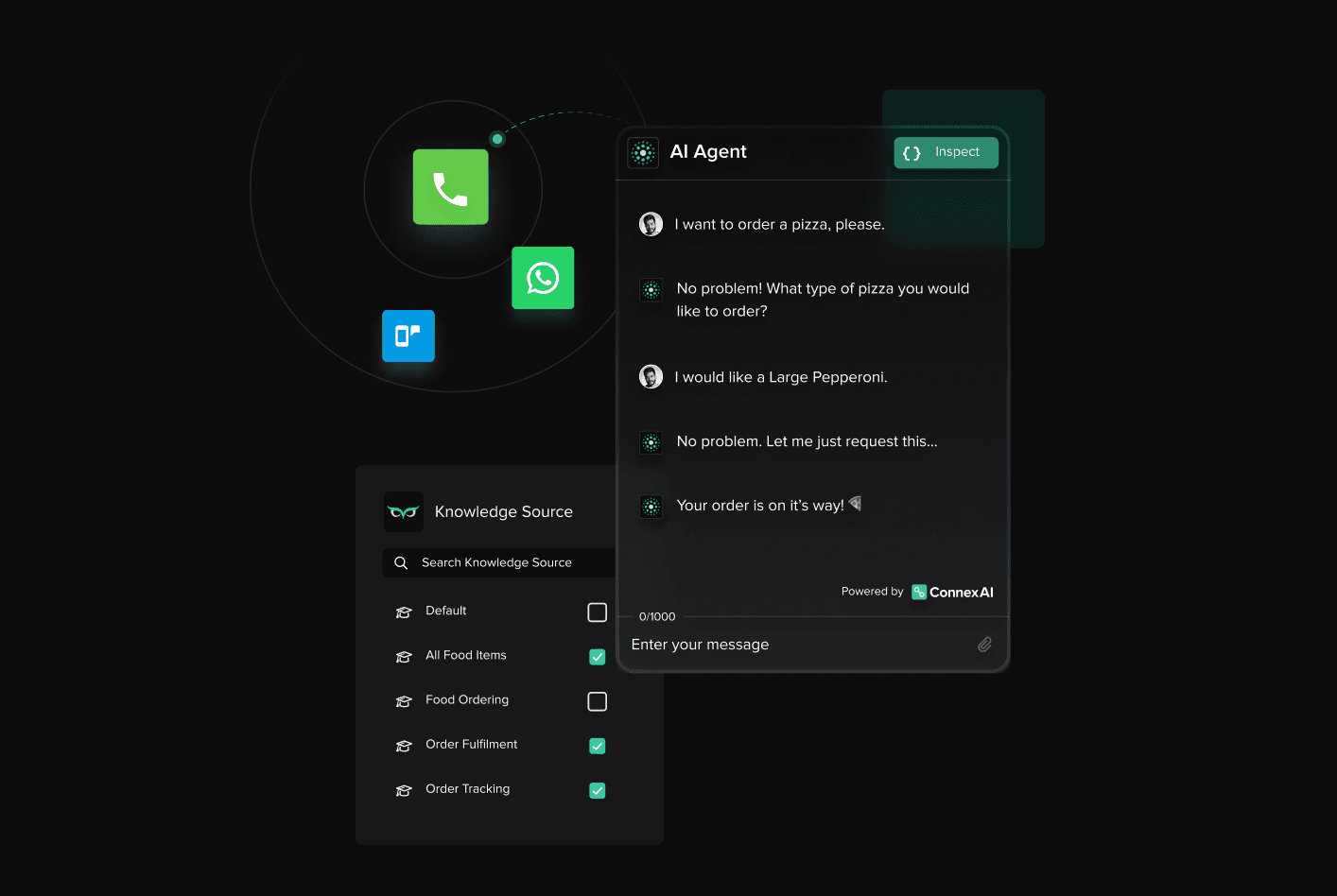
In contrast, interacting with standard AI models typically involves a human-in-the-loop process: a user provides a prompt, receives a response, and then formulates the next prompt based on the output. AI agents function differently. They operate autonomously, perceiving their environment through sensors, processing information with algorithms or internal models, and acting via actuators to influence their surroundings. This autonomy allows them to continuously pursue objectives without requiring constant human intervention, effectively bridging the gap between reactive tools and intelligent, self-directed problem solvers.

How AI Agents Work
Función del Agente
El núcleo de un agente de IA es su función de agente, que determina cómo convierte los datos recopilados en acciones. Esta función representa la "inteligencia" del agente, impulsando su toma de decisiones para cumplir con los objetivos establecidos.
Percepciones
Las percepciones son las entradas sensoriales que un agente de IA recibe de su entorno, proporcionando información sobre el estado actual de su entorno. Por ejemplo, en un chatbot de servicio al cliente, las percepciones pueden incluir mensajes de usuario, detalles de perfil, ubicación, historial de chat, preferencias y detección de emociones.
Actuadores
Los actuadores sirven como los "músculos" del agente, llevando a cabo las decisiones tomadas por la función del agente. Estas acciones pueden incluir dirigir un coche autónomo o generar respuestas de texto en un chatbot. Los actuadores típicos incluyen generadores de texto, APIs de integración de servicios para acceder a sistemas externos, y sistemas de notificación para alertar a los usuarios.
Base de Conocimiento
La base de conocimiento es el repositorio de la comprensión inicial del agente de su entorno, ya sea predefinida o adquirida durante el entrenamiento. Sustenta la toma de decisiones del agente, almacenando información como las leyes de tráfico para un coche autónomo o información detallada sobre productos para un agente de servicio al cliente.
What is an AI agent?
What is the difference between simple AI models and AI agents?
How do AI agents function?
What role does a knowledge base play in AI agents?
Summary
AI agents differ from simple AI models by functioning autonomously toward specified objectives rather than relying on human-generated prompts for each action. They generate and adapt tasks dynamically, perceiving their environment through sensors, processing information with algorithms or models, and acting via actuators. Their intelligence is embodied in the agent function, which converts percepts—sensory inputs from the environment—into actions. Actuators execute these decisions, such as driving a car or responding in a chatbot, while the knowledge base provides foundational information for decision-making. AI agents range from simple rule-based systems to sophisticated, learning-capable entities and are applied in fields like robotics, gaming, virtual assistants, and autonomous vehicles, excelling in dynamic, information-rich environments.
Different Kinds of AI Agents and What They’re Good At
Simple Reflex Agents
These agents operate according to a predefined set of condition-action rules and respond only to the current percept, without considering past inputs. They are most effective in handling tasks that are simple and have a limited scope.
Model-Based Reflex Agents
Using a more advanced approach, model-based agents keep an internal representation of the environment to guide their decision-making. This ability allows them to handle more complex tasks effectively.
Utility-Based Agents
These agents evaluate the expected utility of each possible action to make decisions, which is especially valuable in situations where comparing different options is crucial for choosing the best course of action.
Learning Agents
Learning agents are designed to operate in unfamiliar environments and adapt their actions based on experiences. They use techniques such as deep learning and neural networks for ongoing improvement.
Belief-Desire-Intention Agents
These agents emulate human-like behavior by holding beliefs about the environment, desires, and intentions. They can reason and plan their actions based on these factors, making them ideal for managing complex systems.
How do simple reflex agents differ from other types of AI agents in adaptability?
Why are model-based reflex agents more capable than simple reflex agents?
How do learning agents improve over time?
What makes Belief-Desire-Intention (BDI) agents “human-like” in their reasoning?
AI Agents in Customer Service: Autonomous Support for the Modern Business
A medida que hemos visto, los agentes de IA son prevalentes en varios sectores, su impacto en el servicio al cliente es particularmente notable. Los agentes de IA han revolucionado el panorama empresarial, especialmente en el servicio al cliente, al cambiar fundamentalmente cómo las empresas interactúan con sus clientes. Como parte de las soluciones de Experiencia del Cliente con IA, se han convertido en una tecnología fundamental, permitiendo a las empresas automatizar tareas, ofrecer soporte personalizado y entregar interacciones más significativas.
En esta sección, examinaremos la importancia de los Agentes de IA en los sectores de Experiencia del Cliente y Servicio al Cliente, explorando sus ventajas sobre los modelos de IA Generativa y los chatbots tradicionales y considerando algunos de sus casos de uso.
¿Qué son los Agentes de IA para el Servicio al Cliente?
En otros artículos, hemos cubierto algunas de las formas más importantes en que las herramientas de IA para el Servicio al Cliente han impactado el panorama del compromiso con el cliente. La IA agentica se prepara para revolucionar el servicio al cliente con IA, emergiendo como una de las aplicaciones más impactantes e innovadoras de la inteligencia artificial. Durante el último año, ha ofrecido un rendimiento sin precedentes, transformando la Automatización con IA en una herramienta más poderosa y multidimensional para el rendimiento y la productividad, superando con creces a las soluciones tradicionales de IA Generativa, permitiendo a las empresas ofrecer un soporte más rápido, inteligente y personalizado que nunca antes.
En esencia, como hemos visto, los agentes de IA son programas de software diseñados para realizar tareas de manera autónoma utilizando técnicas avanzadas de IA. Si bien sus aplicaciones abarcan numerosas industrias, su impacto en el servicio al cliente es particularmente notable. Al comprender el contexto, generar soluciones y ejecutar acciones de manera independiente, los agentes de IA proporcionan un nivel de capacidad de respuesta y personalización que va mucho más allá de la automatización convencional, estableciendo un nuevo estándar de cómo las empresas interactúan con sus clientes.
Los sistemas de IA agenticos pueden actuar de manera autónoma para completar tareas, tomar decisiones e interactuar con los clientes con mínima supervisión humana. A diferencia de los chatbots tradicionales de IA, que principalmente responden a consultas basadas en guiones o recuperación de datos, la IA agentica puede resolver problemas proactivamente y optimizar las interacciones con los clientes.
¿Cuáles son las diferencias entre los Agentes de IA para el Servicio al Cliente y los Chatbots?
A diferencia de los modelos tradicionales de IA que requieren indicaciones manuales para generar respuestas, los agentes de IA operan de manera autónoma. En el servicio al cliente, esto significa que una vez que se establece un objetivo, como resolver un problema del cliente o procesar una solicitud, el agente de IA desarrolla de manera independiente una estrategia y la ejecuta. Esta capacidad de actuar sin intervención humana constante permite a los agentes de IA manejar las interacciones con los clientes de manera más eficiente y efectiva.
Mientras que la automatización convencional se basa en reglas y desencadenantes predeterminados, los agentes de IA sobresalen en navegar en el entorno dinámico e impredecible del servicio al cliente. Se adaptan continuamente a nueva información, asegurando que brinden un soporte oportuno y relevante. Los chatbots modernos de servicio al cliente con IA han evolucionado de sistemas básicos basados en guiones hacia agentes avanzados impulsados por IA generativa. Estos Agentes de IA manejan conversaciones complejas, se integran con sistemas backend y mejoran continuamente, resolviendo más del 80% de las consultas de manera autónoma mientras escalan problemas complejos a agentes humanos según sea necesario.
Característica | IA Basada en Reglas (Chatbots Tradicionales) | IA Generativa (IA Conversacional) | IA Agentica (Agentes de IA Autónomos) |
|---|---|---|---|
Función Principal | Asocia entrada a respuestas predefinidas | Genera respuestas usando modelos de lenguaje | Actúa de manera autónoma para lograr objetivos mediante razonamiento |
Núcleo Tecnológico | Motores de reglas y árboles de decisión | Modelos de Lenguaje Grandes | LLMs + planificación + integración de herramientas |
Estructura de Flujo de Trabajo | Estática, predefinida | Flexible, conversacional | Dinámica, adaptativa, multi-paso |
Autonomía | Ninguna (sigue guiones) | Baja (respuestas reactivas) | Alta (proactiva, autodirigida) |
Conciencia de Contexto | Limitada a la entrada actual | Dentro de la conversación | A través de sesiones y sistemas |
Memoria | Ninguna | Corto plazo (solo sesión) | Persistente a largo plazo |
Capacidad de Razonamiento | Ninguna o lógica básica | Algún razonamiento implícito | Razonamiento y toma de decisiones multi-paso |
Integración de Sistemas | Llamadas API preprogramadas | Limitada (recuperación de información) | Completa: APIs, CRMs, bases de datos |
Personalización | Estática y basada en reglas | Personalización textual | Personalización conductual y contextual |
Mejor Para | FAQs simples, enrutamiento básico | Generación de contenido, Q&A | Flujos de trabajo complejos, automatización de ventas |
How do AI Agents improve Customer Experience beyond answering questions?
Why are AI Agents considered more advanced than Generative AI chatbots?
How do AI Agents maintain long-term memory without compromising privacy?

How can modern businesses leverage Agentic AI for Customer Service?
Agentic AI is reshaping customer service software, empowering teams to scale effortlessly, expand their reach, and operate with unprecedented efficiency. As a true breakthrough in the enterprise tech stack, AI agents push Customer Experience Automation further—tackling complex challenges with intelligence and autonomy.
The impact is already evident: over the past year, companies and customers have seen AI models dramatically improve in their ability to resolve queries and deliver effective, human-like support. According to recent research by Zendesk, 70% of CX leaders believe Conversational AI models are becoming skilled architects of highly personalized customer journeys. Other studies show that, in 2025, 50% of customers have successfully resolved a service issue using AI without human assistance—up from 32% in 2024, marking a 51% increase.
Other studies by Salesforce show that, in 2025, 94% of consumers opted to interact with AI when given the choice, and a related global survey found that nearly 60% of regular users believe AI has become noticeably more helpful over the past year. The same study shows that, compared with consumers who rarely use AI agents, regular users report dramatically better experiences: 46% higher satisfaction, a 122% greater likelihood of saying AI services have become more helpful in the past year, a 115% greater likelihood of seeing them as more intelligent, and a 229% greater likelihood of viewing them as more proactive.
This shift is being accelerated by the rapid, widespread adoption of Agentic AI, which marks a significant evolution beyond earlier forms of AI such as generative models. In the first half of 2025, customer service conversations with AI agents grew by a six-month compound annual growth rate (CAGR) of 2,199% for the average business (Salesforce, 2025). A 2025 study by Gartner estimates that, by 2029, agentic AI will autonomously resolve 80% of routine customer service issues.
But how are companies using AI Agents for customer service? Let's see it in the next section.
How can modern businesses leverage Agentic AI for Customer Service?
AI agents have significantly transformed customer service across various industries by delivering efficient and personalised support. Leveraging advanced natural language processing (NLP) and machine learning algorithms, these agents—often deployed as chatbots or virtual assistants—interact with customers in real-time. They handle a wide range of tasks, from answering questions and providing information to resolving issues promptly. This capability allows businesses to offer continuous, 24/7 assistance, which enhances customer satisfaction and loyalty while reducing the reliance on human agents for routine queries.
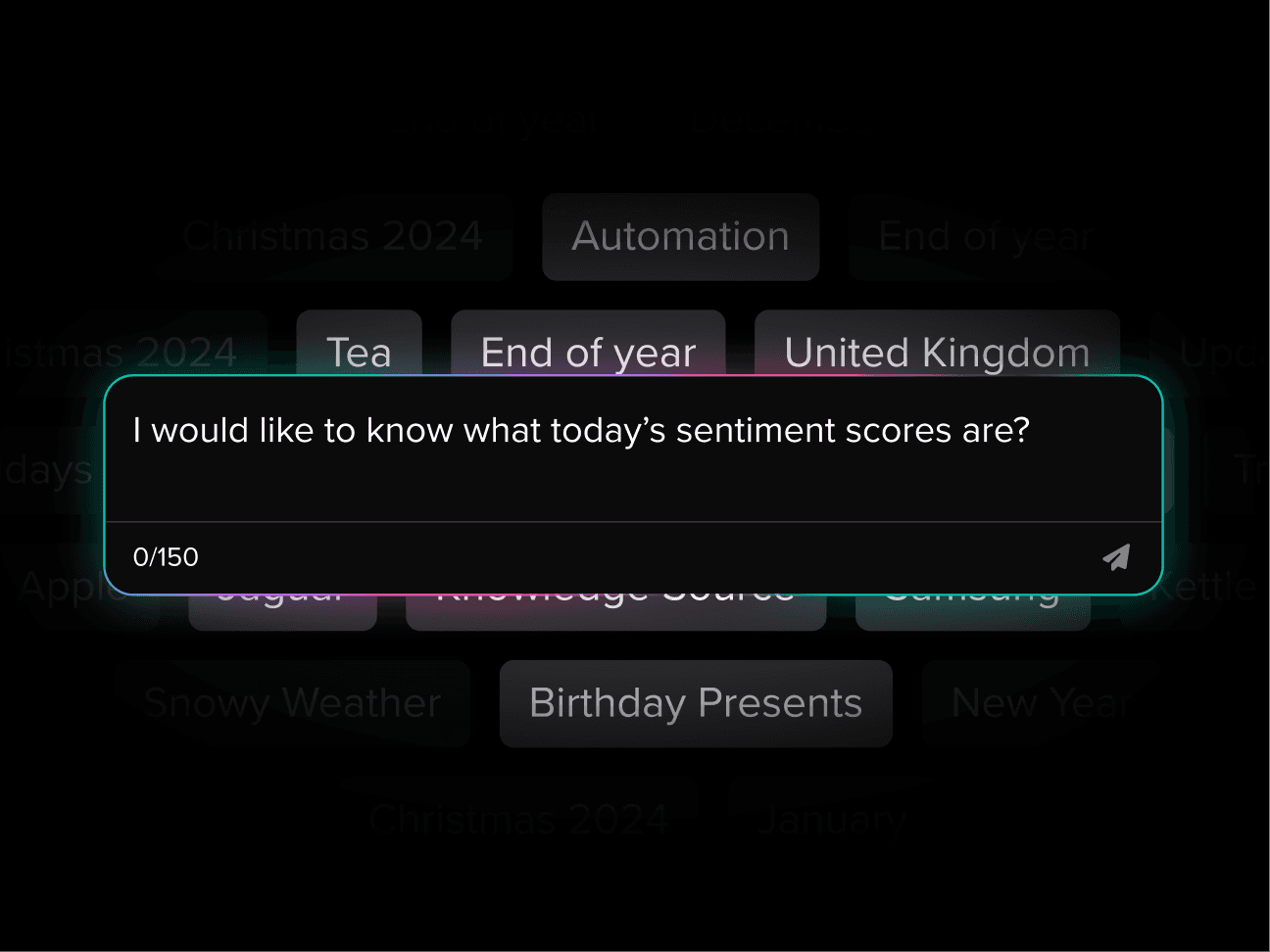
AI agents do more than streamline customer interactions; they also provide valuable insights into customer behavior thanks to Customer Interaction Analytics features. By analysing data from customer queries, preferences, and feedback with advanced AI Analytics features, these agents help businesses gain a deeper understanding of their customers’ needs, uncovering trends and guiding product or service improvements.
In addition to these insights, AI agents with coaching functions assist customer service representatives during conversations. They offer real-time guidance and suggestions to improve interaction quality and efficiency. AI Analytics further enhance business operations by providing actionable intelligence, optimising customer service strategies, resource allocation, and overall customer experience. This comprehensive support helps businesses achieve greater success and maintain a competitive edge in the marketplace.
Autonomous Issue Resolution. AI Agents can identify the root cause of customer problems through analysis of past tickets, transaction history, or product data, executing actions on behalf of the customer, such as processing refunds, upgrading subscriptions, or initiating returns, escalating only when human intervention is truly necessary.
Proactive Customer Engagement. Agentic AI can predict customer needs based on behavior patterns and reaching out proactively and suggesting personalized solutions or products before the customer asks for them.
Dynamic Interaction Management. Agentic AI can understand complex, multi-turn conversations without relying on scripted flows, adjust tone, language, and approach based on customer sentiment and engagement style, and handle simultaneous tasks, such as checking order status while recommending alternatives.
Learning and Improvement. AI Agents continuously analyse interactions to improve response strategies, detects recurring issues and proposes systemic solutions to reduce future service load, and adapts to new products, policies, or customer behaviors without manual reprogramming.
Data-Driven Insights. Agentic AI can summarise customer interactions and sentiment for management, identify trends in complaints, product issues, or opportunities for upselling and cross-selling, and inform strategic decisions by integrating customer feedback directly into business processes.
Real-Time Coaching. Agentic AI can provide real-time AI coaching by monitoring customer interactions and offering agents discreet, actionable guidance—such as suggested responses, tone adjustments, or next-step recommendations—to improve performance and enhance the customer experience.
Can AI Agents predict customer needs before they arise?
How do businesses measure the ROI of Agentic AI?
What role does autonomous issue resolution play in the value of Agentic AI?

The Future of AI Agents
The future of AI agents in customer service holds vast potential, from further enhancing personalisation to integrating more deeply with other business systems to provide a seamless customer experience. However, this future also brings challenges, such as ensuring ethical use and maintaining the balance between customer service automation and human touch.
Despite concerns about job displacement, AI agents are more likely to augment human roles rather than replace them. By taking over routine tasks, AI agents free up human agents to focus on more complex and emotionally nuanced customer interactions. This shift not only improves efficiency but also leads to higher job satisfaction as human agents can engage in more meaningful work.
To fully realise the benefits of AI agents, companies need to invest in the right technology, provide training for their workforce, and continually assess and refine their AI-driven strategies. As AI agents continue to evolve, they will undoubtedly become an even more integral part of customer service, driving innovation, improving customer satisfaction, and maintaining competitive advantage in a digital-first world.
Can AI agents improve customer satisfaction beyond basic automation?
What role do analytics play in AI-driven customer service?
Can AI agents handle multilingual or global customer bases?