AI Analytics: Turning Data into Decisions
In an era defined by data and an economy based on information, harnessing their power effectively can set industry leaders apart. To succeed in today’s business landscape, leveraging data for decision-making across the organisation is crucial. As data volumes surge, leading businesses are moving beyond traditional business analytics and embracing AI analytics to enable more seamless, faster, and more cost-effective data-driven decision-making across their organisations.
However, to unlock its full potential, it’s essential to understand how AI analytics functions, its advantages, and its practical applications. This article will explore the definition of AI analytics, its core pillars, and the pathway to successfully integrating it into business practices.
Let’s start with the basics: what is the definition of AI Analytics?
What is AI Analytics?
AI analytics involves using Artificial Intelligence techniques and algorithms to conduct data analysis, interpret information, uncover insights, and generate predictions or recommendations.
With tools like Voice Recognition, Natural Language Processing (NLP), predictive analytics, and generative and Conversational AI providing real-time insights, AI is fundamentally reshaping how companies interpret, measure, and optimise their operations, enhancing decision-making capabilities. This approach can help reduce costs, minimise errors, improve accuracy, and allow human resources to focus on more strategic, high-value tasks.
In essence, AI analytics leverages sophisticated algorithms to continuously monitor and analyse large volumes of data, automating tasks that would typically require extensive effort from a data analyst. Integrating AI into business analytics has become essential for large organisations aiming to strengthen their competitive advantage. AI’s capability to swiftly analyse vast amounts of data, detect patterns, and generate predictive insights provides a powerful edge. This allows businesses to make informed, data-driven decisions that enhance key performance indicators (KPIs), cut costs, and drive better business outcomes.

What’s the difference between AI Analytics and Data Analytics?
AI analytics differs significantly from traditional data analytics in several key ways. Traditional analytics typically involves a team of data analysts who formulate hypotheses about business issues, test them against data, and then present findings, a process that is time-consuming and may not always yield accurate results due to human limitations. In contrast, AI analytics uses machine learning algorithms to continuously monitor and analyse large datasets in real-time, identifying anomalies and providing root-cause analysis much faster and more accurately.
AI’s speed, scale, and ability to analyse data without bias offer a level of granularity and efficiency that traditional methods cannot match, allowing businesses to make quicker, data-driven decisions with a higher degree of accuracy.
What’s the difference between AI Analytics and Business Intelligence?
Both AI analytics and Business Intelligence help organisations extract insights from data, but AI analytics goes beyond traditional Business Intelligence by automating complex tasks, providing predictive and prescriptive insights, and using machine learning to improve accuracy over time.
While Business Intelligence primarily focuses on reporting and visualising historical data, AI analytics forecasts future outcomes and recommends actionable steps.
What is AI Analytics?
How is AI Analytics different from traditional Data Analytics?
Why is AI Analytics important for large organisations?
Summary
In today’s data-driven economy, businesses gain a competitive edge by leveraging AI analytics, which goes beyond traditional data analysis and Business Intelligence. AI analytics uses machine learning and advanced algorithms to continuously monitor, interpret, and predict outcomes from large datasets, enabling faster, more accurate, and cost-effective decision-making. Unlike conventional analytics, which relies on human-led hypothesis testing, AI can detect patterns, identify anomalies, and provide real-time, unbiased insights, freeing human resources for strategic tasks. By automating complex analyses, generating predictive recommendations, and enhancing operational efficiency, AI analytics empowers organizations to optimize performance, reduce errors, and make informed, data-driven decisions that drive superior business outcomes.

What Makes AI Analytics?
El análisis de IA combina técnicas avanzadas de IA con análisis de datos para ofrecer una experiencia moderna impulsada por datos. Los componentes clave incluyen:
Procesamiento de Lenguaje Natural (PLN)
El Procesamiento de Lenguaje Natural (PLN) permite a las máquinas comprender e interpretar el lenguaje humano, analizando datos de texto como publicaciones en redes sociales, reseñas y solicitudes de soporte. Ayuda a las empresas a medir el sentimiento del cliente, extraer temas clave y clasificar datos. Con los avances en modelos lingüísticos grandes como GPT-3 y GPT-4, el PLN está cada vez más integrado en las plataformas empresariales, ofreciendo soluciones flexibles, seguras y precisas para el análisis de datos.
Aprendizaje Automático
El aprendizaje automático utiliza algoritmos para analizar datos y hacer predicciones sin instrucciones explícitas. Al entrenarse con grandes conjuntos de datos, puede identificar patrones y prever resultados, como detectar fraudes, predecir la deserción o recomendar productos. El análisis de IA facilita que los usuarios empresariales apliquen estos modelos.
Redes Neuronales
Las redes neuronales, inspiradas en el cerebro humano, procesan y analizan datos a través de capas de nodos interconectados. Son ampliamente utilizadas para aplicaciones como el análisis de imágenes y habla, así como tareas de PLN.
Aprendizaje Profundo
Un subconjunto de redes neuronales, el aprendizaje profundo entrena modelos en grandes cantidades de datos para hacer predicciones altamente precisas. Destaca en el manejo de datos complejos, como imágenes y voz, y potencia aplicaciones como los coches autónomos y asistentes de voz, siendo esencial para analizar datos no estructurados en el análisis de IA.
Types of AI Analytics
Descriptive Analytics
AI-powered descriptive analytics helps businesses understand past performance by analysing large datasets for patterns, trends, and correlations. For example, in retail, AI can process sales and social media data to identify popular products during specific seasons or frequently purchased items. This enables companies to optimise inventory, tailor marketing strategies, and improve customer satisfaction based on past behaviours and trends.
Diagnostic Analytics
AI improves diagnostic analytics by rapidly identifying causes and correlations in complex datasets, allowing businesses to solve problems more quickly and accurately. In healthcare, AI can analyse patient data, such as medical histories and imaging scans, to detect underlying causes of diseases like cancer, offering insights for accurate diagnoses and personalised treatment plans.
Predictive Analytics
AI enhances predictive analytics by using historical data to forecast future trends and outcomes. In financial services, for example, AI models analyse past market data to predict stock prices, helping investors make informed decisions about risks and opportunities.
Prescriptive Analytics
AI takes analytics a step further by recommending actions based on data insights. In supply chain management, AI systems analyse data like inventory levels, demand forecasts, and shipping conditions to suggest optimal order quantities and delivery schedules, improving efficiency and reducing costs.
How do machine learning and deep learning complement each other in AI analytics?
How do AI analytics tools ensure accuracy and reliability?
Can AI analytics explain its decisions to users?
How do AI analytics applications adapt to real-time data?
How do businesses use AI Analytics?
Toma de decisiones basada en datos
La analítica de IA ayuda a las empresas a pasar de tomar decisiones basadas en la intuición o prácticas históricas a decisiones impulsadas por datos. Al analizar grandes cantidades de datos estructurados y no estructurados, la IA descubre patrones ocultos, tendencias y correlaciones que los humanos podrían pasar por alto. Esto empodera a los líderes para tomar decisiones más informadas y precisas, ya sea en el desarrollo de productos, marketing o asignación de recursos, asegurando que el negocio se base en información en tiempo real en lugar de suposiciones.
Planificación estratégica y predicción de tendencias
La IA permite a las empresas predecir tendencias del mercado y cambios futuros analizando datos históricos, comportamiento del consumidor y factores externos como eventos económicos o políticos. Esta capacidad proporciona a las empresas una perspectiva más orientada hacia el futuro, permitiéndoles ajustar sus estrategias de manera proactiva en lugar de reactiva. Por ejemplo, la IA puede ayudar a prever aumentos de demanda, interrupciones en la cadena de suministro o cambios en el sentimiento de los clientes, facilitando que las compañías adapten sus modelos de negocio y eviten errores costosos.
Optimización del modelo de negocio
La analítica de IA monitoriza y evalúa continuamente las operaciones de una empresa, identificando ineficiencias, brechas y áreas donde los procesos pueden mejorar. Al procesar grandes volúmenes de datos, la IA puede sugerir flujos de trabajo optimizados, asignaciones de recursos e incluso identificar nuevas fuentes de ingresos o mercados. Este refinamiento constante del modelo de negocio asegura que una empresa se mantenga competitiva, escalable y capaz de crecer sosteniblemente en entornos dinámicos.
Gestión de riesgos
La IA mejora la capacidad de una empresa para gestionar riesgos mediante la predicción de potenciales interrupciones, caídas de mercado o pérdidas financieras. Al analizar una variedad de fuentes de datos, como informes financieros, rendimiento de la industria, comportamiento del cliente o eventos globales, los modelos de IA pueden detectar señales de alerta temprana de riesgos como fraude, incumplimientos de créditos o interrupciones en la cadena de suministro. Esta capacidad predictiva permite a las empresas actuar proactivamente, implementar medidas de protección y minimizar la exposición al riesgo, fortaleciendo en última instancia su resiliencia en condiciones impredecibles.
Agilidad y adaptación en tiempo real
La IA empodera a las empresas para mantenerse ágiles en un mercado que cambia rápidamente al proporcionar información en tiempo real. Tanto si se trata de ajustar estrategias de marketing según la respuesta del consumidor como de replantear ofertas de productos en respuesta a movimientos de la competencia, la IA ayuda a las empresas a adaptarse rápidamente. La capacidad de la IA para procesar y analizar datos en tiempo real permite a las compañías realizar ajustes instantáneos, ya sea en operaciones, compromiso del cliente o logística, asegurando que se mantengan por delante de los cambios del mercado y las necesidades cambiantes de los clientes.
Monitoreo de la experiencia del cliente
El monitoreo de la experiencia del cliente implica seguir de manera continua las interacciones de los clientes, su feedback y los niveles de satisfacción para entender la calidad del servicio que se está proporcionando. Mediante herramientas de IA para atención al cliente, las empresas pueden obtener información en tiempo real sobre el comportamiento, sentimiento y puntos críticos de los clientes. La analítica impulsada por IA puede detectar automáticamente tendencias, patrones y anomalías en los datos del cliente, como quejas, uso de productos o solicitudes de servicio, permitiendo a las empresas identificar rápidamente áreas para mejorar. Esto permite a las compañías responder proactivamente a las necesidades del cliente, mejorar la experiencia general, reducir la deserción y fomentar una mayor lealtad, lo que finalmente lleva a una mayor satisfacción y rentabilidad.
How does AI analytics integrate with existing business systems and workflows?
How does AI analytics improve cross-department collaboration within a company?
Can AI analytics uncover opportunities for innovation, not just efficiency?
How will AI analytics evolve over the next few years?
Examples of Artificial Intelligence Analytics Tools
eCommerce Analytics
eCommerce analytics leverages AI-driven insights to optimise customer engagement, sales, and operational efficiency by analysing vast datasets. AI can identify factors causing changes in conversion rates, such as cart abandonment, enabling businesses to implement targeted promotions or streamline checkout processes to boost sales. By continuously analysing customer behaviour, AI solutions can predict demand, optimise inventory levels, and reduce overstocking or shortages.
In addition, real-time monitoring and diagnostic capabilities allow for the early detection of issues, such as website bottlenecks, while AI-powered tools create personalised marketing campaigns to enhance customer loyalty and maximise lifetime value, ultimately driving revenue growth and improving customer experiences.
Fintech Analytics
In the fintech industry, AI analytics plays a crucial role in detecting and mitigating security risks. By continuously monitoring operational metrics, AI can identify potential vulnerabilities and enable proactive security measures to close gaps. Centralising data sources onto a unified platform allows machine learning to analyse normal patterns of behaviour, detect anomalies, and address issues in real time. Another critical application is fraud detection, where AI can rapidly analyse transaction patterns, spot suspicious activities as they occur, and prevent fraud by swiftly flagging and mitigating potential risks.
Healthcare Analytics
AI analytics is revolutionising healthcare by predicting patient outcomes, identifying high-risk patients, and optimising treatment plans. For example, AI-driven predictive models can forecast patient readmission rates, enabling proactive interventions and improving overall care quality. AI can also analyse medical imaging data to detect diseases early, significantly enhancing diagnostic accuracy and speed.
Another example is the innovative approach taken by some startups, like CanarySpeech, that utilise Speech Analytics AI to analyse the speech patterns of older adults. By identifying subtle changes and irregularities in their voice, this technology can detect early signs of dementia, potentially leading to more timely interventions and improved care outcomes.
Customer Interaction Analytics
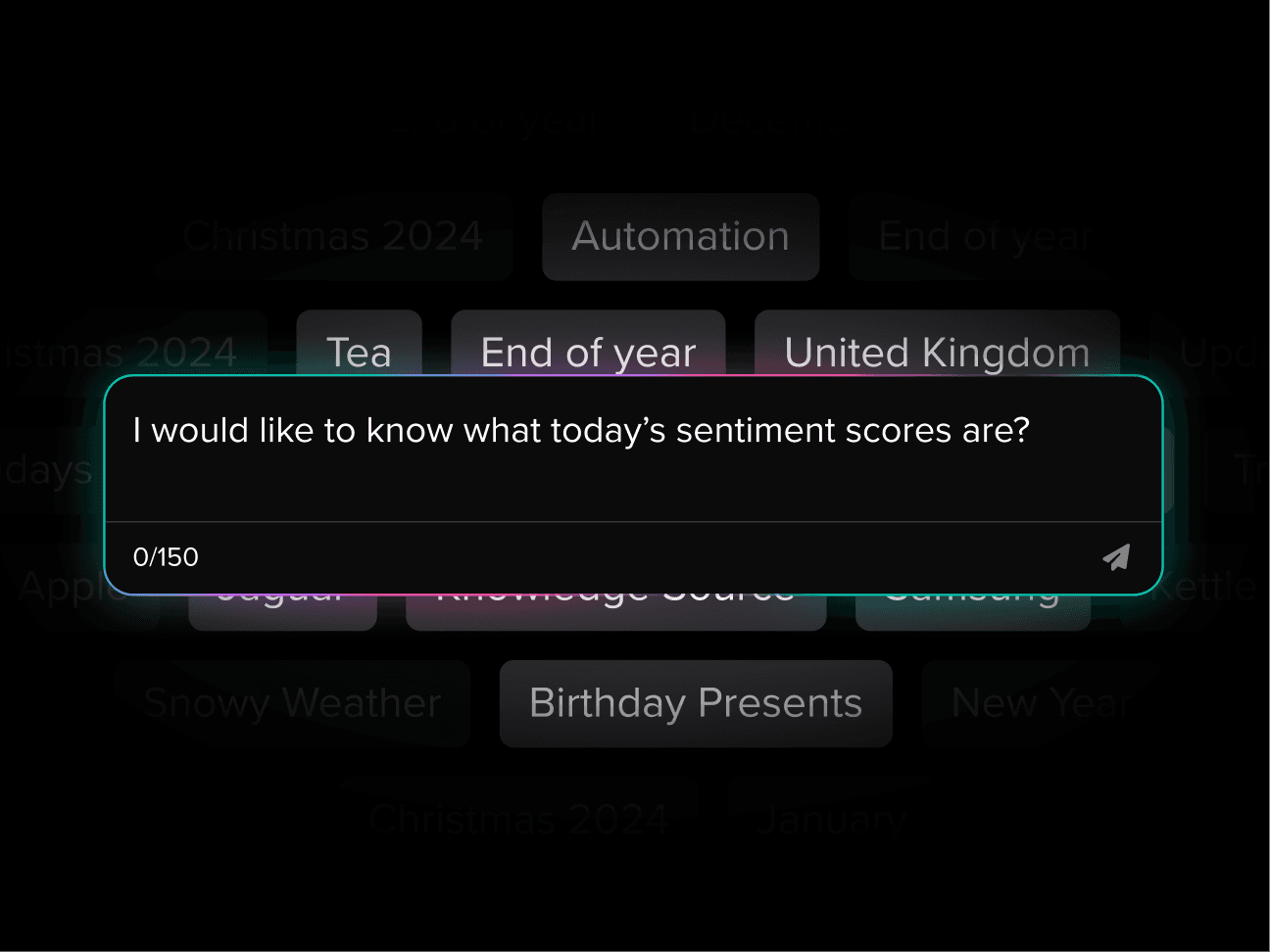
AI analytics is transforming customer interactions by analysing customer data across various touchpoints, such as calls, chats, social media, and emails. This enables companies to improve customer experience management by gaining a deeper understanding of customer sentiment, preferences, and pain points. For example, Call Centre AI features like Sentiment Analysis can analyse call centre conversations to detect patterns in customer satisfaction or dissatisfaction, providing actionable insights to enhance service quality.
AI Chatbots and AI Agents are also an application of customer interaction analytics. These systems use Conversational AI and LLMs to understand and respond to customer queries in real time, improving responsiveness and reducing operational costs. Furthermore, when integrated with Speech Analytics and Natural Language Processing features, AI can segment customers based on behaviour and tailor communications for more personalised marketing campaigns, leading to higher engagement and loyalty.
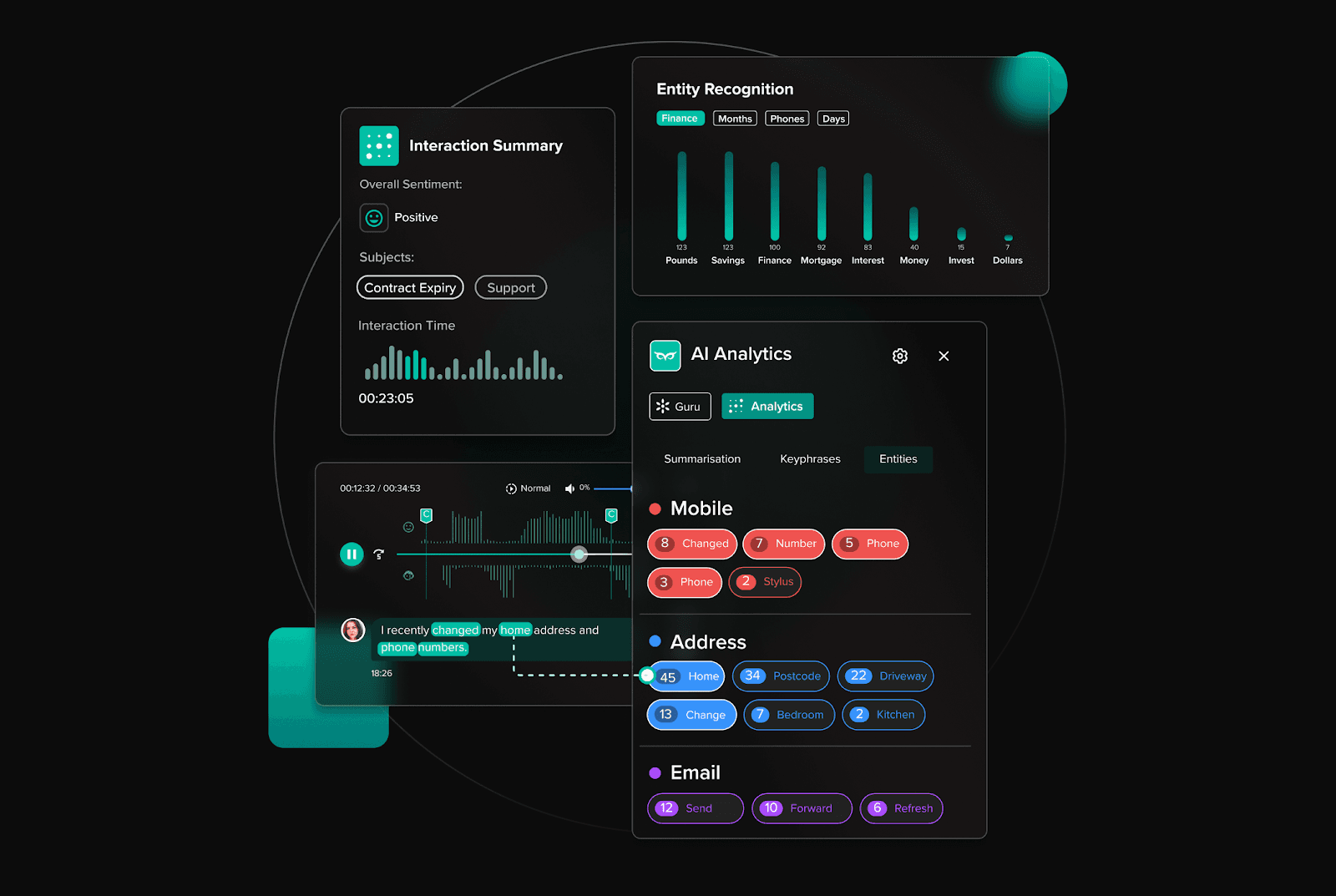
By leveraging predictive analytics, businesses can anticipate customer needs and proactively offer solutions, enhancing customer retention. Additionally, other AI Analytics features like Entity Recognition and Keyphrase Analysis can help businesses to see the words, phrases, products and concepts that are most often mentioned by their customers in conversations with customer service representatives, helping companies understand public perception of their brand and customer preferences.
Overall, the integration of AI analytics into call centre software and customer service software helps businesses optimise their customer experience, increase operational efficiency, and foster long-term customer loyalty through more informed, data-driven interactions.
Beyond identifying cart abandonment, how can AI enhance the overall customer journey?
How does AI improve regulatory compliance in fintech operations?
Can AI analytics help reduce healthcare costs?
How do sentiment and emotion analysis differ in AI-driven customer analytics?