


The Rise of Call Centre AI: A Game Changer in Customer Service
Over the last couple of years, Artificial Intelligence has rightfully proven its potential to revolutionise the way companies do business across different industries. The customer engagement landscape has been particularly responsive to the innovations brought about by AI. Call Centre Artificial Intelligence, or Call Centre AI, encompasses various technologies like Machine Learning, Natural Language Processing, and Speech Analytics, used to enhance call center operations. These technologies continually evolve, shaping the landscape of customer engagement.
With AI’s exponential growth, businesses are increasingly investing in AI capabilities to revolutionize customer service. This surge in AI adoption highlights its crucial role in optimizing customer experiences and staying competitive. Many Call Centre AI features have found massively beneficial applications in the customer engagement space, and particularly in the call centre landscape. But what exactly is Call Centre AI? How does it work? How will it change the customer service and call centre space in the years to come? What will that mean for human call centre agents?

We’ll try to address all those questions in this article. By the time you finish reading, you’ll have a more complete understanding of why Call Centre AI is showing itself as a game changer in the customer engagement landscape, what are the best ways to leverage it in your business, and what we can expect from its evolution. Let’s get to it.
What is Call Centre AI? The Technologies Shaping the Future of Support
Inteligencia Artificial para Centros de Llamadas, o Call Centre AI, no se refiere a una sola tecnología, sino a un conjunto de tecnologías: en general, llamamos Inteligencia Artificial para Centros de Llamadas a cualquier software o tecnología que utiliza Aprendizaje Automático o Profundo, PNL (Procesamiento de Lenguaje Natural), ASR (Reconocimiento Automático de Voz), pronósticos probabilísticos, o redes neuronales para cumplir tareas relevantes para las operaciones diarias de los Centros de Llamadas. En las siguientes secciones, veremos algunos ejemplos más prácticos de cómo se ve esto en el campo.
Sin embargo, estas tecnologías están en constante evolución y expansión. En consecuencia, lo que significa o se refiere a la Inteligencia Artificial para Centros de Llamadas cambia rápidamente con cada nuevo avance, y continuará cambiando a medida que se alcancen nuevos hitos en el ámbito de la Inteligencia Artificial y se encuentren más posibles usos para la IA en el campo del compromiso con clientes.
Como probablemente ya sepas, la evolución de la Inteligencia Artificial ha progresado a un ritmo exponencial en los últimos años, y se espera que continúe haciéndolo. La IA ha sido particularmente impactante en el ámbito del servicio al cliente; las plataformas de software de servicio al cliente avanzadas y modernas con funcionalidades de Inteligencia Artificial para Centros de Llamadas son ahora uno de los activos más poderosos que los departamentos de servicio al cliente o centros de llamadas pueden tener a su disposición. A medida que los expertos en IA en el espacio de CCaaS continúan explorando su máximo potencial, se espera que las capacidades de las herramientas de Software de Inteligencia Artificial para Servicio al Cliente continúen expandiéndose y evolucionando aún más.
Según una investigación de Microsoft, el 79% de los líderes creen que adoptar la IA es esencial para que sus empresas sigan siendo competitivas. Mientras tanto, el 64% de los líderes en experiencia del cliente planean aumentar las inversiones en IA y tecnologías relacionadas en el próximo año, revela datos de Zendesk. Estas tendencias destacan un cambio estratégico, reflejando el reconocimiento creciente del potencial transformador de la IA para revolucionar el compromiso del cliente.
El ámbito de la tecnología de IA ofrece una gran cantidad de posibilidades para refinar las interacciones con los clientes, y su influencia está preparada para volverse cada vez más prominente en moldear la dinámica de cómo las empresas interactúan con su base de clientes.
Este aumento en la adopción de la IA refleja un reconocimiento más amplio dentro de la industria de que aprovechar tecnologías avanzadas es fundamental para optimizar las experiencias del cliente y mantenerse a la vanguardia en el entorno competitivo.
En una sección posterior, consideraremos algunas de las herramientas de IA más importantes e innovadoras para Software de Centros de Llamadas, cómo funcionan y qué función desempeñan en el centro de contacto moderno. Pero primero, veamos las múltiples formas en que las herramientas de IA para Centros de Llamadas están beneficiando a las empresas en el panorama del compromiso con el cliente.
What is Call Centre AI?
How does Call Centre AI work?
How is AI transforming customer engagement?
What are the main benefits of using AI in call centres?
Summary
Artificial Intelligence is transforming how businesses operate, with customer engagement being one of the most deeply impacted areas. In call centres, technologies like Machine Learning, Natural Language Processing, and Speech Analytics—collectively known as Call Centre AI—are revolutionising customer interactions by automating, optimising, and enhancing operations. Constantly evolving, these tools enable greater efficiency, personalisation, and responsiveness. According to Deloitte, 79% of customer service leaders plan to expand their AI investments within two years, underscoring AI’s growing importance in staying competitive. As its capabilities advance, Call Centre AI is set to become an essential driver of customer satisfaction, loyalty, and operational excellence.
How Contact Centre AI Is Boosting Productivity, Personalisation, and Cost Efficiency
El impacto de la inteligencia artificial en los centros de llamadas en el compromiso con el cliente, y la influencia aún mayor que tendrá en los próximos años, no puede ser subestimado. Incluso en sus etapas iniciales, la IA ya ha transformado el panorama del compromiso con el cliente de formas que son tanto profundas como irreversibles. Un vistazo a las estadísticas recientes lo deja claro:
La IA resolvió el 30% de los casos de clientes en 2025, y se proyecta que esta cifra aumente al 50% para 2027. (Salesforce, 2025)
Para 2029, se espera que este número suba al 80% gracias a agentic. (Gartner, 2025)
El 82% de las empresas líderes son más propensas a usar IA generativa para ayudar a los agentes a resolver los problemas de los clientes más rápidamente y con mayor efectividad. (Accenture, 2025)
Más de dos tercios de las organizaciones de CX creen que la IA generativa puede ayudarlas a ofrecer calidez y familiaridad en el servicio, incluso a gran escala. (Zendesk, 2025)
El 70% de los líderes de CX ven a los agentes de IA y chatbots como arquitectos hábiles de recorridos de clientes altamente personalizados. (Zendesk, 2025)
El 70% de los consumidores percibe una brecha clara que se está formando entre las empresas que usan la IA de manera efectiva y las que no. (2025, Zendesk)
La favorabilidad del consumidor hacia la IA en la experiencia del cliente ha saltado al 67%, un aumento de 10 puntos porcentuales año con año. (Zendesk, 2025)
Los primeros adoptadores de la IA en servicio al cliente tienen un 128% más de probabilidades de reportar un alto retorno de inversión de sus herramientas de IA. (Zendesk, 2025)
El 90% de los pioneros de CX reportan un retorno positivo de inversión de las herramientas de IA para los agentes. (Zendesk, 2025)
Claramente, gerentes, propietarios de negocios y tomadores de decisiones en el ámbito de los centros de llamadas ya están reconociendo el potencial transformador de la IA. Con la tecnología avanzando a un ritmo tan rápido, el papel de la IA en los centros de llamadas modernos está destinado a crecer.
Entonces, ¿qué beneficios tangibles puede aportar la IA al centro de llamadas? Exploremos las ventajas clave.
1. Crecimiento de ingresos
La IA está redefiniendo rápidamente el papel de los centros de llamadas, transformándolos de centros de costos en motores de crecimiento de ingresos. La investigación reciente de McKinsey demuestra este desarrollo: al comienzo de 2024, solo el 3% de las organizaciones de servicio al cliente reportaron un crecimiento de ingresos superior al 10% impulsado directamente por la IA generativa. Para la segunda mitad del año, ese número se había disparado al 18% (¡un aumento de seis veces!), demostrando cuán rápido la tecnología estaba remodelando el desempeño. El crecimiento no se limitó a los de mejor desempeño. El catorce por ciento de las organizaciones vieron ganancias entre el 6% y el 10%, mientras que otro 31% logró un crecimiento de hasta el 5%, todo impulsado por la IA generativa. Al final del año, el 61% de las organizaciones de servicio al cliente reportaron un crecimiento directo de ingresos gracias a la IA, frente al 45% al inicio de 2024, cimentando su papel como un impulsor clave del éxito empresarial.
Entonces, ¿cómo está la IA en el servicio al cliente impulsando esta transformación? En su núcleo, la IA se encarga de tareas rutinarias y repetitivas, como actualizaciones de cuentas, consultas de facturación, seguimiento de pedidos, liberando a los agentes humanos para que se concentren en las necesidades complejas de los clientes y las oportunidades de alto valor. Este cambio no solo acelera los tiempos de respuesta y aumenta la satisfacción del cliente, sino que también abre la puerta a ventas adicionales, cruzadas y renovaciones más exitosas.
Pero el impacto va más allá de la automatización de la IA. Los agentes de IA pueden gestionar volúmenes mucho mayores de interacciones con los clientes simultáneamente que los agentes humanos, procesando consultas rápida y precisamente a gran escala. Esto significa menos llamadas perdidas, reducción de atrasos y resolución más rápida de problemas, reduciendo directamente la rotación y fortaleciendo a largo plazo los ingresos. Con la priorización inteligente, los casos de alto valor o que requieren tiempo se abordan primero, asegurando que cada interacción cuente.
El Contact Centre AI también genera una gran cantidad de información sobre el comportamiento de los clientes y los patrones de servicio, lo que permite a las empresas afinar los flujos de trabajo, descubrir nuevas oportunidades de ingresos y refinar estrategias de compromiso. Al combinar automatización, escala e inteligencia basada en datos, la IA transforma el centro de llamadas en algo más que una función de soporte: se convierte en un motor de crecimiento medible, impulsando los ingresos mientras mejora la experiencia del cliente.
La IA puede incrementar significativamente el rendimiento de las ventas analizando datos de clientes e historiales de interacción para identificar oportunidades de ventas adicionales y cruzadas. Guía a los agentes hacia las conversaciones más prometedoras, prioriza leads según la probabilidad de conversión y automatiza seguimientos para clientes que han mostrado interés pero no han completado una compra. Estas capacidades respaldan el crecimiento de ingresos mientras complementan el valor central de la IA: habilitar a los agentes para gestionar más casos de manera eficiente y centrarse en interacciones de alto valor. Datos recientes de Salesforce subrayan el creciente papel de la IA en ventas: el 61% de los vendedores cree que la IA generativa les ayuda a servir a los clientes de manera más eficiente. Además, el 82% de los agentes que atienden al cliente usan IA generativa para la creación de contenido básico, el 74% para analizar datos de mercado y el 71% para automatizar comunicaciones de ventas personalizadas.
2. Mejora del compromiso de los empleados
La IA está transformando la experiencia del empleado en los centros de llamadas, no solo las interacciones con los clientes. Al automatizar tareas rutinarias, proporcionar perspectivas en tiempo real y apoyar a los agentes en conversaciones complejas, la IA permite a los profesionales del servicio al cliente concentrarse en trabajo de mayor valor, sentir menos estrés y obtener mayor satisfacción de sus roles. Según una investigación reciente de Salesforce, el 81% de los agentes dice que la IA los hace más productivos, el 80% informa que reduce el estrés y el 79% dice que aumenta su satisfacción laboral general.
Los representantes en organizaciones que usan IA son significativamente más propensos a tener tiempo para actividades de alto valor. En comparación con sus pares, son:
30% más propensos a construir relaciones más fuertes con los clientes
45% más propensos a centrarse en clientes de alto valor
72% más propensos a ser mentores de colegas
69% más propensos a buscar oportunidades de venta
71% más propensos a mejorar procesos internos
96% más propensos a participar en formación y desarrollo tecnológico
71% más propensos a crear recursos de conocimiento
80% más propensos a explorar oportunidades de liderazgo
104% más propensos a contribuir en proyectos interdisciplinarios.
La IA conversacional mejora aún más la calidad en la entrega de servicios. Los profesionales del servicio valoran altamente a la IA por mantener un tono de marca consistente, entender el lenguaje conversacional, proporcionar transiciones fluidas a agentes humanos, manejar conversaciones complejas, reconocer diferentes dialectos y acentos, e incluso entender las emociones de los clientes.
La IA también mejora la eficiencia operativa, ayudando a los gerentes a prever volúmenes de llamadas para que puedan gestionar el personal adecuadamente y reducir la presión sobre los agentes. Proporciona información procesable y guiones optimizados, lo que permite a los equipos resolver problemas más rápidamente y vender más eficazmente. Al hacerse cargo de tareas repetitivas y apoyar a los agentes de maneras de alto impacto, la IA no solo mejora los resultados del servicio sino que también contribuye directamente a aumentar el compromiso laboral, la satisfacción en el trabajo y el desarrollo profesional.
3. Mejor comprensión de los clientes
Una de las formas más efectivas de mejorar la experiencia del cliente es entender qué puntos de conversación llevaron al resultado deseado. Algunos Contact Centre AI pueden ser un recurso invaluable para eso.
Utilizando características como el Procesamiento del Lenguaje Natural (NLP) y analítica de discursos, las interacciones del servicio al cliente pueden ser grabadas y transcritas para una revisión fácil. Las transcripciones facilitan evaluaciones rápidas por parte de los supervisores, permitiéndoles identificar áreas para el coaching del agente y capturar los detalles esenciales. Otras herramientas de analítica de IA de centros de llamadas, como el Análisis de frases clave y el Reconocimiento de entidades ayudan en la analítica de interacciones con clientes, revelando tendencias en grandes conjuntos de datos del cliente y proporcionando información sobre las emociones de los clientes, permitiendo a los supervisores adaptar estrategias para mejorar la interacción con los clientes y mejorar los servicios.
Otras herramientas de IA para centros de llamadas, notablemente el Análisis de sentimiento, se destacan como una herramienta valiosa dentro de una solución de software de centro de contacto. A través del examen de factores como el tono, el vocabulario, el ritmo del discurso y la inflexión, la IA de análisis de sentimiento evalúa con precisión las emociones del llamador, permitiendo a los gerentes del centro de contacto ofrecer coaching específico para mejorar las habilidades de servicio al cliente.
Con datos de clientes recogidos y analizados por la IA al alcance de su mano, puede aumentar la satisfacción del cliente y probar la efectividad de sus campañas.
4. Mejor gestión de la experiencia del cliente (CXM)
Como hemos demostrado, la mejor manera de mantenerse por delante de la competencia es proporcionar experiencias de cliente de primera clase. La inteligencia artificial puede proporcionar a sus clientes la información correcta en el momento adecuado, puede ofrecer recomendaciones personalizadas, y puede analizar conversaciones a gran escala para ayudarle a proporcionar mejores resoluciones en la primera llamada y manejar las llamadas más rápido.
La IA también puede ayudarlo a dominar la deflexión de llamadas. La desviación de llamadas no trata de reducir los volúmenes de llamadas, aunque menos presión sobre su centro de llamadas es un beneficio: se trata de implementarla estratégicamente para mejorar la experiencia del cliente. La desviación de llamadas exitosa se basa en recopilar y analizar los datos correctos para informar su estrategia y aumentar la satisfacción del cliente. Hace posible un servicio al cliente más rápido y mejor, al permitir a los clientes saltarse la fila y utilizar otros canales.
5. Facilitar el autoservicio y la deflexión de llamadas
La IA no puede reemplazar todo lo que un agente humano puede hacer, pero a menudo es suficiente para alcanzar una resolución satisfactoria para solicitudes simples. Puede dejar preguntas rutinarias, cotidianas y otras interacciones fundamentales que podrían estar bajo la bandera de "autoservicio" a la IA. La solución adecuada de software de centro de contacto puede ayudar a sus llamadores a completar tareas simples como realizar un pedido, verificar un saldo o pagar una factura ellos mismos, de modo que sus agentes humanos estén libres para responder a llamadas más complejas.
También existe potencial para que las herramientas de experiencia del cliente con IA asuman auto-servicios más significativos. Esto depende de tener datos precisos para que la IA pueda automatizar correctamente sus respuestas a los clientes. La información incompleta limita la capacidad de la IA para gestionar interacciones más complicadas. Priorizar la información y el análisis será esencial si desea que la IA juegue un papel más importante en responder a los clientes y proporcionar grados más significativos de autoservicio.
6. Ahorro de costes
Uno de los beneficios más significativos de la IA para centros de llamadas, especialmente para propietarios de negocios y tomadores de decisiones, es su potencial para una reducción sustancial de costos. Al aprovechar soluciones impulsadas por IA, comúnmente integradas en las plataformas de software de servicio al cliente, las empresas pueden automatizar respuestas a grandes volúmenes de consultas rutinarias. Los chatbots de IA conversacional, por ejemplo, manejan consultas repetitivas de manera eficiente, liberando a los agentes humanos para que se concentren en interacciones más complejas y de alta habilidad que requieren juicio, empatía o resolución de problemas. Este cambio no solo optimiza la asignación de la fuerza laboral, sino que también impulsa ahorros financieros medibles.
A lo largo de 2024, las reducciones de costos impulsadas por la IA generativa en el servicio al cliente aumentaron de manera constante. La investigación de McKinsey revela que en la primera mitad del año, el 45% de las organizaciones informaron costos operativos más bajos debido a la integración de la IA; para la segunda mitad, esta cifra había aumentado al 58%, representando un aumento de casi el 30% en los ahorros impulsados por la adopción.
Además, la magnitud de estos ahorros creció en el mismo período. Para mediados de 2024, el 18% de las organizaciones que experimentaron reducciones de costos informaron que sus ahorros superaron el 10%. La proporción de empresas que lograron reducciones aún más significativas (superiores al 20%) también se expandió, subiendo del 4% en la primera mitad del año al 7% en la segunda, casi duplicándose en solo seis meses. Estas tendencias destacan cómo la IA generativa no solo se está adoptando más ampliamente, sino que también está entregando beneficios financieros cada vez más tangibles, convirtiéndola en una inversión atractiva para organizaciones que buscan tanto eficiencia como escalabilidad en sus operaciones de servicio al cliente.
Why is the current stage of Call Centre AI considered “early,” despite its widespread use?
How will Call Centre AI change the skills required for customer service roles?
How can AI improve forecasting and workforce planning beyond basic automation?
What role will generative AI play in the future of contact centres?
Call Centre AI in Action: 7 Key Tools Improving Efficiency and Customer Experience
1. Bots conversacionales de IA
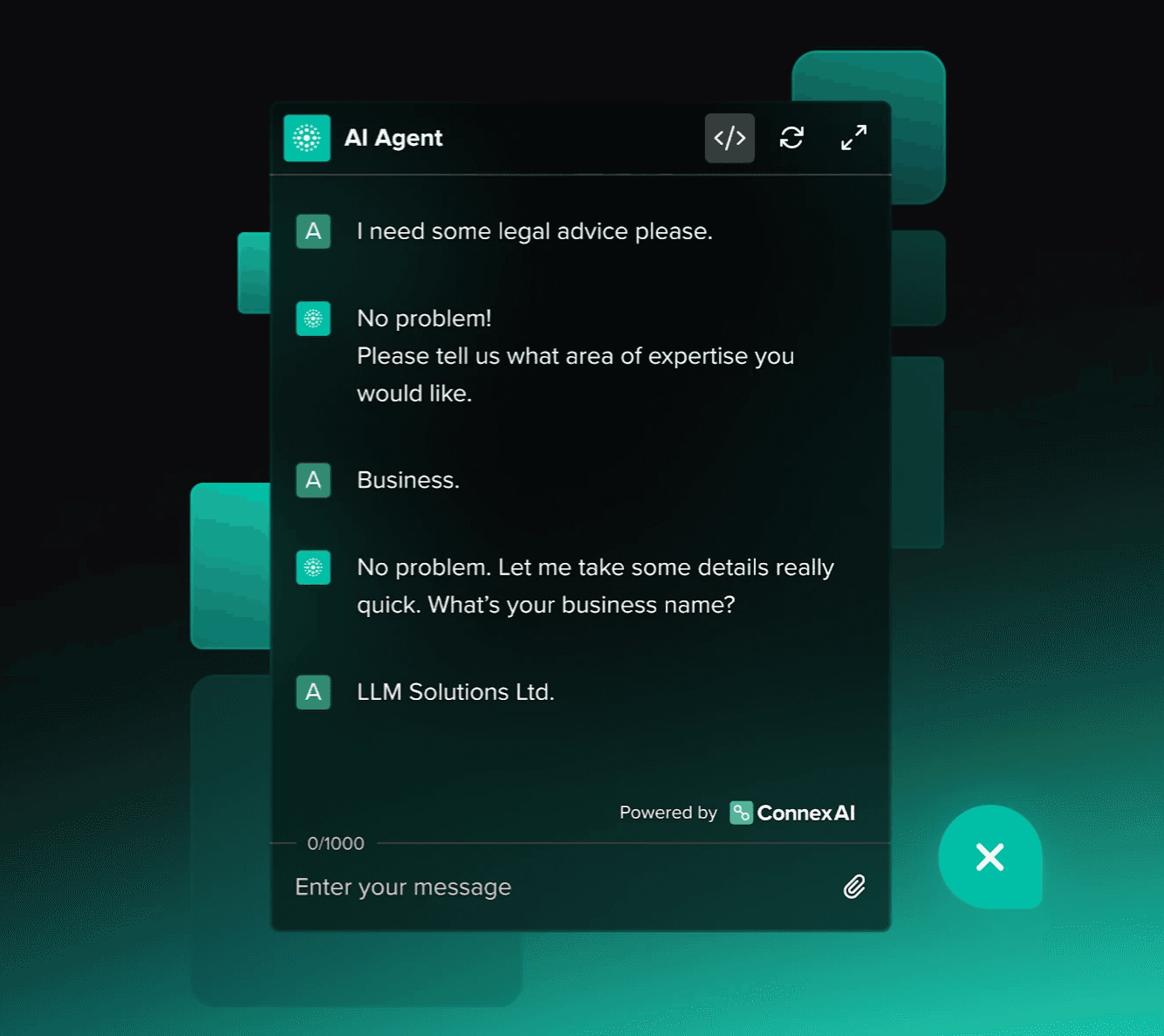
Los bots de IA conversacional a menudo se confunden con los chatbots tradicionales, y el término “chatbot” todavía se utiliza para describir ambos. Sin embargo, la diferencia entre ellos es sustancial. Los chatbots tradicionales suelen basarse en reglas: siguen guiones predefinidos y solo pueden realizar tareas o responder preguntas dentro de los límites estrechos de su programación. Los chatbots de IA, en cambio, demuestran una inteligencia mucho más sofisticada y comprensión del lenguaje natural. Impulsados por técnicas avanzadas de aprendizaje automático, incluidos el aprendizaje profundo y las redes neuronales, pueden interpretar matices, mantener el contexto y generar respuestas que se asemejan a una conversación humana.
En los últimos años, la IA conversacional ha evolucionado rápidamente. Ha pasado de sistemas rígidos y basados en reglas a modelos generativos flexibles capaces de diálogos naturales y conscientes del contexto. Las arquitecturas Transformer introducidas alrededor de 2019–2020 desbloquearon conversaciones coherentes de múltiples turnos, y los avances recientes ahora permiten que la IA entienda la intención, detecte el sentimiento y resuelva problemas de varios pasos. En centros de llamadas modernos, estos sistemas se integran directamente con herramientas de CRM, personalizan interacciones y aprenden continuamente de los datos, aumentando dramáticamente la resolución autónoma de consultas.
Las expectativas de los clientes han cambiado junto con la tecnología. Aunque la mayoría de las personas aún preferían agentes humanos en 2022, con investigaciones que indican que el 60% de los clientes preferirían esperar en una cola que interactuar con un chatbot, estudios recientes muestran la tendencia opuesta: el 67% de los clientes ahora desea delegar tareas de servicio a asistentes de IA, y casi el 60% dice que los agentes de IA son más útiles de lo que eran hace un año. Los consumidores también perciben una creciente brecha entre las empresas que utilizan efectivamente la IA y aquellas que se quedan atrás.
Para las empresas, los beneficios son cada vez más medibles. Las organizaciones que adoptan la IA conversacional y generativa reportan ganancias en eficiencia, satisfacción del cliente y ingresos. Como hemos mencionado anteriormente, según McKinsey, la proporción de empresas que logran un crecimiento de ingresos superior al 10% gracias a la IA generativa saltó del 3% al 18% en 2024, con muchas otras viendo mejoras más modestas pero aún significativas.
El próximo gran paso es la IA agentica: sistemas que no solo generan respuestas, sino que pueden razonar, planificar, tomar acciones y operar con autonomía. Mientras que la IA conversacional o generativa se centra en producir texto a partir de pautas, los Agentes de IA representan un cambio tecnológico más profundo. Pueden interpretar objetivos, descomponerlos en tareas, seleccionar las herramientas o fuentes de datos adecuadas y adaptar sus acciones a medida que aparece nueva información, al igual que un operador humano capaz.
En el servicio al cliente, esto significa que los Agentes de IA pueden ejecutar flujos de trabajo de múltiples pasos de principio a fin, no solo responder preguntas. Pueden recopilar y verificar datos, actualizar sistemas, verificar políticas y decidir los siguientes pasos sin supervisión constante, escalando solo los casos más complejos. Esto les permite manejar tanto trabajos rutinarios como especializados, desde disputas de seguros hasta orientación hipotecaria y verificaciones de cumplimiento.
Al mismo tiempo, los Agentes de IA están comenzando a proporcionar soporte de decisiones en tiempo real, ofreciendo análisis avanzados, destacando riesgos y recomendando acciones a los agentes humanos. Juntas, estas capacidades hacen que la IA agentica sea una fuerza transformadora para el servicio al cliente, especialmente en industrias donde son esenciales la experiencia, la precisión y el procesamiento rápido y confiable de información.
2. Voz de IA: ASR y Generación de Voz
Avances recientes en IA y Speech Analytics están transformando cómo interactuamos con las máquinas a través de la voz. Desde asistentes telefónicos hasta sistemas de servicio al cliente, las tecnologías de voz impulsadas por IA ahora van más allá de las indicaciones pregrabadas, entendiendo el idioma hablado y respondiendo de forma natural. El Reconocimiento Automático de Voz (ASR) y la generación de voz de IA están en el centro de este cambio, convirtiendo el discurso en texto y generando respuestas conscientes del contexto que se sienten humanas. Estas herramientas impulsan aplicaciones que van desde IVRs inteligentes hasta agentes de voz de IA completamente conversacionales.
ASR permite a las máquinas convertir con precisión y rapidez el lenguaje hablado en texto, formando la base de las experiencias modernas de clientes basadas en voz. A medida que los sistemas ASR mejoran, manejando acentos, ruido y discurso espontáneo, desbloquean aplicaciones como IVRs impulsados por IA y agentes de voz. La generación de voz de IA complementa ASR produciendo respuestas naturales y dinámicas, completando el ciclo de interacción por voz.
Los IVRs de IA permiten a las personas que llaman hablar libremente en lugar de navegar por menús. ASR interpreta la intención y activa el flujo de trabajo correcto, mientras que la generación de voz por IA ofrece respuestas personalizadas en tiempo real, como actualizaciones de cuenta o confirmaciones de pago. Esto hace que los IVRs modernos sean más rápidos, flexibles e intuitivos.
Los agentes de voz de IA extienden esta capacidad a conversaciones abiertas y de múltiples turnos. ASR interpreta el habla natural y la generación de voz de IA produce respuestas fluidas y similares a las humanas. Combinado con NLP, los agentes de voz de IA siguen el contexto, aclaran preguntas, guían procesos y proporcionan soporte personalizado, con tono y ritmo mejorados por modelos de voz neuronal.
En ambos casos, ASR convierte el discurso en datos procesables y la generación de voz de IA entrega respuestas naturales. Los IVRs de IA automatizan flujos de servicio estructurados, mientras que los agentes de voz de IA habilitan conversaciones flexibles y similares a las humanas. Juntos, permiten a las organizaciones ofrecer experiencias de voz rápidas, escalables y altamente receptivas que mejoran la eficiencia y la satisfacción del cliente.
3. Análisis de Sentimientos
En el contexto de la tecnología de Centros de Llamadas de IA, el Análisis de Sentimientos destaca como una potente aplicación del AI Speech Analytics. Al escrutar elementos como el tono, el vocabulario, el ritmo del habla y la inflexión, el AI de Análisis de Sentimientos puede evaluar hábilmente los estados emocionales de los interlocutores. Esta funcionalidad permite a la IA seguir los sentimientos del interlocutor durante una conversación, ofreciendo valiosas perspectivas sobre tanto el estado de ánimo del cliente como el desempeño del agente de servicio al cliente.
La tecnología de Análisis de Sentimientos proporciona datos en tiempo real a los departamentos de servicio al cliente y gerentes de centros de contacto, empoderándolos para obtener una comprensión matizada del desempeño de sus equipos. Esta información valiosa facilita sesiones de entrenamiento específicas destinadas a mejorar las habilidades de servicio al cliente de los agentes, contribuyendo así a mejorar la satisfacción y lealtad del cliente.
La capacidad de evaluar sentimientos ayuda a crear un ambiente de servicio al cliente más empático y receptivo, alineándose con el objetivo de entregar experiencias excepcionales al cliente.
4. Análisis de Interacciones con el Cliente
Las herramientas de AI Analytics en Centros de Llamadas ofrecen capacidades multifacéticas más allá del Análisis de Sentimientos. Las herramientas de análisis de palabras clave, por ejemplo, rastrean meticulosamente las palabras y frases utilizadas con frecuencia durante las llamadas e interacciones de texto. Los conocimientos resultantes se compilan en informes comprensivos, proporcionando valiosa información a los gerentes y partes interesadas en los centros de contacto. Este enfoque analítico revela las prioridades de los clientes, permitiendo a los centros de llamadas y departamentos de servicio al cliente anticipar proactivamente las tendencias del mercado y mantener una ventaja competitiva sobre los rivales de la industria.
Además, otros AI Analytics como el Reconocimiento de Entidades desempeñan un papel fundamental para los gerentes de servicio al cliente al identificar entidades específicas mencionadas durante las llamadas, como nombres de empresas, marcas o productos. Esta detección en tiempo real permite a las empresas evaluar rápidamente la frecuencia de estas menciones. Los datos adquiridos son instrumentales para identificar la relevancia de las entidades para el negocio y categorizarlas para informes futuros. A través de estas herramientas avanzadas, la IA de Reconocimiento de Entidades anota, categoriza e informa eficientemente cada vez que se hace referencia a una entidad durante las interacciones de servicio al cliente, contribuyendo a una mejor toma de decisiones basada en datos en los centros de llamadas.
5. Coaching de IA
Las herramientas de coaching de IA son recursos invaluables que aprovechan los análisis avanzados para monitorear y evaluar las interacciones con los clientes en tiempo real, ofreciendo retroalimentación instantánea y sugerencias accionables a los agentes de servicio al cliente. Al analizar diversas métricas y patrones de conversación, estas herramientas proporcionan conocimientos sobre áreas donde los agentes pueden mejorar, como el tono, el uso del lenguaje y el cumplimiento de los protocolos de la empresa. Este ciclo de aprendizaje continuo permite a los agentes refinar sus habilidades de comunicación, profundizar su conocimiento del producto y mejorar sus habilidades para resolver problemas, todo mientras están en el trabajo.
La retroalimentación en tiempo real de las herramientas de coaching de IA garantiza que los agentes puedan hacer ajustes inmediatos a su enfoque, lo que lleva a interacciones más efectivas y satisfactorias con los clientes. Con el tiempo, esto desarrolla un equipo de servicio al cliente más conocedor y apto, capaz de manejar una gama más amplia de preguntas y desafíos. Al ofrecer consistentemente un servicio excepcional, las empresas pueden fomentar relaciones más sólidas con los clientes, mejorar las tasas de satisfacción y, en última instancia, impulsar niveles más altos de lealtad y retención de clientes.
El impacto de la IA en la experiencia del cliente se refleja en estadísticas recientes: una investigación de Zendesk muestra que el 79% de los agentes cree que tener IA como asistente potencia su rendimiento, permitiéndoles ofrecer un servicio al cliente superior. Entre los consumidores, el 75% ahora está a favor de que los agentes usen IA para ayudar a redactar respuestas, un aumento de 10 puntos porcentuales respecto al año anterior. Además, el 93% de los pioneros en CX creen que el copiloto es una excelente manera de familiarizar a los clientes y agentes con la IA mientras también se les introduce a un uso más avanzado.
6. Automatización de Flujos de Trabajo
La IA en los Centros de Llamadas también se puede implementar para automatizar y agilizar flujos de trabajo relacionados con el servicio al cliente. En los centros de contacto tradicionales, los agentes dedican gran parte de su tiempo a tareas como encontrar información del cliente o dirigir llamadas, con IBM estimando que estas tareas ocupan hasta el 75% de su jornada. Esto lleva a tiempos de espera más largos, clientes frustrados, un drenaje de recursos y el agotamiento de los agentes, aumentando la rotación y los costos de contratación. Sin embargo, las funciones de Automatización del Servicio al Cliente pueden ahorrar tiempo a los agentes, permitiéndoles enfocar sus habilidades en conversaciones de calidad.
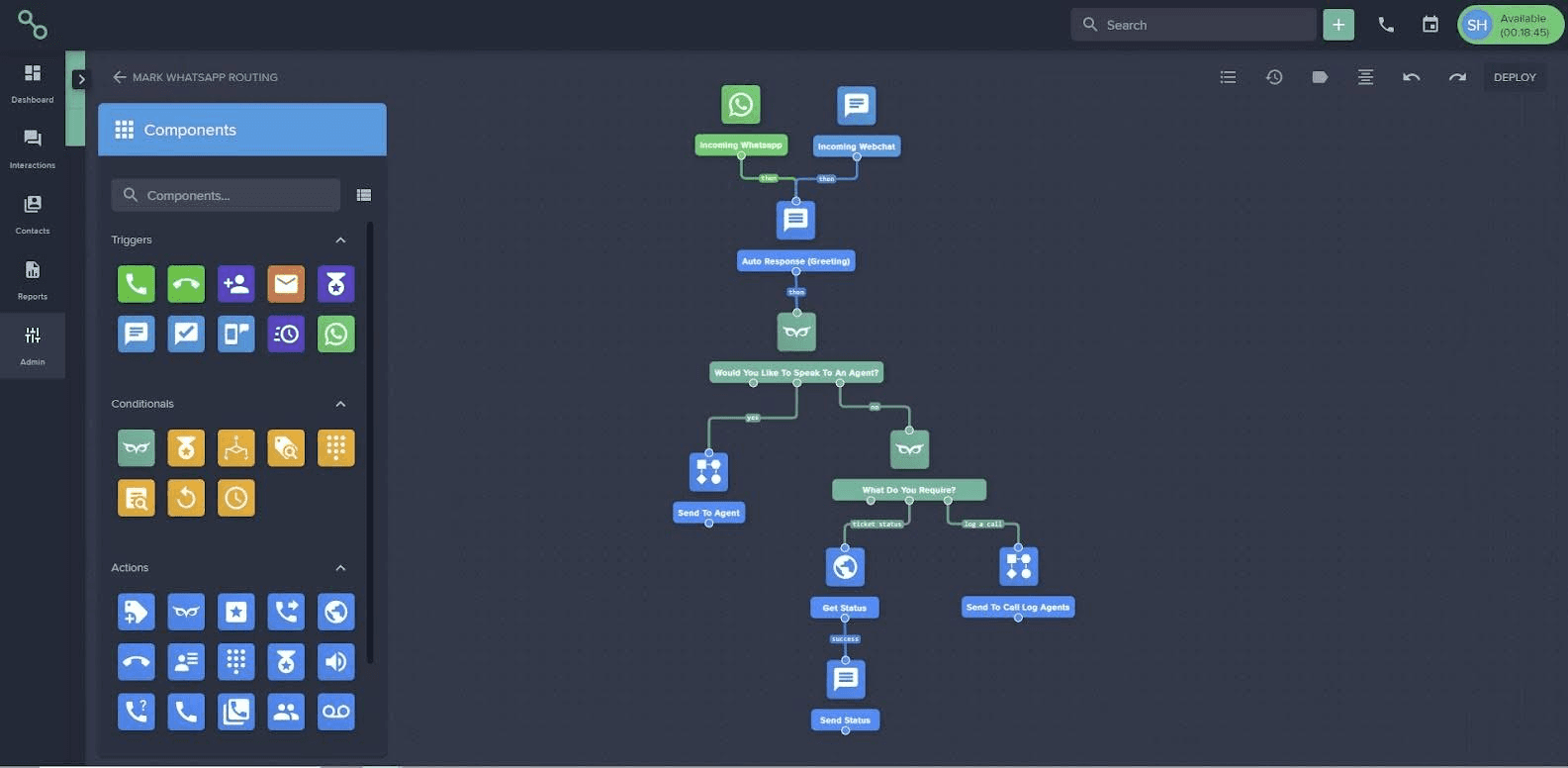
Las herramientas de IA en Centros de Llamadas con funciones de automatización de la experiencia del cliente pueden abordar estos problemas al agilizar los procesos y mejorar la productividad. Algunas de estas herramientas pueden automatizar tareas como el enrutamiento de llamadas y la recuperación de información, permitiendo a los agentes centrarse en interacciones personalizadas de alto valor. Un ejemplo es Flow, la herramienta de mapeo de viajes del cliente y automatización de flujos de trabajo de ConnexAI. Con Flow, un usuario puede diseñar mapas de flujo de trabajo de servicio al cliente en una interfaz intuitiva e integrar herramientas como el Análisis de Palabras Clave, el Reconocimiento de Entidades, ASR (Reconocimiento Automático de Voz) y Agentes de IA conversacionales para optimizar interacciones y viajes completos del cliente. Estas tecnologías pueden categorizar consultas de clientes y enrutarlas automáticamente al agente adecuado en función de las habilidades necesarias, disponibilidad o requisitos de idioma.
Para saber más sobre cómo Flow se puede usar para automatizar tareas, recorridos y flujos de trabajo en el Centro de Contacto, puede leer algunos de nuestros artículos sobre nuestra herramienta de software de Automatización del Servicio al Cliente.
7. Pronóstico y Análisis Predictivo de IA
Al utilizar algoritmos avanzados y datos de interacción históricos, las funciones de pronóstico de IA en Centros de Llamadas pueden predecir futuros volúmenes de llamadas y tendencias de carga de trabajo. Esto favorece la planificación operativa al alinear los niveles de personal con las demandas de servicio al cliente en evolución, lo que permite la toma de decisiones proactiva y basada en datos.
Una de las principales ventajas es anticipar con precisión las necesidades de personal. La IA puede prever momentos pico de llamadas, picos estacionales y otros patrones, ayudando a los gerentes a programar agentes, asignar recursos de manera eficiente y mantener una cobertura óptima. Esto reduce los riesgos de tiempos de espera prolongados por falta de personal o costos innecesarios por exceso de personal, mejorando la eficiencia general.
Además, el pronóstico facilita la gestión del presupuesto y la planificación de recursos. Al alinear los recursos financieros con los requisitos de personal previstos, las organizaciones pueden controlar costos, maximizar la productividad de los agentes y evitar gastos innecesarios.
Como puedes ver, hay múltiples funcionalidades de IA en Centros de Llamadas con el potencial de reducir masivamente las horas-hombre dedicadas a ciertas tareas, como la evaluación de llamadas, el enrutamiento de llamadas o el manejo de consultas rutinarias. Sin embargo, esto nos lleva a una pregunta que hemos insinuado antes: ¿dónde encaja el componente humano en todo esto? Considéremoslo en la próxima sección.
How is AI transforming traditional IVR systems through ASR and NLP?
Can Sentiment Analysis go beyond customer satisfaction measurement?
How does AI Coaching differ from traditional agent training?
How does Predictive Analytics improve long-term strategic planning?
Will Call Centre AI replace the human agent?
As we have seen, multiple AI features can contribute to streamlining call centre operations, help agents fulfill their duties faster, and relieve them of menial tasks or routine interactions.
However, it’s crucial to remember something: at its core, customer service is all about human concerns and interactions. What call centre agents do best is assisting and tending to the individual on the other end of the line, ensuring they feel acknowledged and supported. In this context, the human element is indispensable and can’t easily be replaced with Call Centre AI.
AI faces several challenges in replicating human interactions, primarily in expressions of emotion, humor, and contemporary language usage. Despite advancements in Call Centre AI technology, artificial intelligence often struggles to convey emotions effectively, resulting in delayed or unnatural responses that can disrupt the illusion of human interaction. Fake apologies, insincere compliments, and empty condolences generated by AI can be jarring and unconvincing to users.
Furthermore, the rapid evolution of language, including slang and cultural references, poses a significant obstacle for AI to keep up with the latest trends and nuances in human communication. While machines are continuously learning and improving, the complexity and fluidity of human interactions make the task of replicating them convincingly an ongoing challenge for AI developers.
How Call Centre AI is Transforming Customer Service Across Key Industries
Servicio al Cliente
Naturalmente, el software del centro de atención telefónica impulsado por IA encuentra aplicaciones inmediatas e impactantes en el ámbito del servicio al cliente y el compromiso con el cliente. El uso de IA en los centros de atención telefónica para el servicio al cliente es cada vez más común debido a su capacidad para mejorar la eficiencia, reducir costos y mejorar la experiencia del cliente, gracias a características como IA Conversacional, Análisis de Interacción con el Cliente mediante IA o Análisis de Discurso.
Por ejemplo, Intelling, un BPO líder con más de 1000 empleados en el Reino Unido e Irlanda del Norte, experimentó un aumento significativo en el ROI para sus clientes tras implementar una solución de IA para centros de atención telefónica como ConnexAI. Al aprovechar el módulo de IA Conversacional del agente especializado Athena, impulsado por LLM, para gestionar las interacciones con los clientes y utilizar el módulo de Análisis mediante IA —que incluye características como Análisis de Sentimientos y Análisis de Frases Clave— Intelling logró mejoras notables en la eficiencia y efectividad de sus operaciones. “La plataforma también nos ha ayudado a poder conectar los viajes del cliente desde un correo electrónico hasta un chat web, utilizando el módulo chatbot de IA”, dijo Craig Winnard, Director Comercial del Grupo en Intelling. “Esto puede luego transferirse a una interacción más personal y compleja que requiere levantar el teléfono y hablar con alguien. Realmente brinda un recorrido más completo y pone más poder en manos de los clientes, en lugar de simplemente ofrecer la opción de autoservicio o hablar con alguien, ahora podemos dar ambas opciones. Como resultado, nuestras estadísticas de rendimiento del cliente reflejan eso.”
Logística y Transporte
Las empresas de transporte y logística pueden beneficiarse de la IA en los centros de atención automatizando tareas como el seguimiento de envíos, actualizaciones de entrega y resolución de problemas comunes como recogidas perdidas o retrasos. Los Agentes IA pueden manejar grandes volúmenes de llamadas las 24 horas, proporcionando respuestas instantáneas y precisas a consultas sobre horarios de carga, cambios de ruta o documentación de aduanas. Características avanzadas como la integración en tiempo real con sistemas de gestión de flotas permiten a las empresas ofrecer ETAs precisos y actualizaciones de estado. Además, el Análisis mediante IA puede identificar cuellos de botella en las operaciones, optimizar rutas de entrega y predecir retrasos potenciales, ayudando a las empresas a mejorar la eficiencia y la satisfacción del cliente. Esta combinación de automatización, conocimientos en tiempo real y gestión proactiva de problemas posiciona a las empresas de logística para satisfacer las crecientes expectativas de los clientes mientras reducen costos.
Risetek Global, una destacada empresa de estacionamiento y transporte en EE. UU., opera en varios estados y busca expansión global. La conectividad fluida y el servicio al cliente de primer nivel son vitales para su éxito en un mercado dinámico, y es por eso que la plataforma de software de centros de atención ConnexAI se ha convertido en una parte esencial de sus operaciones. Risetek vio una mejora en la eficiencia, una mayor conectividad y tasas de resolución gracias a herramientas como el Agente Conversacional Athena AI y AI Guru, una característica de entrenamiento que asiste a los agentes durante las conversaciones al recomendar recursos para respuestas completas y sugerir oportunidades de venta adicional. Este enfoque optimizado ha posicionado a Risetek para el éxito en la competitiva industria de estacionamiento y transporte. Puedes escuchar más sobre la contribución de ConnexAI al éxito de Risetek en este video:
Finanzas y seguros
Las soluciones de IA para centros de atención telefónica también pueden ser un activo significativo para las empresas de finanzas, banca y seguros. Estas soluciones pueden contribuir a mejorar el soporte al cliente, mejorar la eficiencia operativa y garantizar el cumplimiento de los estándares regulatorios. La IA Conversacional puede manejar consultas rutinarias, tales como saldos de cuenta, historiales de transacciones, detalles de pólizas o estado de reclamos, proporcionando respuestas precisas e inmediatas las 24 horas. Características avanzadas como la detección de fraudes y la verificación de identidad pueden integrarse para gestionar de manera segura tareas delicadas como el procesamiento de pagos o actualizaciones de pólizas. El análisis de sentimientos ayuda a identificar clientes insatisfechos, permitiendo una escalada oportuna a agentes humanos para casos complejos o de alta prioridad. En el sector de seguros, la IA puede agilizar el procesamiento de reclamaciones recopilando y verificando la información requerida, reduciendo los tiempos de ejecución.
Además, el análisis mediante IA puede identificar patrones de comportamiento del cliente, predecir la rotación y proporcionar información para la planificación financiera personalizada u ofertas de seguros. Al combinar automatización, seguridad y conocimientos en tiempo real, la IA en los centros de atención ayuda a las empresas de finanzas y seguros a ofrecer un servicio excepcional mientras optimizan sus procesos.
Salud
En el sector de la salud, donde la participación del paciente y un buen servicio al cliente son vitales para fomentar la confianza y la satisfacción, las interacciones efectivas, fluidas y personalizadas son cruciales. Es por eso que muchas agencias de salud, como Medicare Exacto, necesitan un Sistema de Gestión de Interacción con el Cliente para garantizar que las conversaciones con los pacientes sean útiles, informativas y sin complicaciones.
La suite ConnexAI está en el centro de esta transformación, presentando un agente de IA altamente especializado basado en un poderoso Modelo de Lenguaje Extenso (LLM) con conocimiento en profundidad, específico del dominio, de Medicare y sus complejidades. Este Agente IA no solo está equipado para proporcionar información precisa y en tiempo real, sino que también habla en un tono que refleja la voz de marca personalizada de Medicare Exacto, asegurando consistencia y personalización en cada interacción. La funcionalidad de Análisis mediante IA fortalece aún más el sistema al proporcionar conocimientos basados en datos e inteligencia de rendimiento, empoderando a los clientes y agentes con un entendimiento más profundo y mayor visibilidad en sus decisiones de cobertura de salud. Juntas, estas características posicionan a Medicare Exacto para ofrecer un servicio superior mientras mantienen un profundo entendimiento de las necesidades de sus clientes.
Puedes ver este video para descubrir cómo mejoró el compromiso de los clientes de Medicare Exacto con la suite Athena AI de ConnexAI.
Viajes
La industria de los viajes también puede beneficiarse en gran medida de la IA en los centros de atención telefónica. Los Agentes IA pueden manejar grandes volúmenes de consultas rutinarias, como modificaciones de reservas, horarios de vuelos, reservas de hoteles o políticas de reembolso, ofreciendo respuestas instantáneas y precisas las 24 horas. Las características de automatización pueden impulsar actualizaciones de itinerario en tiempo real, notificaciones meteorológicas y asesoramiento de viaje local mejorando la experiencia del cliente al abordar proactivamente las necesidades de los viajeros. Además, el análisis mediante IA puede rastrear las preferencias de los clientes, permitiendo que las empresas de viajes ofrezcan ofertas personalizadas, recompensas de lealtad e itinerarios adaptados.
La IA también puede desempeñar un papel crucial en la previsión de la demanda, el comportamiento del cliente y las tendencias del mercado. Al analizar datos históricos de interacciones con clientes, reservas y consultas, la IA puede predecir periodos pico de viajes, identificar destinos emergentes y prever fluctuaciones en las preferencias de viaje. Esto permite a las empresas ajustar precios, personal e inventario en consecuencia para optimizar ingresos y mejorar la satisfacción del cliente. Los análisis impulsados por IA también pueden ayudar a prever posibles interrupciones, como retrasos por el clima o cambios en las regulaciones, permitiendo a las empresas gestionar de manera proactiva las expectativas del cliente y mejorar la eficiencia operativa. Con previsiones precisas, las empresas de viajes pueden planificar mejor campañas de marketing, promociones y ofertas de servicio, asegurándose de cumplir con la demanda del cliente mientras minimizan costos y maximizan oportunidades en un mercado en constante evolución.
Legal
La integración de la IA en el sector legal está transformando cómo los bufetes de abogados interactúan con los clientes. Los sistemas impulsados por IA pueden manejar eficientemente grandes volúmenes de consultas, proporcionando respuestas instantáneas a preguntas sobre procedimientos, actualizaciones de casos o requisitos de documentos. Esto reduce los tiempos de espera mientras libera al personal humano para centrarse en tareas complejas que requieren experiencia legal. El procesamiento avanzado del lenguaje natural permite que estos sistemas entiendan consultas específicas al contexto, haciendo las interacciones más conversacionales que los menús automáticos tradicionales.
Más allá de la comunicación con los clientes, la IA puede apoyar la gestión de casos y el cumplimiento registrando conversaciones, señalando problemas críticos y sugiriendo los próximos pasos, priorizando llamadas urgentes, remitiéndolas al abogado adecuado y asegurando que los detalles relevantes del caso sean inmediatamente accesibles. Si bien la IA no puede reemplazar el juicio de abogados capacitados, actúa como un multiplicador de fuerza, mejorando la eficiencia, la satisfacción del cliente y la accesibilidad, mientras genera información sobre preocupaciones recurrentes de los clientes con el tiempo.
Pathway Law, un bufete de lesiones personales en California especializado en accidentes automovilísticos, creció de una práctica en un solo estado a atender clientes en siete estados y cuatro zonas horarias. Sin embargo, su rápido crecimiento creó cuellos de botella en la captación de clientes, ralentizando las conversiones y tensionando al personal. Para abordar esto, la firma implementó ConnexAI, automatizando el alcance inicial, la pre-calificación y la programación de citas mientras mantenía interacciones consistentes en la marca a través de zonas horarias, con un tono personalizable y cambio automático entre inglés y español. La participación inmediata y la captura de datos automatizada redujeron la pérdida de prospectos, aceleraron la retención de clientes y liberaron a los abogados para centrarse en trabajos de mayor valor. La integración con Salesforce habilitó resúmenes de llamadas automatizados, archivos de casos pre-calificados y supervisión proactiva, mientras los análisis impulsados por IA aseguraron calidad, cumplimiento y una mayor confianza del cliente. Como resultado, Pathway vio un aumento del 30% en la tasa neta de conversión y un aumento de diez veces en las interacciones con los clientes.

How can AI improve operations in logistics and transportation?
How does AI support finance and insurance companies?
What role does AI play in healthcare customer service?
How can the travel industry leverage Call Centre AI?