Omnichannel, the New Standard in Customer Experience
You have probably heard the word Omnichannel before. You might also have an idea of some of the term’s implications. After all, Omnichannel Customer Experience has experienced a tremendous upsurge in the last few years across the marketing, retail, and customer service landscapes. An Omnichannel strategy involves integrating all physical and online customer interaction channels for a seamless brand experience. It improves Customer Experience by providing unified interactions across various touchpoints, ensuring personalized engagement while maintaining brand consistency.
For many companies and brands today, omnichannel software is key to how they do business. However, you might still have some questions about the true meaning of Omnichannel and, more importantly, what it can mean for your business.
In the present context, trying to find an answer to those doubts is one of the best decisions you can make. In 2026, Omnichannel Customer Experience is becoming more and more essential to modern business, to the point where it’s becoming a must in many fields to remain competitive. Today, having a communications strategy and plan in place for Omnichannel marketing is essential because it ensures that your messaging is consistent across all channels. By creating a strategic approach to communication, you can effectively reach your target audience, maintain brand coherence, and avoid repetition that may lead to customer disengagement.
A well-developed communications strategy considers the varying preferences and behaviors of different audience segments, enabling you to tailor your messages accordingly. Additionally, it helps you identify the most efficient channels to engage with your audience, ultimately leading to a more impactful and successful marketing campaign.
With this article, we’ll try to respond to all the questions you might have about the meaning of Omnichannel. As we will show throughout the next lines, in 2026 it can safely be said that Omnichannel is steadily becoming the new standard across industries.
Now more than ever before in history, businesses are expected to offer a personalised customer experience. There are two causes for this: the first one is technological evolution and an increase in options and channels for customer communication and engagement; the second is a rise in customer expectations for a personalised experience.
Naturally, these two causes are interconnected: the more available communication channels exist, the more varied people’s preferences on which of them to use and how will be. This, in a nutshell, explains why in 2026 it’s essential to provide your customers with the full Omnichannel experience.
But first, let’s start with the basics: what do we talk about when we talk about Omnichannel?
What is Omnichannel and why it's the future of Customer Experience
The word “omnichannel”, derived from Omnis, the Latin word for “all/every”, literally means “all channels”. The term is used throughout the marketing, retail, and customer service industries to refer to an integration of all physical and online channels relevant to how a customer perceives and interacts with a business.
One of the earliest formulations of Omnichannel was suggested by Frost & Sullivan, who used it to refer to “seamless and effortless, high-quality customer experiences that occur within and between contact channels”.
And there is a key word there: experience.
First and foremost, Omnichannel is a method for improving Customer Experience. In a nutshell, its purpose is to provide customers with a unified, cohesive brand experience regardless of how they engage with or interact with the brand. Interactions can occur in person at physical stores, online (for example, by browsing the brand’s website or asking a question on social media), or through other means, such as calling customer service representatives.
The ideal Omnichannel Customer Experience will encompass all those experiences and coordinate them with each other. In this way, an omnichannel strategy will allow customers to engage with a brand through their preferred channels, thus giving a personalised experience to every customer, all while retaining and conveying a cohesive, unified brand experience.
The essence of omnichannel involves integrating all physical and online customer interaction channels to create a seamless brand experience.
As we have mentioned earlier, the Omnichannel experience has been becoming more and more widespread in the retail, marketing, and customer service fields, to the point where it can rightfully be called the “new normal” when it comes to Customer Experience. The reason is as simple as it is undeniable: customer behaviour has changed tremendously over the last few years, and businesses have no choice but to adapt.
In the next section, we’ll consider some of the changes that have occurred in the Customer Experience and business landscape over the last years, how those have affected customers’ expectations and preferences, and how all this relates to Omnichannel. We’ll also look at some data to illustrate how and why omnichannel is becoming the new standard in Customer Experience.
What does “Omnichannel” mean?
Why is Omnichannel Customer Experience important in 2026?
How does Omnichannel improve Customer Experience?
Summary
Omnichannel Customer Experience involves integrating all physical and digital customer interaction channels to deliver a seamless, personalized, and consistent brand experience, which has become increasingly essential in 2026 due to evolving technology, rising customer expectations, and the need for unified communication strategies across marketing, retail, and customer service.


Why is the Omnichannel Experience Taking Over?
Hay muchas razones por las que la Experiencia del Cliente Omnicanal y el software Omnicanal se están convirtiendo rápidamente en el nuevo estándar.
Como mencionamos anteriormente, el rápido avance de la tecnología de comunicación es una gran parte de este cambio. Hoy en día, las empresas tienen más formas que nunca para llegar a los clientes, y los clientes tienen más opciones para interactuar con las marcas. Desde redes sociales y SMS hasta sitios web y aplicaciones de marcas, además de tiendas físicas, eventos y canales tradicionales como el teléfono y el correo electrónico, el panorama nunca ha sido más diverso.
Con tantas opciones de comunicación, no es sorprendente que los propios clientes tengan preferencias variadas, y aún más revelador, la mayoría prefiere utilizar múltiples canales cuando interactúan con sus marcas favoritas, como exploraremos más adelante. Este hecho ayuda a explicar por qué el enfoque omnicanal ha ganado popularidad frente a alternativas como la participación multicanal. Profundizaremos en las diferencias entre estos enfoques pronto.
Pero volviendo al punto principal: el comportamiento del cliente ha cambiado drásticamente en los últimos años.
Allá por, digamos, 2008, el número de canales de comunicación era mucho más limitado. El iPad aún no había sido lanzado, Facebook dominaba las redes sociales y tener una aplicación de marca era casi inaudito. Para ponerlo en perspectiva, Jeff Bezos ocupaba el puesto 68 en la lista de multimillonarios de Forbes.
Obviamente, las cosas han cambiado tremendamente en menos de 15 años. La investigación de Goodman reveló que, en 2023, las compras en comercio electrónico representan un total del 25% de las ventas minoristas totales; las redes sociales son el nuevo frente principal para la visibilidad y el compromiso del cliente; y los clientes utilizan muchos canales diferentes para comunicarse en su vida diaria y para interactuar con sus marcas favoritas.
Estos cambios han sido precipitados principalmente por la evolución de las tecnologías de comunicación y las redes sociales, pero también por otros eventos como la reciente pandemia o la aparición y supremacía del comercio electrónico y las compras en línea.
En este contexto, es fácil ver por qué la Experiencia Omnicanal es el caballo ganador en 2025. Una estrategia que integra y coordina todos los canales de compromiso disponibles ya no es solo algo agradable de tener: es simplemente necesario para satisfacer las demandas del consumidor actual.
Cuando se presentan estadísticas sobre la evolución del comportamiento del cliente, es difícil negar la necesidad de una experiencia del cliente omnicanal en el paisaje de compromiso con el consumidor de hoy.
Hemos recopilado algunas cifras clave que ilustran el impacto del omnicanal. Echemos un vistazo a ellas.
La importancia de la Experiencia del Cliente para los negocios actuales
Para empezar, podemos observar algunas estadísticas que demuestran la importancia de la Experiencia del Cliente para las marcas y consumidores actuales.
El 74% de los consumidores es probable que compren basándose únicamente en experiencias (Forbes / Arm Treasure Data)
La investigación de American Express encontró que el 86% de los clientes está dispuesto a pagar más por una mejor experiencia.
Según un estudio del Grupo Temkin, las empresas que ganan mil millones de dólares anualmente pueden esperar ganar, en promedio, 700 millones de dólares adicionales dentro de los 3 años posteriores a invertir en la experiencia del cliente.
Un estudio de Oracle revela que el 89% de los clientes han dejado una marca debido a una mala CX.
Más de 4 de cada 5 consumidores dejarían una marca que aman después de tres o menos instancias de mala CX, y alrededor de 1 de cada 5 lo haría después de solo una instancia. (Emplifi)
9 de cada 10 clientes no volverán a comprar de una empresa después de tres o menos interacciones de servicio al cliente deficiente (Fuente: Customerthink).
Como puede ver, los clientes de hoy valoran la experiencia ofrecida por una marca casi tanto como su producto, si no incluso más.
Experiencia Omnicanal, la Elección del Cliente
Ahora, veamos cómo este aumento en las expectativas sobre CX ha hecho que los clientes se inclinen hacia las empresas que ofrecen experiencias omnicanal:
En los últimos 5 años, el número de compradores digitales ha aumentado en un 40%. Durante el mismo período, los volúmenes de ventas en línea aumentaron en un 218%
El Reino Unido es el país donde los clientes gastan más en compras en línea, con un gasto promedio anual de £4,000 por persona. El 70% de los británicos prefiere comprar en línea en lugar de ir a una tienda física.
El 59% de los compradores encuestados dicen que poder comprar en móvil es importante al decidir de qué marca o minorista comprar.
Datos de RetailMeNot concluyeron que el 69% de los consumidores había utilizado sus dispositivos móviles para verificar productos en casa, con el 53% que había usado sus teléfonos inteligentes para verificar reseñas antes de hablar con un empleado de la tienda.
El 98% de los consumidores cambia entre dispositivos el mismo día para comunicarse con sus marcas favoritas, y esperan la misma experiencia de la marca cada vez.
Un estudio realizado por Harvard Business Review encontró que alrededor del 73% de los consumidores prefieren comprar a través de múltiples canales.
Aproximadamente el 40% de los clientes esperan contactar al mismo representante de servicio al cliente a través de cualquier canal, y casi el 50% de los compradores en la tienda esperan que los empleados de ventas tengan conocimientos sobre productos exclusivamente en línea.
En una encuesta, Salesforce encontró que el 75% de los consumidores esperan una experiencia consistente a través de múltiples canales de compromiso. Y lo que es más: el 73% declara que probablemente cambiarán de marca si no lo obtienen.
No es difícil discernir por qué los clientes de hoy prefieren el omnicanal. Como hemos visto anteriormente, la multiplicidad de opciones de comunicación y canales y los clientes más empoderados resulta en la segmentación de diferentes tipos de compradores con diferentes preferencias cuando se trata de experiencia del cliente y compromiso.
Experiencia del Cliente Omnicanal y su impacto para los negocios
Finalmente, veamos cómo la decisión de adoptar o no una sólida estrategia omnicanal afecta a las empresas:
Se ha encontrado que las tasas de retención de clientes son un 90% más altas para campañas de marketing omnicanal que para aquellas que se centran en el marketing de un solo canal.
Las empresas con estrategias de compromiso del cliente omnicanal retienen en promedio el 89% de sus clientes. En contraste, las empresas con estrategias omnicanal débiles muestran tasas de retención de clientes de solo el 33%.
Además, un informe de Omnisend reveló que los comercializadores que utilizan 'tres o más' canales en cualquier campaña obtuvieron una tasa de compra un 287% más alta que aquellos que utilizan una campaña de canal único. (Omnisend, 2020).
Según Think with Google, las estrategias omnicanal generan una tasa de visitas incrementales a la tienda un 80% más alta por parte de los consumidores
Algunas investigaciones estiman que los minoristas pierden entre el 10% y el 30% de las ventas cuando no cumplen con las expectativas de compras omnicanal.
Datos de Google también mostraron que los compradores omnicanal tienen un valor de vida útil un 30% más alto que aquellos que compran utilizando solo un canal; en otras palabras, generan más ingresos. Cuando se considera que generalmente cuesta entre 5-30 veces más para conseguir nuevos clientes que retener los que ya tienes (Finextra), esto realmente ayuda a poner las cosas en perspectiva.
Las empresas con una fuerte Experiencia del Cliente Omnicanal ven un incremento del 10% año tras año en ingresos anuales, comparado con el 3.4% para empresas omnicanal débiles.
¿Qué pueden hacer estos hallazgos clave sobre Omnicanal para su éxito?
Considerado todo, es fácil entender por qué la Experiencia Omnicanal está convirtiéndose constantemente en el nuevo estándar para el compromiso con el cliente. Podemos resumir todos estos datos con un simple argumento, compuesto por tres premisas y dos conclusiones:
Premisa 1: Ahora, los clientes tienen más opciones y canales para obtener información sobre productos y marcas, y es cada vez más fácil para ellos explorar esas opciones. De hecho, prefieren utilizar diferentes canales al participar con una marca o aprender sobre ella.
Premisa 2: Como resultado, terminan dedicando una cantidad significativa de tiempo antes de su compra (¡pero también después de ella!) buscando información sobre su producto y el de sus competidores a través de diferentes canales.
Premisa 3: Las expectativas del cliente también han aumentado en este sentido. El cliente de hoy considera la experiencia ofrecida por una marca como algo tan importante como el producto en sí, y esto se refleja en sus decisiones de compra.
Conclusión 1: Omnicanal representa una mejora significativa en la Experiencia del Cliente de una marca. No solo satisface las expectativas de los clientes de hoy y los hace más leales y propensos a comprar más, sino que también hace que su producto sea más accesible a nuevos clientes.
Conclusión 2: Una marca que adopta una estrategia Omnicanal y satisface las expectativas de CX de clientes cada vez más exigentes, al mismo tiempo que llega a nuevos clientes, superará a aquellos que no lo hacen. A medida que Omnicanal se vuelve más común, las empresas que no adoptan Omnicanal corren el riesgo de volverse irrelevantes u obsoletas y perder clientes e ingresos frente a aquellas que sí lo hacen.
Esperemos que ahora tenga una imagen más clara de la importancia del Omnicanal, por qué tantas empresas lo están adoptando y por qué cada vez más clientes están eligiendo esas empresas por encima de otras. A estas alturas, probablemente se esté preguntando cómo puede implementar una estrategia Omnicanal en su negocio o marca. También le hablaremos sobre eso en las siguientes secciones.
Sin embargo, hay un malentendido común sobre la naturaleza de Omnicanal que debemos abordar antes de pasar a otras preguntas. Desafortunadamente, muchas empresas no comprenden completamente la diferencia entre omnicanal y multicanal. Intentemos aclarar esa distinción.
How has evolving customer behavior made Omnichannel Customer Experience essential?
What are some key statistics demonstrating the power of Omnichannel?
How important is Omnichannel Customer Experience to purchasing decisions?
How does Omnichannel impact sales and marketing performance?
Summary
The Omnichannel Customer Experience is rapidly becoming the new standard because modern customers engage with brands across multiple channels—online, mobile, social media, in-store, and more—and expect seamless, consistent, and personalized interactions. Driven by technological evolution, social media, e-commerce growth, and heightened customer expectations, businesses that adopt omnichannel strategies see higher customer retention, increased revenue, and stronger loyalty, while those that fail to provide a coordinated, multi-channel experience risk losing customers and falling behind competitors.
Omnichannel vs. Multichannel: What’s the difference and which is better for your business?
Desafortunadamente, muchos dueños de negocios y tomadores de decisiones no comprenden completamente la diferencia entre estrategias omnicanal y multicanal.
Esta confusión lleva a muchas marcas a creer que no hay nada fundamentalmente incorrecto en cómo interactúan con los clientes. Asumen que simplemente tener múltiples canales—como una página de Facebook o Instagram, o un Chat en Vivo en su sitio web—es suficiente para ofrecer una sólida experiencia de cliente a través de plataformas.
Pero eso no podría estar más lejos de la verdad.
A menudo, estas empresas permanecen completamente ajenas a lo atrás que están en comparación con los competidores cuando se trata de involucrar a los clientes. Como resultado, desperdician valiosos recursos—dinero, tiempo e incluso clientes—al apegarse a un enfoque multicanal, creyendo erróneamente que no hay una diferencia significativa entre eso y el enfoque omnicanal.
Entonces, ¿qué realmente diferencia lo multicanal de lo omnicanal? Vamos a desglosarlo.
En esencia, los términos insinúan la diferencia: “multicanal” significa muchos canales, mientras que “omnicanal” significa todos los canales. Esto señala una distinción clave—multicanal añade más opciones para que los clientes se conecten, pero el omnicanal va más allá integrando todos esos canales sin problemas. Sin embargo, la integración es el factor crucial que realmente separa a los dos.
En pocas palabras, piense en el dicho: el todo es mayor que la suma de sus partes. Se trata de calidad sobre cantidad.
Con el enfoque multicanal, los clientes pueden contactar a una marca a través de múltiples canales, pero estos operan aislados. Cada interacción está en silos, y el recorrido del cliente en general se siente desarticulado y fragmentado.

Otra forma de verlo es que el enfoque multicanal realmente no es centrado en el cliente—es lo que podríamos llamar “centrado en el canal.” Se enfoca en hacer que una marca sea más accesible al agregar más formas para que los clientes la alcancen, pero no va más allá. No busca mejorar la experiencia general del cliente ni ver esa experiencia como un todo unificado.
En contraste, una estrategia omnicanal pone la perspectiva del cliente en el centro de cada etapa de su recorrido. Ofrecer recorridos de cliente omnicanal significa mucho más que solo dar a los clientes múltiples formas de conectarse; se trata de comprender realmente de dónde viene el cliente para que el negocio pueda servirle mejor y hacer memorable su experiencia.
Como mencionamos antes, el objetivo del omnicanal es crear una experiencia fluida, suave y unificada a través de todos los canales. Pero, ¿qué aspecto tiene eso en la práctica?
3 Características Definitorias de Omnicanal vs. Multicanal
Naturalmente, cada empresa tiene diferentes necesidades y diferentes clientes, por lo que los detalles de sus estrategias de Experiencia del Cliente Omnicanal serán diferentes en cada caso. Sin embargo, hay algo que todas las aproximaciones Omnicanal tienen en común y que las diferencia del Multicanal:
Integrado, no desarticulado
Desde un punto de vista Omnicanal, no basta con que una marca permita a sus clientes llegar a ellos a través de todos los canales. Si bien es cierto que un componente esencial del Omnicanal es la presencia en todos los canales, no es todo lo que hay al respecto. Una forma de expresarlo es que todas las estrategias Omnicanal son multicanal, pero no todas las estrategias multicanal son Omnicanal.
El punto principal de un enfoque Omnicanal es coordinar los esfuerzos de la marca en múltiples canales para crear una experiencia unificada y fluida.
Permitir que el cliente lo contacte a través de cualquier canal es solo el comienzo: lo que busca el Omnicanal es hacer que todas las interacciones se sientan como una sola y hacer que el cliente se sienta escuchado, atendido y cuidado. Esto nos lleva al siguiente punto:
Centrado en el cliente, no en el negocio
Una estrategia Omnicanal se centra primero y ante todo en el cliente. No concibe el uso de diferentes canales solo como otra forma de alcanzar más clientes; lo ve como un medio para crear una experiencia más fluida.
En otras palabras, el objetivo del marketing Omnicanal no es solo aumentar la visibilidad de una marca incrementando la cantidad de canales en los que está presente. Mientras que el multicanal se enfoca en aumentar la presencia a través de canales para que más y más personas sean conscientes de un negocio, con Omnicanal el objetivo es crear una experiencia de cliente consistente para las personas que ya conocen una marca.
No se trata solo de alcanzar y servir a los clientes en diferentes canales: se trata de permitirles cambiar entre esos canales mientras se sienten inmersos en una experiencia de marca consistente y atractiva. También se trata de eliminar tiempos de espera, hacer que el cliente se sienta escuchado y visto en cualquier punto de su recorrido y, idealmente, permitirles hablar con el representante adecuado en cada interacción.
En pocas palabras: Omnicanal asume un marco donde la Experiencia del Cliente es lo que más importa.
Calidad sobre cantidad
Si hay una palabra que podemos usar para resumir la lógica detrás del enfoque Omnicanal y las razones de su éxito, es personalización.
Un enfoque multicanal extenderá la presencia de una marca a través de canales para llegar a más clientes, pero básicamente ahí es donde termina; en tanto que el cliente muestra una preferencia por usar diferentes canales, una estrategia estrictamente multicanal no considerará el recorrido del cliente como un todo; observará cada canal por separado, no cada punto de contacto, qué canales prefieren usar para cada etapa de su recorrido, por qué prefieren usar esos canales, qué puntos de dolor o experiencias desarticuladas están encontrando en el camino, etcétera.
En contraste, una estrategia de marketing omnicanal avanza examinando la relación del cliente con una marca en una escala mayor: su objetivo es coordinar la presencia de la marca en todos los canales para transmitir una experiencia unificada pero personalizada que permita al cliente interactuar con la marca en sus propios términos. Considera múltiples canales no como un fin en sí mismo, sino como una forma de crear experiencias de cliente más sólidas, atractivas, fluidas y memorables.
Summary
Multichannel refers to a strategy where a brand is present on multiple channels—like social media, email, apps, or in-store—but these channels operate independently, often leaving the customer experience fragmented and disconnected. Omnichannel, on the other hand, integrates all these channels so that interactions are seamless, consistent, and personalized, allowing customers to move between platforms without losing context, ensuring a unified and customer-focused experience

How Can Omnichannel Improve Your Customer Interactions and Boost Revenue?
La presencia, la disponibilidad y la velocidad de resolución son claves cuando se trata de la interacción con el cliente. Y eso es exactamente lo que ofrece una experiencia de cliente omnicanal.
Aquí hay siete grandes ventajas de utilizar una plataforma de interacción con el cliente omnicanal.
1. Mayor presencia y alcance
Estar presente en todos los canales permitirá a una marca llegar a cualquier cliente. Hoy en día, hay tantos canales de comunicación como preferencias de los clientes: las encuestas revelan que la generación Baby Boomer aún prefiere hablar con un representante por teléfono al interactuar con una marca, mientras que las generaciones más jóvenes prefieren usar WhatsApp, SMS o redes sociales.
Utilizar todos ellos y permitir transiciones fluidas de un canal a otro hará instantáneamente que una marca sea más accesible tanto para los clientes actuales como los potenciales.
2. Interacciones fluidas y eficientes
No es solo que diferentes personas usen diferentes canales de comunicación; también cambian entre ellos varias veces al día para comunicarse en su vida cotidiana, y es natural que esperen hacer lo mismo cuando hablan con negocios. ¿Recuerdas la cifra que citamos anteriormente? Según Harvard Business Review, el 73% de los consumidores prefieren comprar a través de múltiples canales.
Adoptar un enfoque omnicanal en tu sistema de gestión de interacción con el cliente permitirá a tus representantes atender sin problemas las preferencias de comunicación de los clientes y cambiar las conversaciones a diferentes canales cuando sea necesario.
Omnicanal permite a tus representantes cambiar de canal sin interrupciones: como resultado, las conversaciones con los clientes mejoran en términos de calidad, fluidez y tiempo de resolución. Pero eso no es todo.
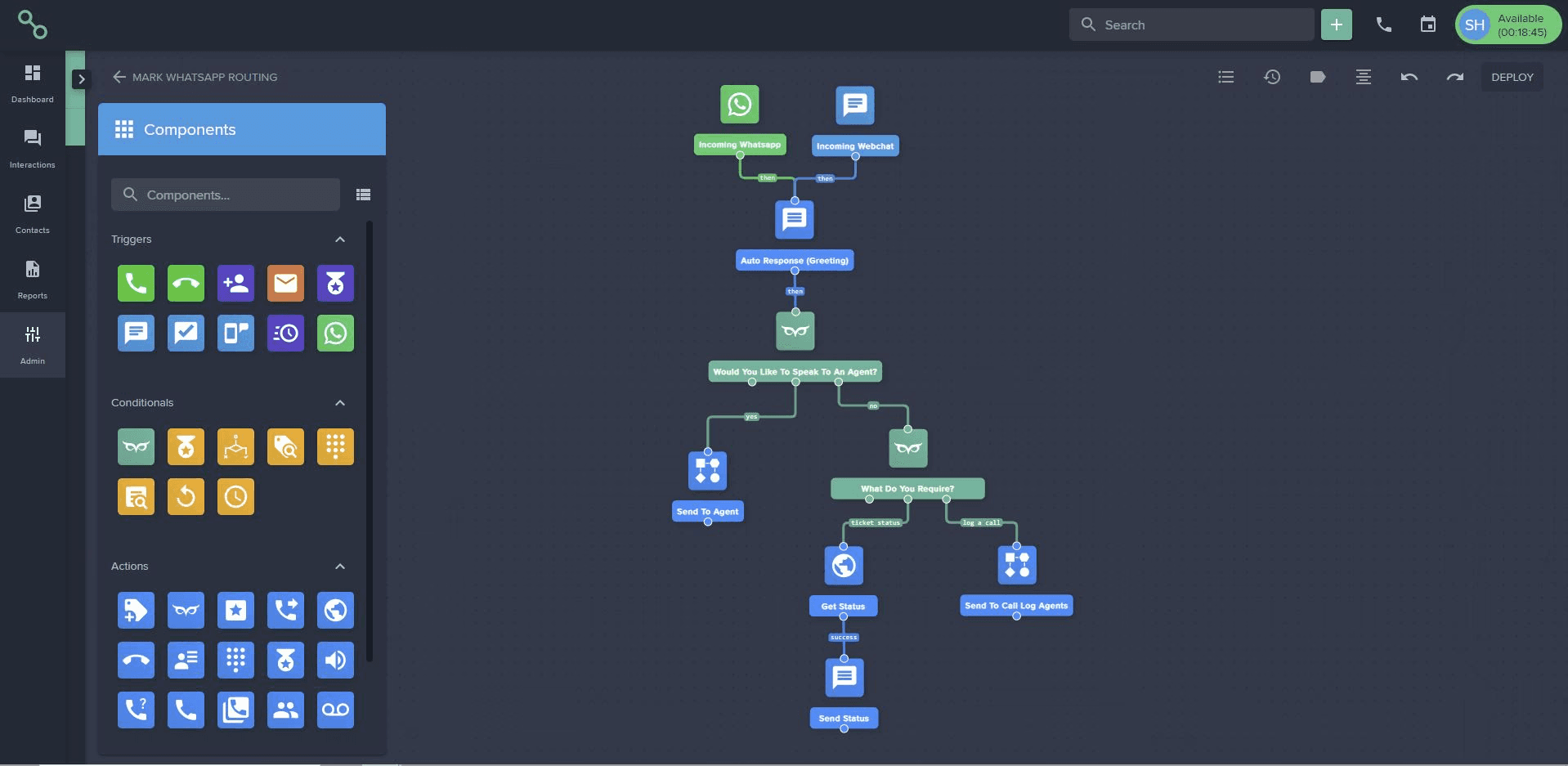
Con Flow, nuestra herramienta de automatización de flujos de trabajo, puedes diseñar recorridos completos del cliente omnicanal incluyendo cualquier canal que prefieran utilizar tus clientes y agentes, crear reglas para decidir cómo, cuándo y bajo qué condiciones debería cambiar la interacción a otro canal, y automatizar todo el proceso, reduciendo los tiempos de espera y mejorando la eficiencia de tus interacciones y la experiencia general de tus clientes.
3. Mejor CX, clientes más felices y leales
Como dijimos anteriormente, omnicanal se trata de mejorar la experiencia del cliente. El objetivo final es establecer un estándar de oro para lo que significa para tu cliente interactuar con tu marca y mantenerlo en todos los canales, creando experiencias consistentemente atractivas.
Según una investigación de Aberdeen Group, las empresas que implementan una solución omnicanal pueden ver hasta un aumento de 23X en sus tasas de satisfacción del cliente! Y no solo eso: los clientes satisfechos también tienen más probabilidades de recomendar un producto o marcas a amigos, de dejar reseñas positivas en línea o de inscribirse en programas de lealtad.
4. Mejor recopilación de datos
Adoptar una estrategia omnicanal no solo hará que los recorridos de tus clientes sean más fluidos y satisfactorios; también te proporcionará una visión privilegiada del comportamiento y preferencias de tus clientes a través de los canales.
La analítica de interacciones con el cliente omnicanal facilitará una comprensión más completa de lo que desean tus clientes, lo que esperan y cómo, dónde y cuándo prefieren interactuar con tu marca. También aprenderás qué tipo de campañas funcionan mejor y crean el mayor valor. Al incorporar estos conocimientos en su estrategia general, las marcas pueden seguir mejorando la experiencia del cliente y optimizar su gasto en medios.
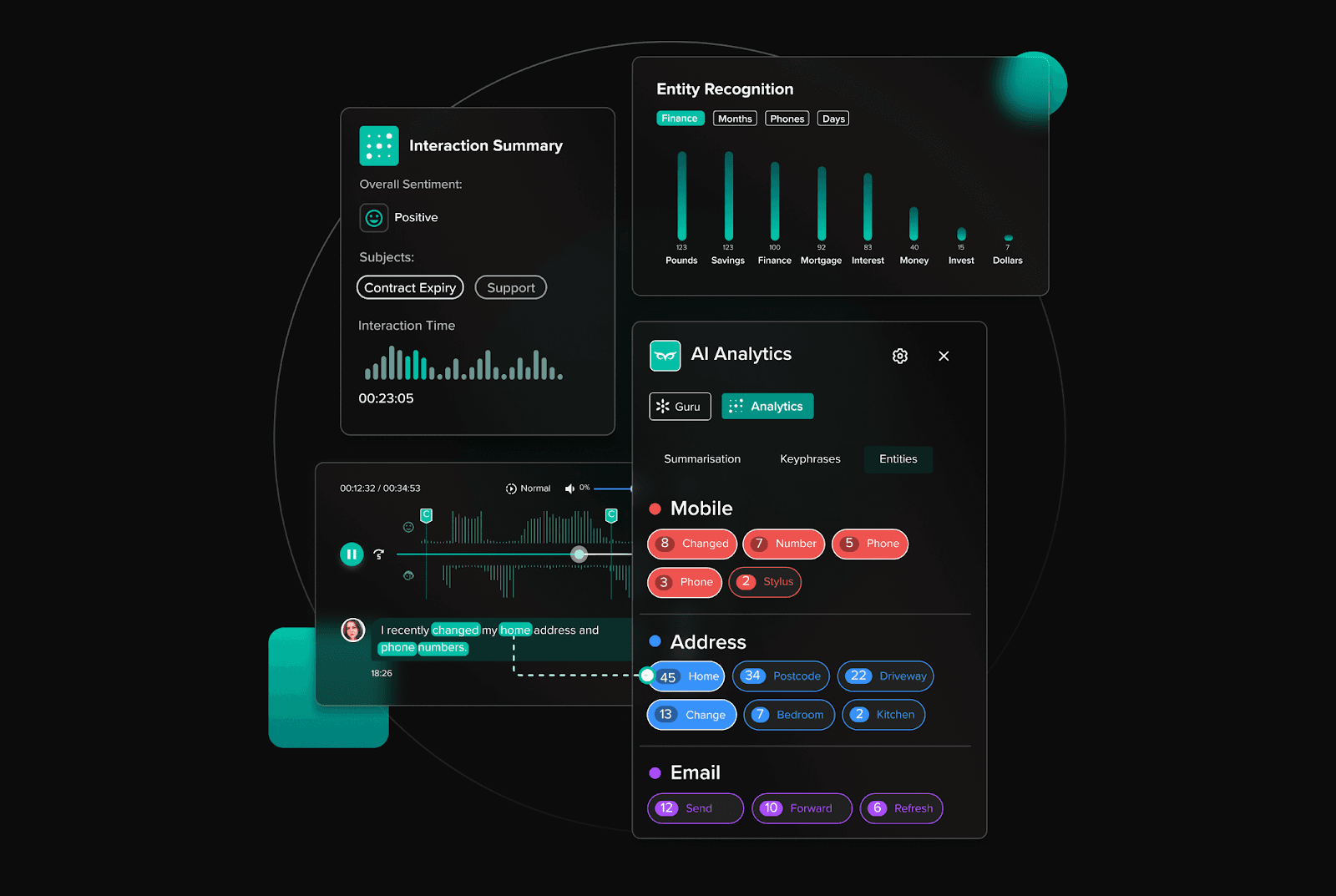
Aún más: algunas plataformas Omnicanal, como ConnexAI, vienen con una gama de herramientas de analítica de interacción AI que proporcionarán a tu negocio información inestimable sobre las preferencias, deseos y necesidades de tus clientes. El Análisis de Frases Clave y el Reconocimiento de Entidades, por ejemplo, detectarán con qué frecuencia tus clientes mencionan palabras y frases específicas, informándote sobre tendencias y problemas recurrentes. Además, el Análisis de Sentimiento AI analizará la elección de palabras en las llamadas de tus clientes y evaluará su nivel de satisfacción y compromiso con las respuestas de tus representantes.
5. Una identidad de marca más consistente
Las estrategias omnicanal desempeñan un papel fundamental en transmitir una identidad de marca consistente y convincente. Al adoptar un enfoque omnicanal, las empresas pueden garantizar que su mensaje y valores de marca se comuniquen de manera uniforme a través de todos los puntos de contacto con el cliente, ya sea en línea, en tienda o a través de varios canales de comunicación. Esta consistencia crea una experiencia de marca cohesionada y sincronizada, fomentando la confianza y la lealtad del cliente.
Con omnicanal, los clientes reciben un viaje sin interrupciones donde encuentran los mismos elementos, voz y visuales de la marca, independientemente del canal que elijan. Esta presentación unificada de la marca refuerza su identidad, genera reconocimiento y mejora el recuerdo de la marca.
Al entregar consistentemente una experiencia de marca atractiva, las empresas pueden establecer una identidad de marca fuerte y memorable que resuene con los clientes, fomente conexiones emocionales y las diferencie de los competidores.
6. Mejor visibilidad
Según un reciente estudio de IBM, localizar la información de la cuenta del cliente consume el 75% de una llamada de soporte manual típica (orientada al agente).
Sin embargo, con algunas soluciones de centro de contacto omnicanal de alto nivel, como ConnexAI, la información de interacciones anteriores se almacenará y estará disponible sin importar qué canal esté utilizando el cliente. Con este nivel de visibilidad de datos disponible para los equipos de atención al cliente, pueden pasar más tiempo en la tarea actual y menos tiempo buscando información.
Estos datos útiles también pueden ser utilizados por los representantes de servicio al cliente para informar los siguientes pasos en el recorrido del cliente. Con la habilidad de ver todas las etapas del mapa del recorrido del cliente omnicanal de principio a fin, los agentes pueden entender mejor cada interacción en su contexto más amplio, permitiéndoles trazar con mayor precisión el camino hacia la resolución.
7. Prevención del agotamiento de agentes
El agotamiento de los agentes y la tasa de deserción son los peores enemigos de los centros de contacto. El centro de contacto promedio experimenta una tasa de rotación de agentes que varía entre 30 – 45% por año, costándole a los Centros de Contacto en promedio una estimación de £7000 por empleado para reemplazar.
Según una encuesta de ICMI, el 87% de los agentes de call center reportan niveles de estrés moderados a altos durante su jornada laboral, y el 71% atribuye esto a ineficiencias de sistemas y herramientas.

En la misma encuesta de ICMI, un abrumador 100% de las organizaciones estuvieron de acuerdo en que la moral y satisfacción de los agentes tienen un impacto directo en la experiencia del cliente. Sin embargo, la mayoría de los antiguos agentes de call center citan el estrés, que con frecuencia es causado por herramientas ineficientes, como una de las principales razones por las que dejaron sus trabajos.
“Me molesta que cuando preguntas a los líderes empresariales qué es lo más importante para ellos, te digan que es la experiencia del cliente, el servicio al cliente”, dice Justin Robbins, analista senior de ICMI. “Pero la realidad es que sus acciones son completamente contrarias a eso. Saben que sus agentes están estresados, y la razón principal es que sus herramientas y tecnología no son eficientes”.
Para combatir estos problemas y mejorar la experiencia del agente, muchas empresas están recurriendo al software omnicanal para liberar a los agentes del estrés de tareas menores, repetitivas y arduas, permitiéndoles centrarse en construir relaciones con los clientes sin el riesgo de agotamiento.
Esperemos que ahora entiendas lo importante que es el CX Omnicanal para los negocios modernos y cómo puedes aprovecharlo para crear mejores experiencias de marca e interacción con el cliente. Ahora, pasemos a la práctica de cómo implementar un enfoque omnicanal.
What makes Omnichannel customer engagement important?
How does Omnichannel improve interactions?
Can Omnichannel help businesses understand their customers better?
How does it affect customer satisfaction and loyalty?
How to implement an Omnichannel strategy
To create an effective omnichannel customer experience, it’s crucial to consider how customers interact with your brand as a whole, rather than just focusing on individual channels. Here are a few key essentials to keep in mind when developing an omnichannel strategy:
1. Know your customer
The first thing you should do before implementing an omnichannel CCaaS solution is to figure out how you’re going to use it. Naturally, the first step in this stage is to know what your customer cares about, what type of experience they would like to have, and their preferred communication channels.
This doesn’t mean you need to have it all set in stone; as a matter of fact, going fully omnichannel will probably give you a more complete picture of your customers’ behaviour and preferences, which will help you later on to provide more personalised and satisfactory levels of customer experience.
However, it’s absolutely essential that you start your omnichannel journey with a purpose: getting to know your customers and give them exactly what they want and expect.
The best way to do that is to ask questions. Gather customer feedback, get insights from customer service and sales representatives, and learn all you possibly can about how to best engage your customers.
For successful Omnichannel marketing, focus on collecting data that is essential and relevant to your marketing objectives. Ensure that you adhere to GDPR regulations while capturing data on various touch points and interactions, beyond just the usual transactional activities. Valuable data should be current, precise, and aligned with the goals of your marketing strategies.
Any information you can extract from customer data analysis will also be of invaluable help before you move on to the next step.
2. Build a customer journey map
Then, you should create a customer journey map; or, in other words, a visual representation of all the touchpoints your customer goes through when engaging with your brand.
Here, you want to contemplate each channel and how it fits into the customer journey as a whole. Some customers might prefer asking about products via email, while others might prefer using Live Chat or reaching out through social media; in that case, you may want to compose different customer journey maps for different types of clients.
Map everything that happens from the first moment your customer hears about you to the moment they decide to make a purchase; you shouldn’t forget to include decisive events like the customers’ individual work of research about your product, their comparison between you and your competitors, and every experience leading up to their decision about whether they should buy from you or not.
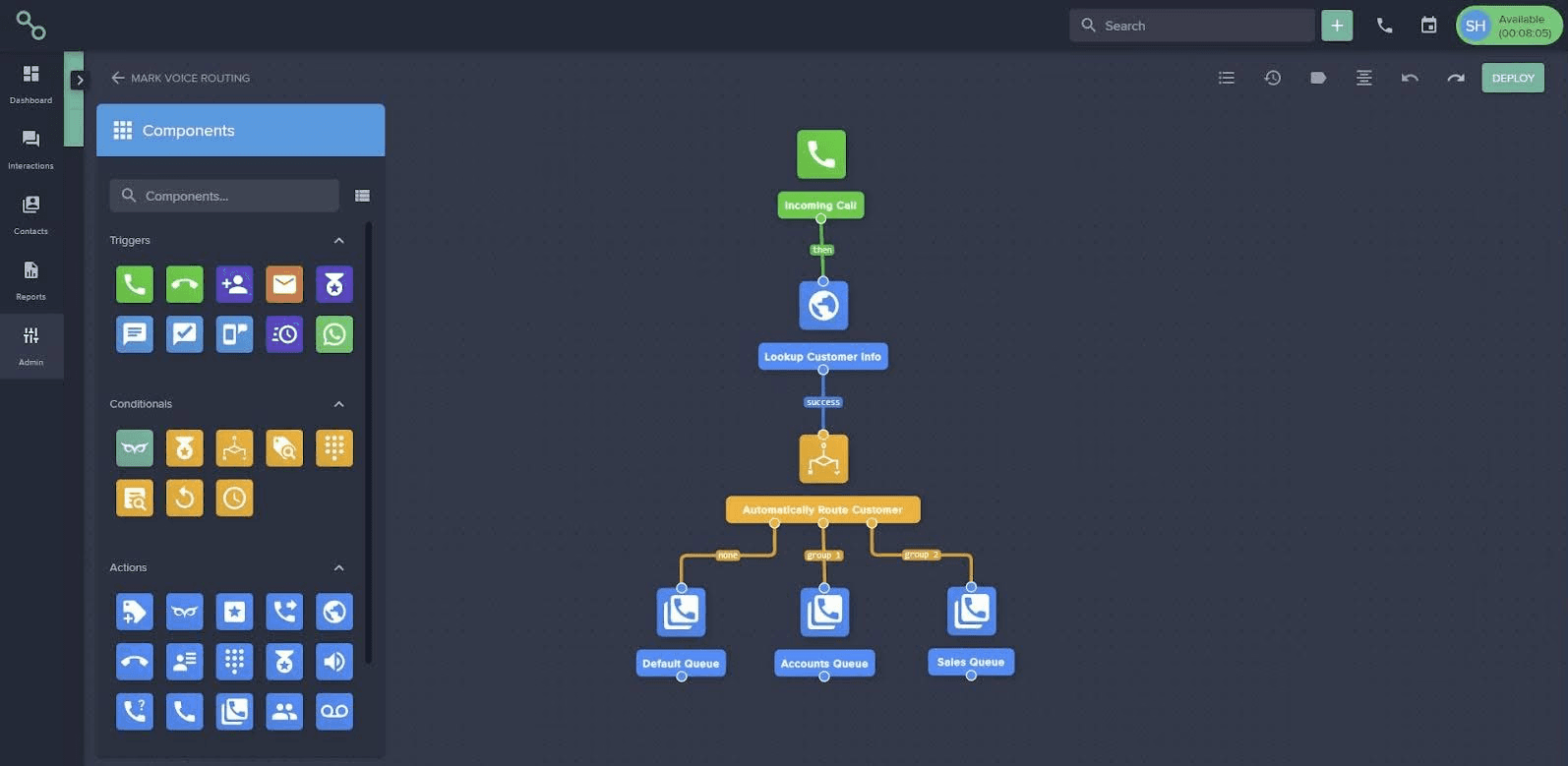
In other articles, we have covered further the subject of customer journey mapping and explained how you can construct the perfect customer journey map. Here, you can also read about how Flow, our customer service automation software tool, can help you create and automate customer journeys from scratch.
3. Understand each channel in its context
When selecting the right channels for omnichannel marketing, it is crucial to first identify your target audience and understand their preferences and behaviors. Consider whether your business is primarily focused on B2B, B2C, or falls within the Third Sector, as this will influence the channels that are most effective. Next, evaluate a wide range of channels available for reaching your audience, including social media platforms like Linkedin, Facebook, Instagram, Twitter, Pinterest, and others, as well as website, native and web apps, email, SMS, WhatsApp, Slack, and offline channels such as retail stores, events, call centers, and offices.
It is essential to assess how these channels can complement each other and work cohesively to create a seamless experience for your customers. Integration and consistency across all channels are key in omnichannel marketing to ensure a unified brand message and customer journey. Analyze the strengths and weaknesses of each channel in relation to your target audience and objectives to determine the most effective combination for your omnichannel marketing strategy.
4. Connect all channels
Achieving success with an omnichannel strategy requires flawless execution, which can be challenging. The key is to have the proper technology in place to track customers throughout their journey, from researching on your website and social media to browsing on third-party marketplaces, and ultimately making purchases at your physical store.
ConnexAI’s Omnichannel will allow you to integrate all channels in a matter of days. Our platform provides users with an intuitive, easy to use interface where they can engage with new or regular customers across all channels, sort all their customer interactions, and switch between channels with ease, all in one hub. They will also be able to see each customer’s complete history and information with just one click.
Also, Flow, our workflow automation feature, can automatically take your customers where they want you to, switching between different channels if necessary and saving your agents’ and customers’ time without writing a single line of code.
5. Maintain a consistent brand identity across channels
To facilitate an effective omnichannel customer experience, it’s important for organisations to create a clear brand identity with specific messaging and creative guidelines. These guidelines should be consistently applied across all channels to promote brand recognition and awareness. Additionally, leveraging brand tracking tools can help measure and predict the health of the brand perception among consumers.
During an Omnichannel marketing transformation, it is crucial to continuously uphold core brand values. Neglecting or downplaying these values in the planning and execution of such a transformation can lead to inconsistencies that may erode the trust and perception your audience has towards your brand.
Maintaining alignment with core brand values across all channels ensures a seamless and unified brand experience for your audience, reinforcing brand loyalty and trust. Therefore, staying mindful of core brand values throughout an Omnichannel marketing transformation is essential to preserving a positive brand image and strengthening customer relationships.
Sentiment Analysis is another tool that can be of great use to find a consistent voice to use across channels: our solution, for example, can analyse the customers’ and representatives’ choice of words during the conversation and automatically recognise the customers’ sentiment at each point of the interaction.
Matching this AI functionality with other tools like Keyphrase Analysis will also allow you to find which words or phrases are associated with successful outcomes in your representatives’ conversations, which can be incredibly useful to track the effectiveness of new campaigns.
6. Keep testing and improving
An essential aspect of a successful omnichannel marketing strategy is consistently evaluating the effectiveness of your approach. After you’ve come up with a plan, you’re going to have to keep testing it, measuring its effectiveness, and gathering feedback.
Testing plays a critical role in the Omnichannel marketing process as it allows businesses to thoroughly evaluate their strategies and operations. By testing extensively, companies can identify potential weaknesses, optimise their processes, and ensure that all aspects of their Omnichannel marketing efforts are effective. Whether it’s conducting strength tests, load tests, penetration tests, or any other form of evaluation, the practice of testing helps organizations fine-tune their approaches and improve the overall performance of their Omnichannel campaigns.
In essence, testing is a fundamental component that empowers businesses to enhance their Omnichannel marketing strategies, reach their target audiences more effectively, and achieve greater success in today’s competitive market.
Consider the individuals involved, both internally and externally, as well as the processes and technologies that contribute to delivering an enhanced and unified omnichannel customer experience. Assess which workflows are performing well and which ones require improvement. Thoroughly document these touchpoints to optimise customer service.
ConnexAI’s analysis features can be your best ally to constantly track and upscale the success of your Omnichannel strategy. Our platform’s dashboards grants full visibility of agents’ inbound and outbound queues, call transcripts, performance, and productivity. AI Analytics and tools like Scorecard Builder, AI Assessors, Call Transcription, Sentiment Analysis, Keyphrase Analysis, or Entity Recognition will allow you to dig deeper than ever into the conversations your representatives have with customers, empowering you to instantly recognise what works and what you can improve.
After taking note of your current strategy’s strengths and weaknesses, develop a strategic plan to streamline inefficiencies, foster collaboration, and cultivate a loyal customer base that continues to return for more.
So far, we have talked about what Omnichannel Customer Experience is in general. However, Omnichannel will take different forms depending on whether we’re talking about retail, marketing, or customer service. In the following sections, we’ll consider what Omnichannel Customer Experience looks like in each of these fields by looking at some examples of different businesses that owe a big part of their success to their implementation of omnichannel.
Why is knowing your customer essential before implementing omnichannel strategies?
How do I gather customer insights effectively?
How do I choose the right channels for my omnichannel strategy?
Why is continuous testing important in an omnichannel strategy?
Summary
An effective omnichannel customer experience means looking at how customers interact with your brand as a whole, not just through individual channels. It starts with understanding your customers’ needs, preferences, and behaviors, then mapping their journey across all touchpoints. Choosing the right channels, integrating them seamlessly, and maintaining a consistent brand identity are essential, while automation and AI tools can streamline interactions and track customer history. Continuous testing, feedback, and optimization ensure your strategy evolves, delivering a personalized, cohesive experience that builds trust, loyalty, and long-term engagement.

What industries can benefit from implementing an Omnichannel approach?
Omnichannel approaches have become increasingly popular across industries as customers have more options to communicate and more power of choice. Here are some particular areas where Omnichannel approaches have proven to be extremely effective.
Omnichannel for retail
In today’s omnichannel environment, retail has undergone significant changes. With the ability to buy in-store or online and the emergence of social media and review sites, retail marketers must centralise consumer interactions across multiple channels to ensure a positive outcome. It’s all about creating a cohesive brand experience, monitoring feedback, and utilising data to drive success in this dynamic landscape. In the UK, leading fitness clothing brand Gymshark is one of the paramount examples of retail omnichannel done right: By utilising Shopify Plus, Gymshark enhances customer experiences by tailoring them to individual preferences, implements company-wide promotions, and conducts worldwide campaigns, all while ensuring a dependable and customizable platform.
Omnichannel for Healthcare
In the world of healthcare, customers interact across various touchpoints across multiple providers, including hospitals, primary care, and pharmaceuticals. By analysing omnichannel customer journey data, healthcare providers can personalise their services, deliver meaningful information, and mitigate potential health risks for individuals.
This data-driven approach improves patient outcomes, enhances care coordination, and empowers patients to make informed decisions about their well-being. Here, you can read about Optegra, UK’s leading eye healthcare provider, which benefits from an Omnichannel capacity provided by ConnexAI. After onboarding with our Omnichannel solution, Optegra managed to increase agents’ productivity by 20% thanks to detailed, real-time, AI-powered reporting, improve customer satisfaction levels by 15%, and increase conversion rates.
Omnichannel for Pharma
In the dynamic contemporary market, pharmaceutical companies face the task of finding innovative methods to connect with, captivate, and convince physicians. Faced with shifting behavioural influences, mounting marketing costs, and a vast array of communication channels, pharmaceutical companies are leveraging Omnichannel Customer Experience to improve the accessibility of their drugs to physicians and, ultimately, to patients in need.
Omnichannel for Financial Services
The banking and financial services sector is undergoing a transformation, shifting their focus from product-centred thinking to putting customers first. As a result, companies are now faced with the challenge of delivering bespoke, omnichannel customer experiences that allow them to understand which services and products would be the most suitable for each customer, taking into consideration their personal preferences, wants, and needs.
This, of course, includes the type of experience that each type of customer looks for and appreciates when engaging with their bank or financial service provider. Old Mutual, 170+ year old investment, savings, insurance, and banking group, was one of many financial services businesses betting for Omnichannel Customer experience to best serve their customers. ConnexAI helped them deliver outstanding customer experience to their customers, all while gaining real-time, comprehensive insights on team performance and increasing their team’s efficiency; here, you can learn how Old Mutual used Omnichannel to increase the effectiveness of their CX.
Omnichannel for Contact Centres
Omnichannel has emerged as a crucial and highly relevant concept in the customer service industry over the past few years. With the proliferation of communication channels and the increasing expectations of customers, organisations have recognized the importance of providing a seamless and integrated experience across various touchpoints. By embracing omnichannel strategies, contact centres can enhance customer satisfaction, build stronger relationships, and improve overall business outcomes. The ability to provide a seamless, cohesive experience across channels has become a defining factor in the success of contact centres in today’s highly competitive and customer-centric landscape.
Omnichannel for the automotive industry
Given that cars represent a significant long-term investment, car dealerships and manufacturers place great importance on maintaining customer loyalty and staying at the forefront of customers’ minds. However, the automotive buying journey has undergone a transformation, with a remarkable 80 percent of shoppers conducting online research before making a decision. This shift underscores the increasing significance of having an omnichannel marketing strategy that effectively engages with customers across all channels, making Omnichannel Customer Experience the logical conclusion of these changes in customer behaviour.
Conclusion
Hopefully, by know you know everything there is to know about Omnichannel, why it is so important, and how to go about implementing it in your business. However, there’s still one thing left.
While you might be fully aware of the theory now, you might still want to get some practical notions of how Omnichannel works. Fortunately, that couldn’t be easier.
You can speak to us to get more information about our Omnichannel platform or get a free, personalised demonstration session. We’re absolutely confident your team and your customers will love our Omnichannel solution as well as the quick set up, and rapid time to value. Give it a go!