Beyond the Product: Customer Experience Management, the Key to Brand Loyalty
In 2026, great Customer Experience (CX) is more important than ever, and that’s why optimal Customer Experience Management (CXM) is essential for every modern business. Customer Experience Management, or CXM, involves a collection of processes and strategies that a brand or business uses to enhance the quality of its interactions with customers, solidifying a company’s capacity to create valuable and memorable experiences and ultimately strengthening the relationship between the customer and the brand.
This has become an integral part of any modern business; today’s customers will not be satisfied with just a product that fulfils their needs if it doesn’t come with an outstanding brand experience. Customer Experience Management involves businesses’ efforts to enhance interactions with customers, nurturing relationships through tailored experiences and retention strategies like loyalty programs. It includes tracking and analyzing customer interactions to understand preferences and designing personalized interactions to create brand advocates.
In this article, we’ll explain what is Customer Experience Management, why it’s so important, how your business can benefit from investing in CXM, and the best CXM strategies to increase customer retention and satisfaction rates.
Why Customer Experience Management Is Essential for Business Success Today
For the last few years, buyers’ expectations have continued to rise; the customer’s experience when interacting with a brand has become more and more crucial as a factor influencing purchasing behaviour. Today, efficient Customer Experience Management is no longer just a “nice-to-have”; it’s essential if you want to stay competitive.
A quick look at some statistics is enough to make a case for the importance of CX:
77% of brands believe CX is a key competitive differentiator (IDC).
74% of consumers are likely to buy based on experiences alone (Forbes / Arm Treasure Data)
Research by American Express found that 86% of customers are willing to pay more for a better experience.
According to a study by The Temkin Group, companies earning $1 billion annually can expect to earn, on average, an additional $700 million within 3 years of investing in customer experience.
A study by Oracle reveals that 89% of customers have walked away from a brand due to poor CX.
Over 4 out of 5 consumers would leave a brand they love after three or fewer instances of poor CX, and about 1 in 5 would after only one instance. (Emplifi)
9 out of 10 customers won’t purchase again from a company after three or even less poor customer service interactions (Customerthink).
US businesses lose $35.3 billion annually in customer churn caused by avoidable CX issues (CallMiner)
But why has CX gained this degree of relevance? The mentioned Oracle study also asked 1,300 senior executives about their opinions on this. The top reasons they gave for why CX is now at the forefront of business priorities were:
Customers’ experiences impact their willingness to be loyal advocates.
Customers are willing to pay more for great customer experiences.
Customers have more power today than a few years ago.
Customers will switch brands because of poor experiences.
Other reasons we could cite are the acceleration of online shopping, the global changes in customer behaviour precipitated by the pandemic, and the diversification of available communication channels through which customers engage with brands and businesses.

In any case, the bottom line is clear: Customer Experience Management is an essential area for modern business. Companies that don’t make it a priority to constantly improve and optimise their CX to meet buyers’ preferences at each touchpoint of their journey are at risk of losing customers and relevance as time goes by.
What is Customer Experience Management (CXM)?
Why is CXM important for modern businesses?
How does CXM differ from Customer Service?
What role does technology play in CXM?
Summary
In 2026, Customer Experience Management (CXM) has become a vital pillar of modern business strategy, as customers increasingly value not only quality products but also memorable, personalized brand interactions. CXM encompasses the processes and strategies used to enhance customer relationships through tailored experiences, data-driven insights, and loyalty initiatives, ultimately turning buyers into brand advocates. With most consumers willing to pay more for better experiences and many abandoning brands after poor interactions, effective CXM is now essential for competitiveness and growth. Studies consistently show that businesses investing in customer experience see substantial financial gains, while those neglecting it face major losses in customer retention and revenue. In an era shaped by digitalization, shifting expectations, and multiple communication channels, prioritizing CXM is no longer optional but crucial for long-term success.

What is CXM (Customer Experience Management)?
In a nutshell, Customer Experience Management is the set of processes and strategies deployed by a brand or business to improve the quality of their interactions with customers and, ultimately, nurture the relationship between the customer and the brand. This includes:
Tracking, overseeing and organising interactions between a customer and the business throughout the customer journey.
Using quantitative data analysis to understand customers.
Gathering qualitative customer feedback in order to paint a picture of what the customer likes and dislikes, so they can be given more of the former and less of the latter.
Designing new customer interactions to meet or exceed customer expectations.
Deploying customer retention strategies, such as loyalty programs.
Working to create memorable customer experiences through personalised interactions that turn buyers into brand advocates.
Differences between CXM and CRM
While Customer Experience Management might sound similar to Customer Relationship Management (CRM), there are important differences between the two.
As you may know, CRM is also concerned with the set of strategies, technologies and practices through which a business interacts with its customers. It also monitors the interactions between a brand and a customer, and it also seeks to gather customer data to best guide future interactions.
However, unlike CXM, CRM proceeds mainly from the business’ perspective. In other words, CRM is concerned with what the customer looks like to the business, whereas CXM is about what the business looks and feels like to the customer.
From this main differential factor stem many other differences: CRM is strongly quantitative and concerned with statistics, trends, and data; CXM, on the other hand, is qualitative, and values other abstract, yet equally important aspects of the business-customer relationship, such as customer satisfaction and sentiment. But that isn’t all.
The goals of CRM are, primarily, increasing sales; the means to that end are usually customer service improvement, technical support optimisation, and the refinement and targeting of marketing campaigns. However, CXM’s goals are more long-term: the mission of Customer Experience Management is, to put it simply, creating an emotional connection between the customer and the brand.
CXM benefits from the customer data extracted by CRM, but it also considers qualitative customer feedback in order to build seamless, personalised experiences that increase customer loyalty.
Another way to express the difference between CRM and CXM is this: CRM is concerned mostly with optimising the way a business serves its buyers, while CXM is all about engaging customers.
As we have seen earlier, in 2026 customers look for much more than a product that fulfils their needs; they also want their brand to understand them on a deeper level and to provide them with a personalised experience.
What’s more, they’re willing to pay more for it or switch to whoever caters best to those preferences if their current go-to brand gets too complacent. And that’s why Customer Experience Management is so important today.
Summary
Customer Experience Management (CXM) and Customer Relationship Management (CRM) both focus on interactions between a business and its customers, but they differ in perspective and purpose. CRM is primarily business-centered, using data and analytics to optimise service, support, and marketing with the goal of increasing sales. CXM, on the other hand, is customer-centered, focusing on how the business feels and appears to the customer. It combines quantitative data with qualitative feedback to create personalized, memorable experiences that foster emotional connections and long-term loyalty. In short, CRM optimizes how a business serves customers, while CXM engages customers by prioritizing their experience and satisfaction.
Benefits of CXM (Customer Experience Management for Your Business: Boosting Retention, Cut Churn, and Win New Advocates
Help you become a customer-centric company
Customer-centricity refers to a business approach where the customer is at the centre of all business decisions, and everything is geared towards improving their experience.
Amazon is the paramount example of a customer-centred company. From its user-friendly website and personalised product recommendations to its fast and reliable shipping options, Amazon has made it a priority to provide its customers with a seamless and convenient shopping experience. In Jeff Bezos’ own words:
“We see our customers as invited guests to a party, and we are the hosts. It’s our job every day to make every important aspect of the customer experience a little bit better.”
Gain a better understanding of your customers and increase brand equity
The term “brand equity” is used in marketing to refer to the value a brand has in the eyes of its consumers. However, another way to think of it is in terms of the emotions customers feel when they think about a brand.
Positive brand equity can be developed by delivering on promises, offering high-quality products and services, and being responsive, while negative brand equity can be caused by under-delivery and poor interactions.

The best way to optimise brand equity, naturally, is putting yourself in your customers’ shoes and wondering what it is like for your customer to interact with your business, what are some common pain points, and where you can improve; or, in other words, prioritising CX.
Keeping these things in mind when making business decisions can help brands undertake the necessary changes to make their presence in their customers’ lives more positive, satisfying, and memorable. It can help develop new products, adjust existing ones, or think in more depth about how the brand engages with its customers.
Increase customer retention and loyalty
Placing the Customer Experience among the top priorities of your business and delivering satisfying, memorable, personalised experiences will make your customers feel cared for, increasing their loyalty and making them less likely to switch to another brand.
As we have seen earlier, you should never underestimate the role of customer’s expectations about all the experiences surrounding their relationship with a brand and the influence those have in their buying decisions. Today, a good product is not enough to retain a customer, and CX is a must if you want to stay competitive.
Besides, it’s a known fact that satisfied customers tend to order more. Harvard Business Review found that customers spend 140% more than those who had a bad or less than great experience.
What’s more, any measure destined to optimise customer retention will go a long way: studies have shown that just a 5% increase in customer retention can result in a 25% increase in profit.
Reduce costs associated with customer churn
However, there’s more to customer loyalty and satisfaction than increasing sales revenue. To put it simply, gaining new customers is expensive: it usually costs between 5-30 times more to get new customers than retain the ones you already have (Finextra).
And as it turns out, poor Customer Experience is often a big cause of customer churn: as we mentioned earlier, customer churn caused by just easily avoidable Customer Experience issues costs American businesses about $35.3 billion every year (CallMiner).
Bottom line: customer-centricity is not a sweet-sounding buzzword; it’s an investment that pays back in spades and will instantly place any business on top of the competition.
Acquire new customers via word of mouth
We know that satisfied customers are repeat customers, but that’s not all: a brand that delivers a good experience often enjoys the support of enthusiastic customers who are happy to share their experiences with positive online reviews or by telling friends and family about the brand, on top of joining loyalty programs.
By implementing a robust Customer Experience plan, a company can not only satisfy and surpass its customers’ expectations, but also attract new ones.
Now that you know how investing in Customer Experience Management can help your business, it’s time to move on to the meat of the matter. In the next sections, we’ll explain what makes a good Customer Experience and how you can implement a CX plan.
But first, we should look at one of the most common pain points businesses face when trying to improve their CXM. While it’s important to know what makes for good Customer Experience Management, it’s equally important to understand while companies fail in this arena so that you can avoid those mistakes. Let’s get down to it.
Can improving Customer Experience Management really increase revenue?
How does CXM help reduce costs associated with churn?
What are common mistakes companies make when trying to improve CX?
How can CXM guide product development and innovation?
Common Challenges in Customer Experience Management — And How to Address Them
Unfortunately, and despite the importance that CX plays in modern business, many companies face challenges when it comes to managing their CX.
The study by Oracle we mentioned earlier, which discovered that a baffling 89% of customers have ever walked away from a brand after a poor Customer Experience, investigated further the causes of these CX shortcomings.
After enquiring a large base of business executives and decision-makers about the problems they found when trying to optimise their company’s CX, Oracle identified these as the most threatening obstacles for good Customer Experience processes:
Limitations of inflexible technology and application infrastructure (mentioned as the top concern by 29% of those surveyed)
Difficulty regularly tracking performance measures and customer feedback (24%)
Lack of a consolidated, accurate, 360-degree customer view across all customer journey touchpoints (23%)
Siloed systems that prevent team members from easily sharing information or supporting continuous processes across touchpoints (18%)
What do all those obstacles have in common?
That’s right: they’re challenges associated with the technology used by the companies in question.
That’s why deciding on a CX software platform is anything but a trivial choice. To put it crudely, the technology you use for your CXM strategies can make or break the effectiveness of your plans.
Later in this article, we’ll explain what to look for in a Customer Experience Management software platform. But first, let’s start with some basic steps for a good CXM plan.
5 Steps to Optimise Customer Experience Management and Drive Business Growth
Antes de empezar a considerar cómo puedes mejorar tu experiencia del cliente (CX), consideremos algo por un momento.
Como probablemente puedes deducir, la Gestión de la Experiencia del Cliente es un dominio fuertemente heurístico en el que diferentes soluciones funcionarán mejor para distintos tipos de negocios.
No solo eso; así como cada negocio es diferente, cada cliente también lo es. Lo que funciona para un tipo de cliente puede no funcionar para otro, y es responsabilidad del negocio averiguar qué le gusta y qué no le gusta a sus clientes respecto a su experiencia y qué pueden hacer para satisfacer esas demandas.
Sin embargo, aunque no hay una respuesta única sobre lo que hace que la Experiencia del Cliente sea buena, hay algunos pasos que debes seguir para determinar cómo debería ser tu política de CX. Aquí te damos 5 pasos necesarios para una gestión efectiva de la experiencia del cliente.
1. Comprende y segmenta a tus clientes
Lo primero que deberías hacer es tratar de entender cómo tus clientes perciben tu marca. En esta fase, tienes que considerar las necesidades, deseos, intenciones, motivaciones, metas, gustos y preferencias de tus clientes.
Puedes apoyarte en encuestas o recopilar comentarios y preguntas comunes de tus equipos de ventas o servicio al cliente.
2. Mapea el recorrido del cliente
En resumen, un mapa del recorrido del cliente es una representación visual de todas las etapas del recorrido del cliente que puede ser extremadamente útil para identificar puntos de dolor comunes del cliente y áreas de mejora en la Experiencia del Cliente.
Necesitas mapear qué sucede desde el primer momento en que tu cliente escucha sobre tu marca hasta el momento en que decide comprar de ti; esto también debería incluir cómo el cliente realiza su propio trabajo de investigación sobre tu producto, cómo te compara con tus competidores y cada experiencia previa a su compra. En este artículo, hemos explicado cómo construir el mapa perfecto del recorrido del cliente.
3. Mide el sentimiento del cliente
A continuación, necesitas averiguar cómo se siente tu cliente en cada uno de los puntos de contacto del recorrido del cliente.
Recopila todos los comentarios e información que puedas sobre tus clientes. Hay múltiples maneras de abordar esto, desde encuestas de satisfacción hasta ideas de tus equipos de servicio al cliente y ventas. Cuanta más información recopiles, mejor.
También puedes utilizar herramientas dentro de una plataforma de gestión de la experiencia del cliente (CXM) como el Análisis de Sentimiento con IA para medir cómo se sienten tus clientes durante sus interacciones con tus representantes. Estos conocimientos serán increíblemente útiles más tarde para enseñar a tus agentes sobre las mejores prácticas de CX contribuyendo a una óptima Gestión de la Fuerza Laboral (WFM).

4. Diseña el mapa de recorrido del cliente perfecto
Haz un plan sobre cómo estructurar los puntos de contacto del recorrido del cliente de ahora en adelante, cómo cambiará la relación con tus clientes, qué procesos necesitas ajustar, qué canales de información utilizarás, y cómo tus representantes se comunicarán con los clientes a partir de ahora.
Implementar esos cambios suele ser la parte más difícil de la optimización de la Gestión de la Experiencia del Cliente. Sin embargo, hay algunas herramientas que pueden facilitarlo, como el Flow de ConnexAI, una herramienta de vanguardia para la planificación, implementación y automatización de recorridos y flujos de trabajo de clientes completos. Con Flow, puedes optimizar los flujos de trabajo relacionados con CX para hacer tus procesos más rápidos y efectivos que nunca: implementar funcionalidades como enrutamiento inteligente de llamadas, Análisis de Interacción con el Cliente usando IA o IA Conversacional a tus flujos de trabajo elevará tu Sistema de Gestión de Interacciones con Clientes al siguiente nivel.
5. Mide y desarrolla
Después de hacer los ajustes necesarios para mejorar tu Experiencia del Cliente, no termina ahí. La Gestión de la Experiencia del Cliente es un proceso continuo, y nunca puedes aprender demasiado sobre lo que les gusta y no les gusta a tus clientes cuando interactúan con tu marca.
Así como te esforzaste en ponerte en los zapatos de tus clientes al principio, tendrás que llevar un seguimiento constante de sus experiencias después de implementar un nuevo plan de experiencia del cliente. De esa manera, puedes mantenerte adaptable y versátil, asegurándote de que siempre estás buscando maneras de que tu marca mantenga una presencia positiva en la vida de tus clientes.
Como hemos mencionado, hay múltiples herramientas dentro de una plataforma de gestión de la experiencia del cliente (CXM) que puedes utilizar para la optimización de CX. Y aunque, como también hemos dicho, cada negocio tiene diferentes necesidades al igual que cada cliente, hay algunas características imprescindibles que no te pueden fallar si deseas mejorar tus procesos de Experiencia del Cliente. En la siguiente sección, consideraremos cuatro de ellas.
How do I know which customer segments are worth focusing on first?
How do I ensure the feedback I collect is meaningful and actionable?
How can AI help beyond sentiment analysis?
How can I measure ROI from CX improvements?

6 Essential CXM Tools to Elevate Customer Experience, Boost Satisfaction and Grow Revenue
Experiencia del Cliente Omnicanal
Las experiencias de los clientes pueden ocurrir en cualquier lugar, y necesitas estar presente donde sea que esto suceda. Los clientes de hoy utilizan diferentes dispositivos y distintos canales para comunicarse entre ellos, y tiene sentido que elijan hacer lo mismo al interactuar con marcas y negocios.
Un estudio realizado por Harvard Business Review encontró que alrededor del 73% de los consumidores prefieren comprar a través de múltiples canales. Además, Salesforce descubrió que el 75% de los consumidores esperan una experiencia consistente a través de múltiples canales de interacción, o, en otras palabras, una experiencia omnicanal. Más aún: el 73% declara que probablemente cambiarán de marca si no lo obtienen.
La conclusión es clara: necesitas estar disponible para tus clientes en todos los canales. La mejor manera de hacerlo es adoptar una solución de software omnicanal, que permitirá a tus representantes cambiar de canal sin problemas a conveniencia de tus clientes, reduciendo los tiempos de espera, creando una experiencia más fluida y aumentando la satisfacción del cliente.

Análisis de Interacciones de la Experiencia del Cliente
Como hemos visto, medir las preferencias, intereses y actitudes de los clientes es una parte crucial de cualquier estrategia de Gestión de Experiencias del Cliente. Por eso es tan importante confiar en un software de CX que te permita recopilar datos de los clientes de diversas maneras, para obtener la imagen más completa posible de lo que siente, quiere y le importa a tu cliente. La Inteligencia Artificial (IA) es un recurso invaluable para agilizar los procesos de CX, especialmente aquellos relacionados con el Análisis de Interacciones del Cliente.
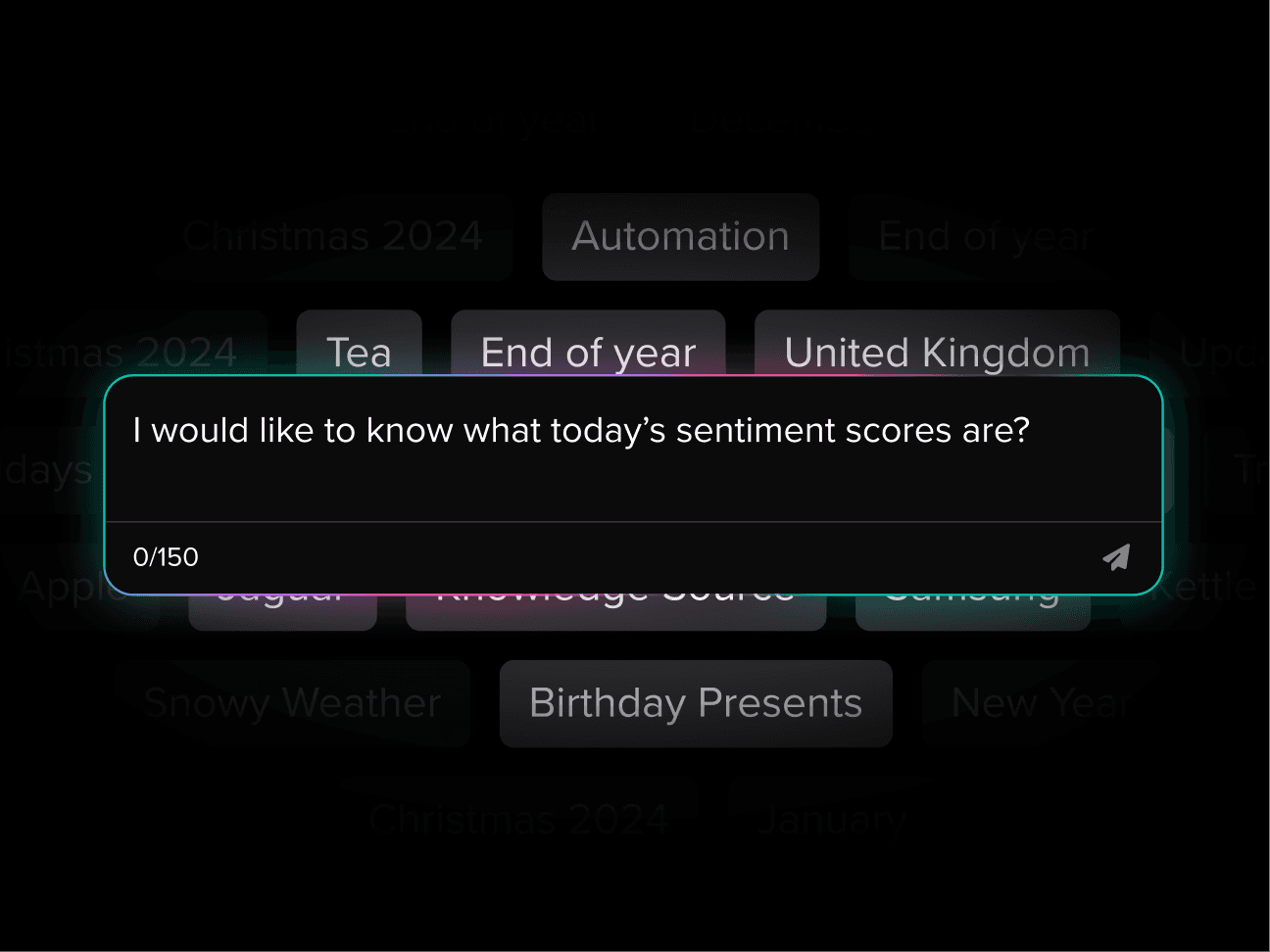
Una herramienta que puedes utilizar es el Análisis de Entidades y Frases Clave de IA. Esta función de Análisis de IA está diseñada para reconocer las palabras, frases o entidades más comunes (como productos o precios) mencionadas por tus clientes; esta información será increíblemente útil para detectar lo que tus clientes piensan y quieren de ti.
Dentro de una plataforma de CXM, herramientas como el Análisis de Sentimiento de IA también pueden ser un recurso invaluable: con esta función de IA, los algoritmos inteligentes leerán las emociones de tus clientes a partir de su tono de voz, inflexión y elección de palabras durante las llamadas con tu personal, proporcionándote conocimientos invaluables sobre lo que les importa a tus clientes, cómo se sienten en cada uno de los puntos de contacto del viaje del cliente y qué puntos problemáticos están encontrando.
Integraciones de IA
La Inteligencia Artificial está demostrando ser una fuerza disruptiva en el ámbito de la Experiencia del Cliente, con múltiples herramientas que pueden contribuir a la Gestión de Interacciones del Cliente y CXM de una marca.
Por ejemplo, la IA Conversacional ha revolucionado la Gestión de Experiencias del Cliente al mejorar la forma en que las empresas interactúan con sus clientes. Estas herramientas de Agente de IA aprovechan el procesamiento del lenguaje natural (NLP) y el aprendizaje automático para comprender y responder a las consultas de los clientes de manera humana. Esta capacidad permite a las empresas proporcionar respuestas inmediatas, precisas y personalizadas, mejorando la satisfacción y el compromiso del cliente.
Además, las herramientas de coaching de IA como AI Guru son recursos invaluables que aprovechan el análisis avanzado para monitorear y evaluar en tiempo real las interacciones con los clientes, ofreciendo retroalimentación instantánea y sugerencias prácticas a los agentes de servicio al cliente. Al identificar áreas de mejora y ofrecer coaching personalizado, las herramientas de IA aseguran que los agentes siempre estén rindiendo a su máximo potencial. Esto no solo mejora la experiencia general del cliente, sino que también aumenta la satisfacción y retención de los empleados al proporcionarles el apoyo y las oportunidades de desarrollo que necesitan para tener éxito. Juntos, los Agentes de IA, los LLM y las funciones de coaching de IA crean un ecosistema poderoso que impulsa la excelencia en la gestión de experiencias del cliente.
Automatización de la Experiencia del Cliente
Hemos hablado sobre la importancia de construir recorridos del cliente precisos y completos. Estos deberían incluir todos y cada uno de los puntos de contacto de la interacción de tus clientes con tu marca, y, idealmente, deberías poder diseñarlos y remodelarlos fácilmente. Los recorridos del cliente claros y completos son infinitamente valiosos para obtener una visión más amplia y holística de tus procesos de Experiencia del Cliente; sin embargo, algunas herramientas de Mapeo del Viaje del Cliente ofrecen aún más gracias a las características de Automatización de la Experiencia del Cliente, que serán tus mayores aliados cuando se trata de implementar nuevos recorridos del cliente y ajustarlos a medida que detectas oportunidades de mejora.
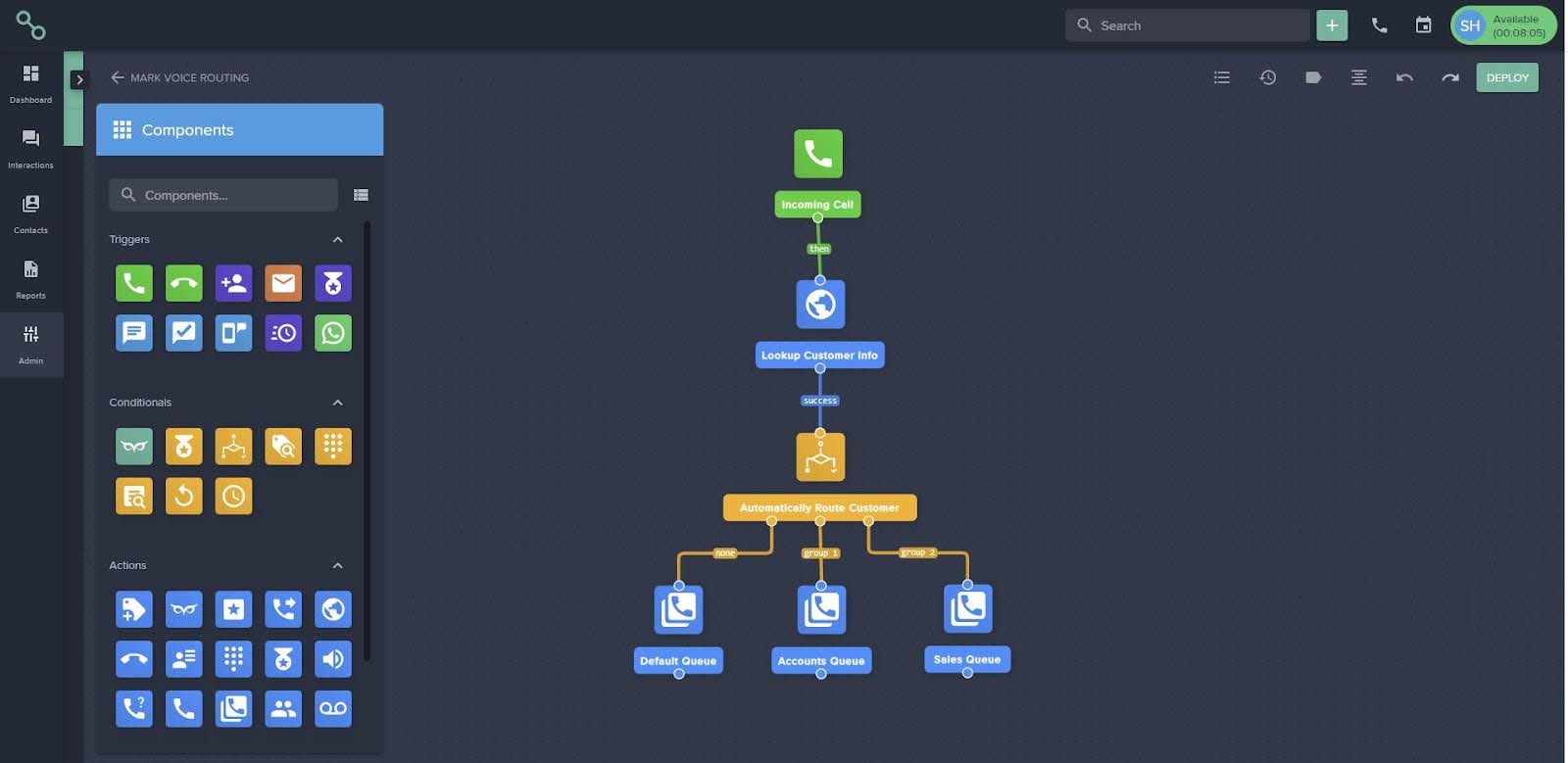
La automatización de flujos de trabajo es una de las herramientas más útiles de la Automatización de la Experiencia del Cliente: te permite diseñar, enrutar y automatizar mapas de interacción y procesos, reduciendo la cantidad de trabajo humano dedicado a tareas repetitivas como la categorización, clasificación y enrutamiento de interacciones, que a menudo pueden consumir tiempo y resultar alienantes para los profesionales de la Experiencia del Cliente. Flow, nuestra herramienta de automatización de flujos de trabajo y mapeo del viaje del cliente, está diseñada para hacer que el diseño y despliegue de mapas de viaje del cliente personalizados sea más fácil que nunca. Usando una interfaz intuitiva, sin código, de arrastrar y soltar, podrás dictar cada paso en el viaje del cliente, con una vista completa de todos los puntos de contacto. Luego, la automatización se encargará de todo, clasificando y dirigiendo todas tus interacciones según parámetros como la disponibilidad del agente, la habilidad requerida, el producto mencionado o el idioma, ahorrando tiempo y recursos a tu negocio mientras garantiza los más altos niveles de personalización.
Además, puedes integrar herramientas de IA dentro de los recorridos del cliente en Flow para llevar la automatización un paso más allá. Con Reconocimiento Automático del Habla (ASR), el Análisis de Frases Clave y el Reconocimiento de Entidades de IA pueden detectar nombres de productos o palabras clave en las expresiones de los clientes, ayudando a dirigir la interacción a la persona más calificada para manejarla.
Integraciones
Tu organización tiene acceso a una gran cantidad de datos más allá de la retroalimentación de los clientes, incluyendo analíticas de sitios web, herramientas CRM como Salesforce y datos de recursos humanos y finanzas. Estos sistemas a menudo ofrecen APIs que simplifican la transferencia de datos a otros sistemas.
Conectar tus CRMs como Hubspot y Salesforce con plataformas de CXM te permitirá obtener perspectivas más profundas sobre tus procesos de CX, permitiéndote obtener una visión más clara y completa sobre dónde puedes mejorar y el efecto de tus estrategias de CX.
Con más de 40 integraciones, ConnexAI ofrece la fuerza combinada de omnicanal, analítica de IA, automatización de flujos de trabajo, gestión de la fuerza laboral y las principales plataformas de software CRM del mundo.
Funciones de autoservicio para clientes
El autoservicio del cliente es cualquier acción o tarea que un cliente puede completar sin la intervención de un agente o empleado. El autoservicio del cliente se está volviendo más popular día a día: en un informe de Harvard Business Review, el 81% de los clientes afirmó que preferiría resolver un problema por sí mismo antes de buscar ayuda.
Las maneras de habilitar el autoservicio del cliente incluyen construir una base de conocimientos, crear cursos de formación sobre conocimientos de productos, hacer vídeos de capacitación o agregar un chat en vivo a tu sitio web.
How does AI Entity and Keyphrase Analysis improve decision-making?
What differentiates Conversational AI from traditional chatbots?
How can AI coaching improve employee performance and satisfaction simultaneously?