Why Modern Contact Centers Need a Better Call Handling Solution
The traditional contact center model is facing a breaking point. For decades, businesses have relied on a linear relationship between call volume and headcount, but that math no longer works in an era of skyrocketing consumer expectations and volatile labor markets. A modern Call Handling Solution uses conversational AI, virtual voice agents and generative AI to understand customer requests and resolve suitable interactions without human intervention. As call volumes and customer expectations rise, these systems are becoming an increasingly practical way to expand service capacity without relying solely on additional staff. It is the solution to a compounding crisis where 57% of customer care leaders expect call volumes to rise by as much as 20% in the next two years.
Imagine your contact center as a high-pressure valve. In the past, when pressure (call volume) rose, you simply added more valves (agents). However, with global agent attrition averaging 52% in 2023, the talent pool is evaporating just as demand peaks. This creates a vivid operational bottleneck: overwhelmed agents navigating fragmented systems while customers wait in long queues for simple resolutions. This isn't just an efficiency problem; it’s a cost catastrophe, considering that labor represents up to 95% of total contact center operating expenses.
This article explains how AI-powered call handling works, the types of systems available and the business benefits they can deliver. It also looks at the features to assess when choosing between these systems and the steps involved in introducing automated phone support.
What Is a Call Handling Solution and How Does It Work?
A Call Handling Solution is a system that manages incoming and outgoing customer calls, from answering and routing inquiries to resolving requests. AI-powered versions go further by understanding natural language, accessing business systems and completing suitable tasks without a human agent handling every interaction. It is important to distinguish modern AI-powered phone support from legacy Interactive Voice Response (IVR) systems. Traditional IVRs are rigid, "press 1 for sales" decision trees that often frustrate users. A good Call Handling Solution should make it easier for callers to reach an answer, whether that means routing them to an employee or resolving the request automatically. When comparing a Call Handling Solution, businesses should also check how easily it fits their existing telephony setup and customer service processes. When assessing a Call Handling Solution, businesses should consider both the quality of the caller experience and the range of tasks the system can complete. In contrast, an AI-powered platform can use Generative AI (GenAI) and Large Language Models (LLMs) to hold fluid, natural-language conversations.
The mechanics of an AI-powered voice system follow a four-step process:
Speech-to-Text (STT) & Natural Language Understanding (NLU): The system captures the caller's audio and converts it into structured text. It doesn't just look for keywords; it uses NLU to determine the caller's "intent" (what they want) and "sentiment" (how they feel).
Reasoning and Logic: Unlike a script, a GenAI-powered agent queries an internal knowledge base or database to formulate a logic-based response. It can "reason" through complex queries, such as explaining a billing discrepancy or troubleshooting a technical fault.
Natural Language Generation (NLG): The system generates a coherent, context-aware response in text form.
Text-to-Speech (TTS): The response is converted back into high-fidelity audio. Modern TTS can replicate human-like prosody, pauses, and tone, making the interaction feel remarkably natural.
Implementation varies; some systems are "closed-loop," meaning they stay within specific guardrails to ensure compliance, while others are more flexible, allowing them to resolve a wider range of requests. Despite the high adoption of AI tools, a significant gap remains: only 3% of organizations have successfully scaled GenAI into their everyday operations. Closing this gap requires moving beyond "chatbots" to integrated voice agents that can access CRMs and process transactions autonomously.
What is an AI-powered call handling system?
How do autonomous call handling systems decide when to transfer a call to a human agent?
Which types of calls are best suited for autonomous resolution?
Can autonomous voice agents handle multiple tasks within the same conversation?
How can organizations measure the success of a call handling service?
Summary
An AI-powered Call Handling Solution moves beyond menu-driven phone systems. It uses language models, connected business data, and voice technology to understand requests and complete suitable customer tasks without human intervention.

What Business Benefits Can a Call Handling Solution Deliver?
A well-designed Call Handling Service can improve more than answer speed. It can provide a consistent approach to call handling across departments, while giving managers clearer oversight of service levels and demand. Depending on its capabilities and integrations, it can route inquiries, automate routine transactions and give customers access to support outside standard business hours. A flexible Call Handling Service can also help managers adapt call flows as products, policies and customer needs change. The right Telephone Call Handling setup also helps organizations manage demand consistently across teams and locations. Strong Telephone Call Handling processes give callers clear options, keep queues organized and make it easier to direct urgent inquiries to the right people.
Drastic Reduction in Labor Costs
The primary driver for AI adoption is the bottom line. Gartner predicts that conversational AI will reduce agent labor costs by $80 billion globally by 2026. By automating roughly one in ten interactions, businesses can redirect their remaining human capital toward high-value, emotionally complex tasks that require genuine empathy, rather than routine password resets or balance checks.
Accelerated Issue Resolution and Productivity
A reliable Call Handling Service does more than reduce manual work; it can also help teams resolve requests more consistently. For businesses reviewing their existing Telephone Call Handling processes, this can mean fewer manual steps and less time spent transferring callers between departments. Reviewing Telephone Call Handling performance can also reveal which inquiries are suitable for automation and where human support remains essential. Research published by the National Bureau of Economic Research (NBER) found that deploying a generative AI assistant increased issue resolution by 14% per hour. Furthermore, the time spent handling each issue was reduced by 9%, allowing the business to process a much higher volume of inquiries with the same or less infrastructure.
Elimination of Agent Information Overload
A major pain point in modern service is that 75% of agents report being overwhelmed by too many systems and too much information. Effective automation can reduce this pressure by acting as a filter. It handles the data-heavy "drudge work" of looking up records across multiple legacy systems, ensuring that when a human agent does need to step in, they are presented only with the relevant facts.
Enhanced Employee Retention
High attrition is often a result of burnout from repetitive tasks. Companies currently deploying GenAI are 35% less likely to report that their agents feel overwhelmed. By removing the most monotonous 50% of call volume, AI allows human agents to focus on more engaging, rewarding work, which NBER research shows can reduce agent attrition by as much as 25%.
Superior Customer Satisfaction Through "Service Innovation"
The top 25% of service delivery performers, known as "service innovators," are 8x more likely to have deployed GenAI than their peers. These innovators are 4.6x more likely to report excellent customer satisfaction because their AI systems provide instant, 24/7 responses that eliminate the friction of waiting on hold.
How does automated call handling affect scalability during peak demand periods?
Does AI-powered call handling improve consistency across customer interactions?
Can a call handling service improve first-contact resolution?
Can automated call handling generate valuable business intelligence?
How can telephone call handling support global operations?
How should we categorize the different types of autonomous Call Handling Solution AI tools?
1. Generative Voice Agents
Generative AI Voice Agents are the most advanced form of automated call handling. Powered by large language models (LLMs), they can conduct fluid, unscripted conversations that adapt dynamically to the caller's responses. Unlike traditional IVR systems or rule-based chatbots, these AI Voice Assistants can handle interruptions, clarifying questions, topic changes, and more nuanced conversational flows while maintaining context throughout the interaction.
Advantage: Delivers a more natural customer experience and can resolve a broader range of inquiries without human intervention.
Limitation: Requires extensive grounding, guardrails, and integration with enterprise systems to ensure responses remain accurate, compliant, and aligned with company policies.
Who should use it? Organizations dealing with complex, variable customer inquiries, such as technical support providers, insurers, financial services firms, and telecommunications companies.
2. Autonomous Transactional Agents
These AI Agents are designed to execute specific business actions rather than simply answer questions. Typical use cases include processing payments, updating customer information, scheduling appointments, handling order modifications, or initiating service requests. Their value comes from combining conversational capabilities with direct access to operational systems.
Advantage: Automates high-volume workflows with speed, consistency, and reduced risk of manual errors.
Limitation: Typically operates within tightly defined workflows and may struggle when conversations move beyond its authorized actions.
Who should use it? Retailers, utilities, healthcare providers, travel companies, and any organization managing large volumes of repetitive customer transactions.
3. Triage and Intent Bots
These systems act as the front door of the customer interaction. Their primary role is to identify customer intent, authenticate users, gather key information, and determine the most appropriate resolution path. In many deployments, they work alongside other AI virtual assistants or human representatives rather than attempting to resolve every issue themselves.
Advantage: Improves routing accuracy, reduces transfers, and shortens handling times by ensuring customers reach the right resource from the outset.
Limitation: Creates value primarily through efficiency gains rather than end-to-end resolution.
Who should use it? Large enterprises with multiple support teams, product lines, or service departments where misrouting is a significant operational challenge.
4. Autonomous Quality Assurance (QA) Agents
These AI Agents continuously analyze customer interactions across voice, chat, email, and messaging channels. Rather than reviewing a small sample of conversations, they can evaluate every interaction for compliance, adherence to scripts, customer sentiment, escalation risks, and service quality metrics.
Advantage: Provides comprehensive visibility into operational performance, compliance risks, and customer experience trends.
Limitation: Most deployments focus on post-interaction analysis, although real-time coaching capabilities are becoming increasingly common.
Who should use it? Highly regulated sectors such as financial services, healthcare, insurance, and telecommunications, where compliance monitoring is critical.
5. Hybrid Agent-Assist Systems
Rather than replacing human agents, these contact center agentic AI tools augment them. During live interactions, the AI listens to conversations, retrieves relevant information, recommends responses, generates summaries, and suggests next-best actions. The human agent remains in control of the customer relationship while benefiting from AI-powered assistance.
Advantage: Combines the speed and consistency of AI with human judgment, empathy, and problem-solving capabilities.
Limitation: Does not eliminate staffing requirements and depends heavily on agent adoption and workflow integration.
Who should use it? B2B organizations, enterprise service desks, financial institutions, healthcare providers, and any environment where customer interactions are complex, high-value, or emotionally sensitive.
6. Multi-Agent Orchestration Systems
Agentic AI orchestration platforms coordinate multiple AI agents and enterprise applications to complete complex workflows spanning several systems, creating a fully self operating call center. Rather than relying on a single agent, they allocate tasks to specialized agents, manage handoffs, monitor progress, and ensure actions occur in the correct sequence.
Advantage: Enables end-to-end automation of processes that cross departmental or system boundaries.
Limitation: Requires significant governance, integration work, and operational oversight.
Who should use it? Large enterprises seeking to automate complex customer journeys or business processes involving CRM, ERP, contact center, and back-office systems.
Which features and integrations maximize the value of an AI Call Handling Solution?
Automated call handling does not exist in a vacuum. To move from a "cool demo" to a "productive tool," it must be woven into your existing technology stack.
CRM and Data Synchronization
The most effective AI Call Center Agents are "context-aware." When a caller rings, the AI should instantly pull their history from a CRM (like Salesforce or HubSpot). This allows the AI to say, "I see you're calling about the order you placed yesterday," rather than asking for an order number. This integration is a core strength of platforms like ConnexAI, which emphasize a unified view of the customer across all touchpoints.
Sentiment and Predictive Analytics
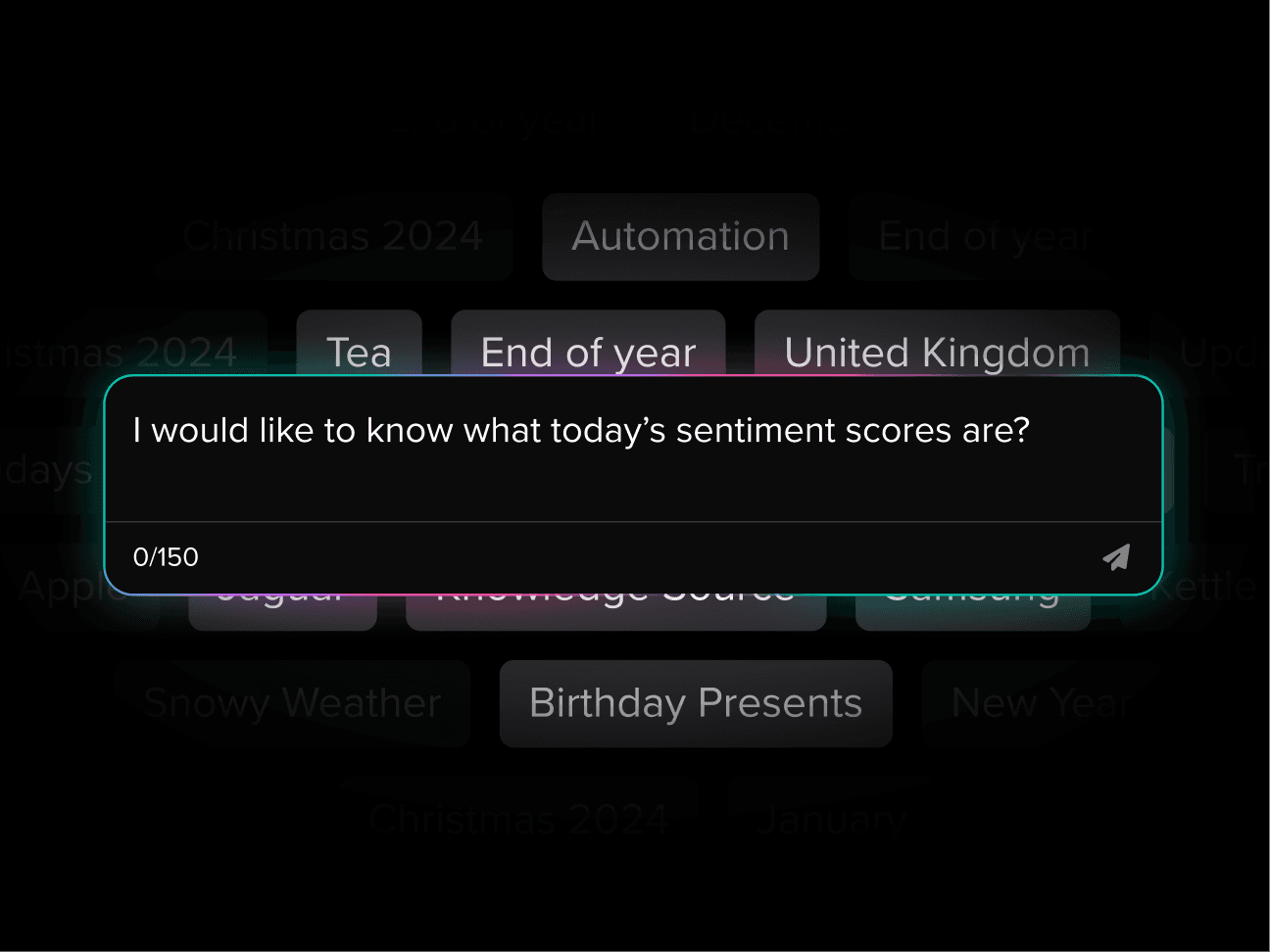
By combining automated call handling with sentiment analysis, the system can detect when a caller is becoming frustrated or angry. It can then make an autonomous decision to "escalate" the call to a human supervisor immediately. This ensures that while the AI handles the bulk of the work, it never risks a PR disaster by ignoring a distressed customer.
Omnichannel State Management
Customers often switch channels; they might start on a web chat and move to a phone call. A connected platform should preserve relevant context when that happens. This is especially important when a Phone call handling system is part of a wider omnichannel customer service operation. Consistent Phone call handling means customers do not have to start again when their inquiry moves between voice and digital channels. An integrated AI system maintains the "state" of the conversation across these channels. Deloitte found that companies adopting these omnichannel integration tools achieved a 9% reduction in cost per assisted contact. ConnexAI’s Omni architecture is specifically designed to bridge these gaps, ensuring the AI agent knows what happened in the chat before the phone even rings.
Real-time Knowledge Base Sync
AI is only as good as the information it can access. Integrating your AI handler with a dynamic knowledge base ensures that if a product manual is updated, the AI agent's "advice" is updated across every call in real-time, eliminating the "lag" that usually occurs when retraining human staff on new procedures.
Which Industries Can Benefit from AI-Powered Call Handling Services?
The requirements vary by sector, so a Call Handling Solution should be configured around the types of inquiries each organization receives. Some businesses need straightforward Telephone Call Handling and accurate routing; others need AI agents that can authenticate customers, retrieve account information and complete transactions. The right Call Handling Solution should reflect these differences rather than apply the same call flow to every department.
Banking and Financial Services
Banks face intense regulatory pressure and high volumes of "status check" calls. Autonomous agents handle balance inquiries, card activations, and fraud alerts. By automating these, banks have seen generative AI reduce human-serviced contact volumes drastically.
Telecommunications
Telecom providers struggle with high churn and complex billing. AI can manage the 24/7 nature of tech support and "plan upgrades." For instance, a major telco scenario might involve an AI agent autonomously running a line test and rebooting a router while the customer is on the phone, resolving a "no-internet" ticket without human intervention.
Utilities (Energy and Water)
Utility companies often deal with seasonal spikes (e.g., winter bill inquiries). AI-powered automation allows them to expand capacity without relying solely on temporary staff. In this sector, omnichannel integration has proven vital, with companies seeing significant reductions in cost per contact through better tool alignment.
Healthcare and Pharmaceuticals
In healthcare, AI handles appointment scheduling and prescription refills. This is particularly valuable because productivity gains from AI are most pronounced among less-experienced staff, helping newer administrative teams perform at the level of senior veterans. A Call Handling Solution can also connect appointment workflows with patient records and service teams, provided the necessary privacy and access controls are in place.
Retail and E-commerce
Retailers use autonomous agents to manage "Where is my order?" (WISMO) calls, which often make up a big portion of their volume. A Phone call handling system connected to order management software can retrieve delivery updates and respond to these inquiries without requiring an employee to look up each order. The same Phone call handling approach can support returns, payment queries and other routine retail inquiries. By resolving these via AI, they free up human agents to handle high-value sales consultations.
How does automated call handling affect scalability during peak demand periods?
Does AI-powered call handling improve consistency across customer interactions?
Can a call handling service improve first-contact resolution?
Can automated call handling generate valuable business intelligence?
How can telephone call handling support global operations?

How to Choose and Implement a Call Handling Solution
When comparing providers, look beyond whether a platform can answer calls. A complete Call Handling Solution should fit your existing workflows, support the channels your customers use and provide clear controls for escalation. Consider whether the Telephone Call Handling features cover call routing, queue management, reporting and integrations, as well as AI-led resolution. Reliable Telephone Call Handling should also include fallback procedures for outages and periods of unusually high demand.
Conduct a Volume Audit: Review your current Phone call handling processes before buying a call center management software platform, analyze your last 90 days of call logs. Identify the "top 5" intents that are high-volume and low-complexity (e.g., password resets). These are your prime candidates for autonomous resolution. This review gives teams a practical baseline for improving Phone call handling without automating every interaction at once. It also helps identify where Phone call handling would benefit most from better routing, self-service or agent assistance.
Define Success Metrics Beyond AHT: While Average Handle Time is important, focus on "First Call Resolution" (FCR) by the AI. Use the McKinsey benchmark of aiming for a 30-45% increase in overall customer operations productivity.
Choose a Cloud-Native CCaaS Foundation: Scaling AI on legacy hardware is nearly impossible. Check that the platform can support your existing Call Handling Service requirements while allowing you to introduce more automation over time. Before committing, compare how each Call Handling Service handles integrations, reporting, security and ongoing support. The global Contact Center as a Service (CCaaS) market is projected to reach over $30 billion by 2034 because it provides the "plumbing" for AI. Ensure your provider, such as ConnexAI, offers a cloud-native environment and the integrations needed to support your phone support workflows.
Build "Human-in-the-Loop" Escalations: Define the exact "trigger points" where the AI should hand off to a human. This ensures a safety net.
Pilot and Iterate: Start with a "silent" pilot where the AI listens and suggests answers to agents, then move to "active" handling for a small segment of traffic. Monitor for "hallucinations" and refine the LLM's grounding before a full rollout.
Conclusion: Choosing the Right Call Handling Solution
Choosing the right Call Handling Solution is increasingly important for organizations looking to manage rising call volumes and customer expectations. The data is clear: businesses that embrace these "service innovator" traits see 4.6x better customer satisfaction and significant relief from the 52% attrition rates currently crippling the industry. You have learned that the key to success is not just deploying a bot, but operationalizing a reasoning agent that is deeply integrated with your CRM and business logic.
As you look to reduce your labor costs—which Gartner reminds us can be 95% of your budget—the logical next step is a platform that simplifies this complexity. ConnexAI provides the unified, AI-first infrastructure necessary to bridge the gap between promising technology and productive results.
Sources
57% of leaders expect call volumes to increase by as much as one-fifth (McKinsey)
Labor represents up to 95% of contact center costs (Gartner)
Only 3% of organizations successfully scaled a generative AI use case in operations (McKinsey)
GenAI Adopters 35% Less Likely to Report Agent Overwhelm (Deloitte)
Gen AI can reduce human-serviced contacts by up to 50% (McKinsey)
Service innovators 8x more likely to deploy GenAI (Deloitte Digital)
Service innovators: 4.6x better CSAT, 2.5x better employee satisfaction (Deloitte Digital)
Omnichannel integration leading to 9% reduction in cost per assisted contact (Deloitte Digital)
30-45% productivity increase in customer operations (McKinsey & Company)
CCaaS market going from $7.08B in 2025 to $30.15B in 2034, 17.40% CAGR (Fortune Business Insights)