


From Calls to Connections: Choosing the Right Call Centre Software Platform in 2026
In 2026, the market is full of Call Centre Software options designed to fit every possible need, making it crucial to pick the right one if you want your customer engagement to really shine. At its core, Call Centre Software helps businesses handle large volumes of phone calls by managing tasks like call routing, collecting caller data, and automating responses. But many platforms go beyond just calls — they offer full customer interaction management across multiple channels, packed with AI-driven tools to gain deeper insights into your callers. Plus, features like Call Centre Automation make customer engagement smoother and more efficient, while Workforce Management (WFM) tools boost agent productivity and give managers clear visibility into performance.
With so many ways for customers to reach out—whether through live chat, social media, or email—you might think phone calls are becoming obsolete. But actually, that’s far from true. According to recent research by Contact Babel, 47% of customers still prefer phone channels for complex inquiries. So managing phone calls effectively remains a critical part of how companies connect with their customers today.
There are almost as many Call Centre Software choices as there are types of call centres. Every business is unique, and often the best CCaaS (Contact Center as a Service) solution is one that can be customized, scaled, and fine-tuned to meet the specific challenges and goals of a particular call centre.
So, why is Call Centre Software so important, and how do you choose the right one? That’s exactly what we’ll cover in this article. We’ll explore different types of Call Centre Software and what they mean for different businesses, explain why picking the right solution matters, and share tips on finding the best platform for your needs. We’ll also highlight key features to look for, share practical use cases, dive into the benefits for various industries, and discuss best practices for onboarding and implementing your chosen software.
But first, let’s start with the basics: what exactly is Call Centre Software?

What Is Call Centre Software and What Can It Do For Your Business?
We can define Call Centre Software as any program designed to assist businesses in managing high volumes of incoming and outgoing phone calls. Typically, this can include functions like call routing, gathering caller data, initiating pre-recorded responses to frequently asked questions, and facilitating transfers to alternative communication channels. But that’s not all.
Some Call Centre Software platforms offer even more features that go beyond optimised call routing, managing of phone calls, or collecting customer information.
The rapid evolution of AI, for example, has facilitated a plethora of intelligent functionalities that can help call centres to gain a deeper understanding of their callers than ever before. Other tech innovations, like Call Centre Automation, have also given a whole new meaning to what Call Centre Software can do to streamline and boost customer engagement processes. Additionally, some call centre solutions also include features related to workforce management or WFM. Workforce Management Call Centre tools can help call centre agents be more productive and motivated and managers to gain a better, more comprehensive view of agents’ aggregate and individual performance.
Some features we can find in advanced call centre solutions are Customer Interaction Management, Customer Interaction Analytics, Dialler features, Call Recording, Voice Recognition, Conversational AI, Workflow Automation, and more.
Later on in this article, we’ll briefly go over how each of those functionalities work and what they can do for different types of contact centres. But before that, let’s give an answer to what you’re probably wondering: why use Call Centre Software?
What is Call Centre Software?
How has Call Centre Software evolved beyond phone calls?
Is phone support still relevant with so many digital channels?
Summary
In 2026, Call Centre Software is essential for managing high volumes of calls and multi-channel customer interactions. Modern platforms go beyond call routing, offering AI-driven insights, automation, and workforce management tools to boost efficiency and customer satisfaction. Despite digital channels, 65% of customers still prefer calling directly, making effective phone management crucial. Choosing a scalable, customisable solution tailored to your business ensures better engagement, productivity, and long-term value.
What Call Centre Software Can Do for You: Benefits, Use Cases, and Who Needs It
That’s arguably the most important question when it comes to call centre solutions, and probably the one you’re most eager to have answered.
When you look at today’s customer engagement landscape and consider how rapidly communication technologies have evolved over the past few decades, it’s clear why Call Centre Software—or Customer Service Software platforms—have become indispensable across industries.
Simply put, technology has advanced at lightning speed, matching the rising expectations customers have for service. Features like intelligent call routing, Artificial Intelligence, omnichannel support, and workflow automation give call centres a huge advantage in handling customer queries, meeting demands, and delivering a seamless, fast, and cost-effective customer experience. These capabilities have quickly made Call Centre Software a must-have for any call centre aiming to stay competitive in today’s fast-moving customer service world.
Some of the key benefits Call Centre Software offers include:
High-value, personalized customer service that meets customer needs more quickly and effectively
Omnichannel support, allowing seamless interactions across multiple communication channels
Intelligent call routing that directs calls to the best-suited agents, cutting wait times and improving outcomes
Robust analytics and reporting tools to monitor performance, track key metrics, and gather customer feedback
Cost savings by boosting efficiency and reducing time spent on menial tasks
Support for remote work, helping teams stay flexible and productive
Later in this article, we’ll take a closer look at how Customer Service Software drives meaningful improvements across contact centre operations. But first, to understand why Call Centre Software has become so essential, let’s look at some revealing industry statistics:
Customer expectations continue to rise. In 2024, 87% of support teams reported higher customer expectations compared to the previous year; that number was 83% in 2023 and 75% in 2022.
Customer loyalty is more fragile than ever. In 2025, 87% of consumers say they would avoid a brand after just one negative service experience. Meanwhile, 78% would switch companies after encountering rudeness or apathy from staff, and 75% would leave if they can’t reach support or receive inconsistent information.
Speed matters. 90% of customers consider an immediate response important or very important when they have a question, and 60% define “immediate” as within ten minutes.
Retention is cheaper than acquisition. It typically costs between 5 and 30 times more to acquire a new customer than to retain an existing one. The bottom line is clear: poor customer service is now costlier than ever.
AI is reshaping expectations.
77% of support teams believe AI will accelerate expectations for faster responses.
Consumer favourability toward Customer Service AI has climbed to 67%, up 10 percentage points year over year.
The share of customers expecting AI to become the primary service channel has risen from 21% in 2021 to 63% today.
94% of consumers choose to interact with AI agents when given the option, and nearly 60% say these agents have become noticeably more helpful in the past year.
70% of consumers see a widening gap between companies that use Call Centre AI effectively and those that don’t.
AI is boosting revenue and lowering costs.
In the second half of 2024, 61% of customer service organisations reported direct revenue growth from generative AI, up from 45% at the start of the year.
Cost reductions followed a similar trend: 45% of organisations saw lower service costs in the first half of 2024, rising to 58% in the second half, an increase of nearly 30%.
The cloud contact centre market is booming. Valued at USD 31.20 billion in 2024, the global cloud-based contact centre market is expected to grow from USD 37.98 billion in 2025 to roughly USD 222.91 billion by 2034. Demand for scalable, flexible solutions will continue to drive the shift toward CCaaS platforms and improved customer experiences.
In 2026, choosing the right software platform, or combination of platforms, has become one of the most critical decisions for business owners, managers, and decision-makers in the call centre industry.
Which brings us to a key question: who actually uses Call Centre Software? Is it necessary for every call centre, or only for certain types of organisations? And do small businesses really need Call Centre Software solutions? Let's address it in the next section.
Why has Call Centre Software become essential?
Can AI improve revenue and reduce costs?
What do consumers think about AI agents?
How does automation benefit call centre operations?
Summary
Call Centre Software has become essential in today’s rapidly evolving customer service landscape, driven by rising customer expectations, the need for faster responses, and the growing role of AI. Modern platforms offer features like intelligent call routing, omnichannel support, automation, and analytics, enabling faster, more personalized service while reducing costs and supporting remote work. With customer loyalty increasingly fragile and retention far cheaper than acquisition, businesses that leverage AI and advanced software gain a competitive edge, improving efficiency, satisfaction, and revenue. The cloud contact centre market is expanding rapidly, highlighting the growing demand for scalable, flexible solutions, making the choice of software platform a crucial decision for businesses of all sizes.
Who uses Call Centre Software? Does my business need it?
The use of AI interaction analytics, for example, can benefit practically any business when it comes to recognising patterns in the conversations with customers or prospects by providing information and insights that can be extremely valuable for sales, product, or marketing teams. Also, Omnichannel, or the capability to maintain seamless conversations across digital channels, can also contribute to making internal communications more effective, seamless, and faster for any company. More on these and other advanced features and Call Centre Software later.
But coming back to pure, core Call Centre Software features: in any business or industry, where effective customer service and communication management is essential, choosing the right call centre solution is a must to stay competitive.
Firstly, call centre software enhances customer service and communication management, which is essential for businesses in today’s highly competitive landscape. It helps businesses address customer inquiries promptly, maintain detailed records of interactions, and ensure that customers receive consistent and high-quality support. This, in turn, leads to increased customer satisfaction and loyalty, which are crucial for sustaining and growing a customer base.
Secondly, call centre solutions can contribute to operational efficiency and productivity by automating call routing, which will ensure that calls are directed to the most suitable agent, reducing wait times and improving response times. It can also provide automated responses to frequently asked questions, freeing up agents to handle more complex inquiries.
Additionally, some Call Centre Software platforms’ analytics and performance monitoring tools allow businesses to assess agent productivity, track key performance indicators, and make data-driven improvements. This efficiency not only improves customer service but also optimises resource allocation within the organisation.
Companies engaged in sales and telemarketing activities can employ call centre software platforms, especially those with Dialling features, for managing outbound calling, lead tracking, and monitoring agent performance.
Lastly, Omnichannel Call Centre Software contributes to accommodate different customer preferences and interaction methods. Many customers now expect businesses to engage with them through channels like email, chat, social media, and text messaging.
By offering these options, businesses can meet customers where they are, creating a more seamless and convenient experience. This flexibility is particularly beneficial in industries where customer interactions occur across multiple channels, such as e-commerce and financial services.
However, call centre solutions are not exclusive to the corporate world. Government agencies and nonprofit organisations often use this software to manage citizen inquiries, hotline services, and public outreach efforts. Healthcare institutions, including medical practices, pharma companies and emergency services, also use call centre software for functions such as appointment scheduling, patient communication, and coordination of emergency responses.
Do small businesses need Call Centre Solutions?
Large enterprises with substantial call volumes and intricate customer service requirements often leverage advanced call centre software to streamline and optimise their customer interactions. However, small businesses can also benefit significantly from call centre software.
Firstly, small businesses often have limited resources and staff, making efficient customer service management critical. Call centre solutions help optimise resource allocation, automates routine tasks, and provides performance monitoring, ensuring that every customer interaction is handled effectively, even with a smaller team. This leads to improved customer satisfaction, which can contribute to customer loyalty and positive word-of-mouth marketing – crucial for small businesses looking to grow and succeed.
Secondly, call centre software offers scalability, allowing small businesses to adapt to growth and changing customer demands. As small businesses expand, they may experience an increase in customer interactions. Call centre solutions can accommodate this growth by easily adding new agents and providing features like call routing to ensure all inquiries are handled promptly. This scalability not only helps businesses meet their customer service demands but also prevents disruptions as they expand.
What’s more: small businesses often need to compete with larger, more established companies. Call centre software can level the playing field by enabling small businesses to provide high-quality customer service and support, which is crucial for building a strong reputation and standing out in the marketplace.
However, it’s essential for small businesses to consider their budget constraints when contemplating a call centre solution. While cost-effective options are available, businesses should weigh the potential benefits against the software’s costs. Ultimately, the decision to implement a call centre solution should be based on the specific needs and goals of the small business in question.
As you might know, there are a few different types of Call Centre Software platforms, and each of them might suit some businesses better than others; so it’s vital to know the differences between them, as well as the features and benefits each of them can bring with them, before deciding on a particular Call Centre Software solution.
Before we review some of the most important Call Centre Software features to see how Contact Centre Software works in the field, let’s go through the main categories of Call Centre Solutions in the next section.
How can AI interaction analytics transform the way businesses understand their customers?
What role does automation play in enhancing customer interactions?
How can call centre software help manage peak call volumes?
How do outbound dialing call centre software features enhance sales efficiency?
Summary
In 2026, Call Centre Software is essential for businesses of all sizes to manage customer interactions efficiently and stay competitive. Modern platforms go beyond handling calls with routing and automation, offering omnichannel support, AI-driven insights, and workforce management to boost agent productivity and customer satisfaction. They help large enterprises and small businesses optimise resources, scale operations, and deliver personalised service. Across industries—from e-commerce and finance to healthcare and government—these solutions enable fast, seamless, high-quality experiences, making the right software choice critical for efficiency, loyalty, and long-term growth.

How Different Types of Call Centre Software Solutions Can Improve Your Customer Service
Hosted, Cloud, and On-Premise Contact Centre Software Solutions
When it comes to setting up a call centre, businesses usually have three main types of software deployment to choose from: on-premise, hosted, and cloud-based. Each option has its own setup, costs, and level of flexibility, so it’s important to understand what fits best with your company’s needs
On-premise call centre software is installed on a business’s own servers and managed internally. This gives your company full control over the system, which can be important for organisations with strict data security requirements or specialised needs. It also allows for a high degree of customisation. However, running an on-premise system comes with high upfront costs and ongoing maintenance responsibilities. Businesses need to invest in physical infrastructure and keep IT staff on hand to manage updates and troubleshoot issues. Because of this, on-premise contact centre software solutions are generally better suited to large organisations with the resources to manage them.
Hosted call centre software, by contrast, is managed by a third-party provider and runs on the provider’s servers. This setup significantly reduces the initial cost, since there is no need to purchase or maintain hardware. The provider typically handles maintenance and updates, freeing up your business’s internal team. Hosted solutions are often a good fit for small and medium-sized companies that want a straightforward, pay-as-you-go model. While they offer less flexibility for customisation, they will make it easier to get up and running quickly and scale as needed than with On-premise solutions.
Cloud-based call centre software takes things a step further. While it is often lumped together with hosted solutions, the cloud model is more flexible and decentralised. Rather than relying on physical infrastructure or direct network connections, cloud call centre solutions operate using virtual servers and internet-based calling through VoIP.
This setup will allow your business to scale instantly depending on their needs, whether that means increasing capacity during busy periods or scaling back when things are quieter. There are no fixed servers or unused resources to worry about, which makes cloud software particularly resilient and cost-effective. It offers strong business continuity and is ideal for companies that need to stay adaptable and available.
Outbound and Inbound Contact Centre Software Solutions
Inbound and Outbound Call Centre Software Solutions are designed to manage different aspects of customer interactions and communication. Understanding the differences between them is essential for businesses looking to optimise their call centre operations.
Inbound Call Centre Software is all about handling the calls your customers make to you. Think of those times when someone calls for support, to ask a question, or get help with an order. This software helps your team manage those incoming calls quickly and efficiently. It usually includes features like automatic call routing (so customers don’t get stuck waiting or transferred too many times), interactive voice response (IVR) systems that guide callers through options, and tools to monitor calls for quality. If your business deals with a steady stream of customer inquiries and needs to provide fast, helpful service, inbound software is essential. It’s designed to make sure every call ends with the customer feeling heard and supported.
On the flip side, Outbound Call Centre Software is built for reaching out to customers or prospects. Whether you’re running sales campaigns, doing telemarketing, or sending reminders and follow-ups, this software helps your agents make those calls efficiently. Key features typically include different dialler features, like predictive dialling, progressive dialling, auto-diallers, and call scripting tools, which guide conversations to keep them on track. If your focus is on sales growth or proactive customer outreach, outbound software is your best friend.
The key difference? Inbound solutions handle incoming calls and focus on customer care, while outbound solutions automate outgoing calls to boost sales and marketing efforts. And if you want the best of both worlds, some platforms, like ConnexAI, combine these capabilities in one easy package.
Understanding these differences means you can make smarter decisions about how to equip your call centre so your team works smarter, your customers get better service, and your business grows stronger.
Omnichannel Contact Centre Software Solutions
As we have explained in previous articles, Omnichannel Customer Experience is now the new norm across industries; in turn, Omnichannel Call Centre Software Solutions are steadily becoming the new standard in the world of customer service and engagement.
These solutions are designed to seamlessly integrate various communication channels, such as phone, email, chat, social media, and more, into a unified platform. What makes them stand out is their ability to provide customers with a consistent and personalised experience regardless of the channel they use to connect with a business.
Agents equipped with omnichannel software have a comprehensive view of each customer’s interaction history, allowing them to offer efficient and highly customised support. This not only enhances customer satisfaction and loyalty but also streamlines internal processes, leading to improved operational efficiency. In a world with multiple communication channels and a variety of customer preferences, Omnichannel solutions are essential for businesses aiming to stay competitive and meet their customers’ demands in the digital age. Omnichannel call centre solutions often come equipped with additional features, like Conversational AI, Call Centre Automation or Customer Interaction Analytics.

But how does a Call Centre Software platform work? In the next section, we’ll take a quick look at how each of those functionalities could look like on the field.
What is on-premise call centre software?
How does hosted call centre software differ from on-premise?
What are the benefits of cloud-based call centre software?
How Contact Centre Software Works: 8 Key Features
We’ve already touched on how call centre software can cover a lot of ground — helping teams manage everything from daily operations to complex customer interactions. Some features are absolutely essential if you want to keep up in today’s competitive call centre world. Others are more advanced, specialized tools that can give your contact centre a serious advantage.
In this section, we’ll break down both the must-have basics and the cutting-edge features that can transform how you work.
Omnichannel Customer Experience
Customers no longer reach out through just one channel. One day it’s a phone call, the next it’s an email, a chat message, or a comment on social media. The challenge isn’t just being available on all these channels, but able to manage them in a connected, consistent way.
That’s what omnichannel call centre software is designed to do. It brings all your customer communication into a single platform, so agents can see the full context of a customer’s interactions, no matter where they happened. That means faster responses, fewer misunderstandings, and a smoother experience for the customer.
It also simplifies things behind the scenes. With everything in one place, it’s easier to monitor performance, spot service gaps, and maintain consistent standards across channels. Software like ConnexAI goes further by providing real-time data and reporting tools that give you a clearer picture of how your customers are engaging — and how your team is handling those interactions.
AI Analytics
Customer Service AI is becoming a valuable asset for call centres that want to better understand their customers and improve team performance. It can process large volumes of interactions, picking up patterns and trends that would be difficult to spot manually. Research by Accenture shows that 57% of high-performing organizations leverage customer service insights to enhance enterprise processes, ranging from go-to-market strategies to product development. Moreover, leading companies are 48% more likely to make significant investments in generative AI to improve predictive capabilities compared to organizations with the weakest service outcomes.
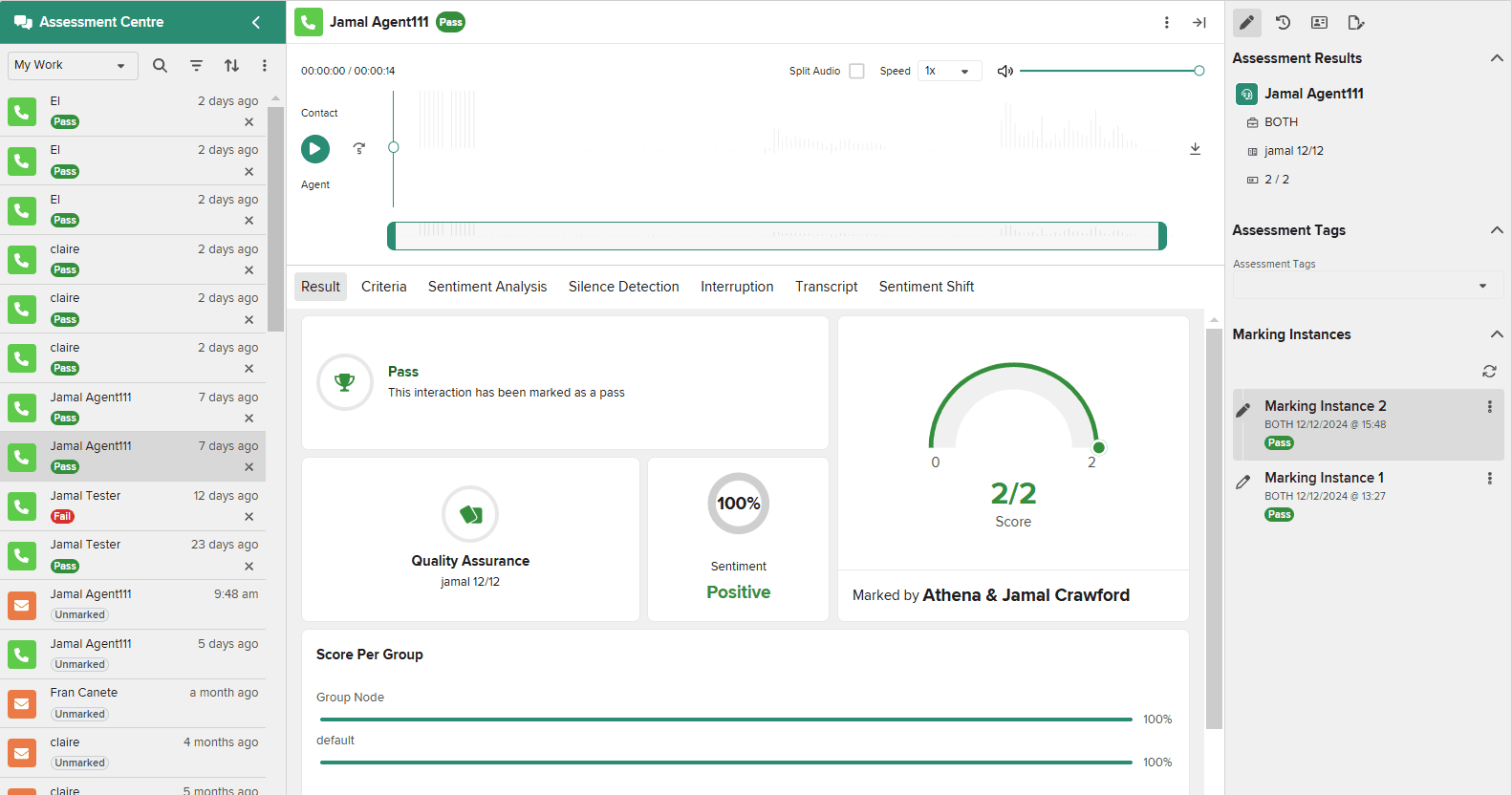
One of the most useful tools is sentiment analysis. By examining the language, tone, and structure of conversations, the software can detect whether a customer is satisfied, confused, or becoming frustrated. This helps managers identify moments when things go off track and adjust training or processes accordingly.
Other Call Centre AI tools focus on recurring keywords or topics, helping you see what issues come up most often and how they’re being handled. This is especially useful for quality assurance, product feedback, and identifying areas where agents may need more support.
These insights allow your team to respond more thoughtfully to customer needs while also improving internal workflows.
Conversational AI
Conversational AI is software designed to interact with customers using natural language. It can answer questions, automate routine responses, and guide users to the right resources, reducing wait times and improving service consistency. By handling repetitive inquiries, it frees human agents to focus on complex, high-value tasks, enhancing efficiency and the overall customer experience. Industries like e-commerce, finance, and customer support—where high volumes of routine queries are common—benefit the most. From small startups seeking cost-effective support to large enterprises aiming to maximize efficiency, AI Chatbots have become an essential tool.
AI Agents represent the next generation of customer service automation. Unlike traditional chatbots, which rely on pre-defined scripts or simple data retrieval, or conversational AI chatbots, which can understand natural language and generate human-like responses but still depend largely on user prompts, agentic AI operates autonomously. It understands context, generates solutions, executes actions independently, integrates with backend systems, and continuously learns from interactions. These advanced AI agents can manage complex conversations and escalate only the most challenging issues. This autonomy allows businesses to provide faster, smarter, and more personalized customer support than ever before.
Over the past year, the capabilities of Conversational AI have grown dramatically. In 2025, 42% of customers report that AI can handle complex service inquiries as effectively as humans—a 50% increase from 28% in 2024. Meanwhile, 67% of consumers are now asking AI a broader range of questions than ever before. Salesforce data shows that 69% of customer service professionals use some form of AI, with 39% employing agentic AI and 53% using generative AI, while deployment of AI agents surged 119% in the first half of 2025, particularly in sales and customer service.
Advanced solutions like ConnexAI's AI Agent take this further, being trained on domain-specific data to provide expert-level responses to highly specific customer queries. By continuously adapting to new information, acting independently, and understanding context, AI Agent offers a level of responsiveness and personalization far beyond traditional call centre automation. As a result, it is setting a new standard for how businesses interact with customers, transforming Artificial Intelligence from a simple support tool into a strategic driver of performance and productivity.
AI Coach
Even the most experienced call centre agents know that having the right information at the right moment can make all the difference. It’s the line between a smooth, confident call and one that leaves a customer feeling uncertain or frustrated. When agents can quickly answer detailed questions, naturally spot upsell opportunities, or guide someone to the right service, it doesn’t just help the customer—it builds trust, enhances the overall experience, and strengthens team performance.
But keeping on top of that knowledge in real time—especially during a high volume of calls—isn’t always easy. This is where AI steps in.
AI coaching or copiloting tools give agents real-time support during calls, so they no longer have to rely solely on memory or manually search through systems. The AI can surface relevant product information, suggest the most effective responses, and guide the conversation based on what the customer needs. If there’s an upsell opportunity, the tool highlights it. If another department is a better fit, it can prompt a timely transfer. Essentially, it’s like having an expert assistant at the agent’s side, helping them navigate conversations with confidence and efficiency.
In fact, research by Zendesk reveals that 93% of CX Trendsetters say that AI copilots are an effective way to help both customers and agents get comfortable with AI, while also introducing them to more advanced uses. Agents supported by AI copilots are 20% more likely to feel empowered to excel in their role.
Workflow Automation
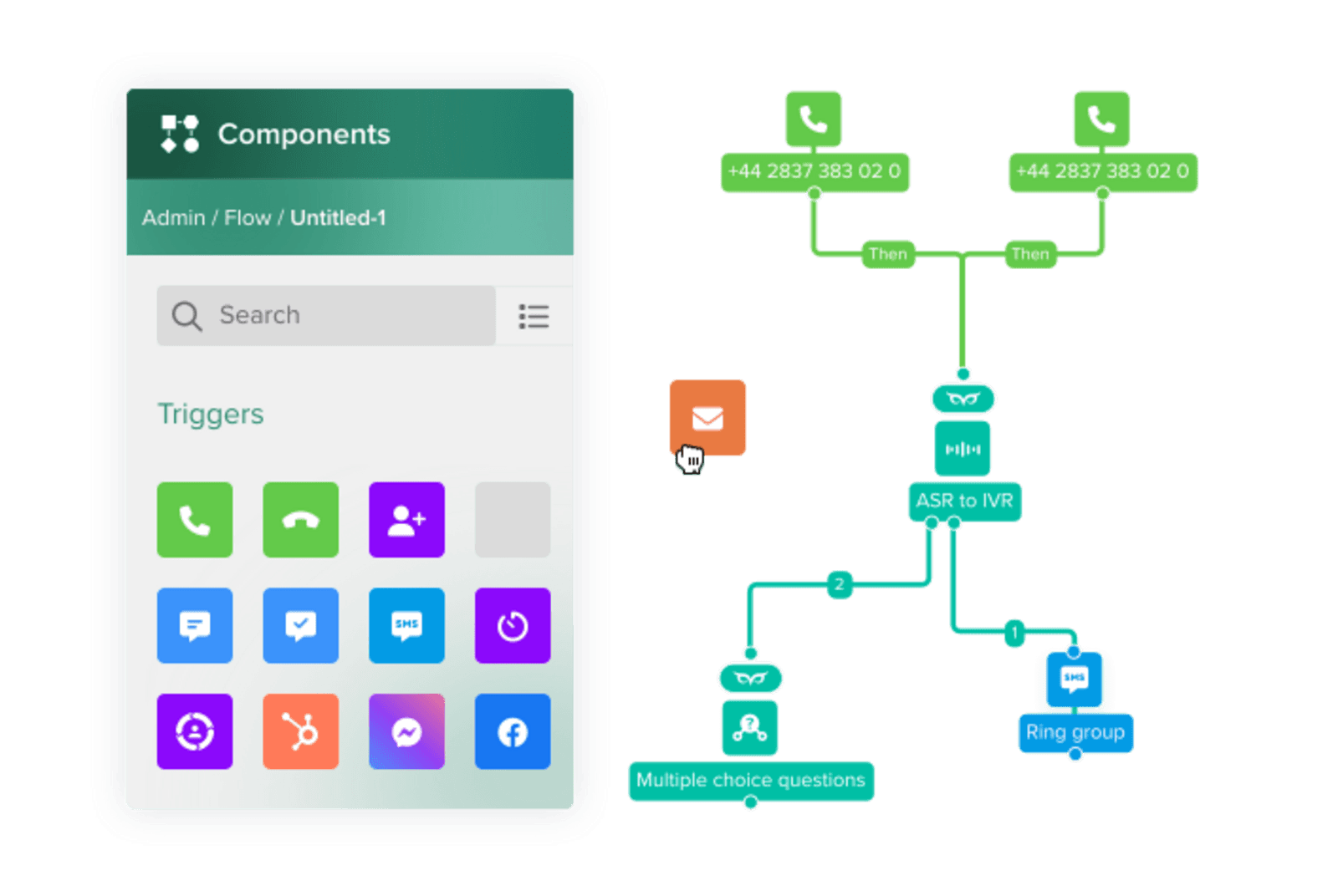
Workflow automation is one essential practice linked to Customer Experience Automation, leading to more seamless, satisfying, and effective customer interactions. This form of Customer Service Automation contributes to creating memorable brand experiences and fosters increased customer loyalty. Automating workflows related to the customer experience can empower teams to achieve unprecedented levels of efficiency, resulting in faster, cost-effective processes and increased customer satisfaction. Some Call Centre Software platforms equipped with workflow automation features can automate the entire call routing process, seamlessly connecting various touch points according to the rules aligned with the business and customer preferences.
Queries can be sorted and routed by channel, skill requirements, language, or specific keywords. Workflow automation is especially beneficial for businesses dealing with a high volume of queries that demand diverse skillsets. Customer Service Automation ensures that each interaction is promptly handled by the appropriate team, ensuring smooth, fast, and fruitful conversations for both representatives and customers.
What’s more, integrating AI into these workflows allows for the categorization and routing of inquiries using advanced features like Voice Recognition IVR or Keyphrase Analysis.
Predictive Dialler
If you’re in sales or outbound marketing, you’ve likely come across predictive diallers. As we have explained in other articles, a Dialler is a device or software application used to assist sales and contact centre agents in making outbound calls. It does so by automating the dialling process from a contact list and connecting calls seamlessly to available agents. The particular type of Dialler within a certain Call Centre Phone System is paramount to how a company engages with its customers or prospects and how it scales and develops its operations.
Predictive Diallers are a distinct type of Dialler, notable for their use of advanced statistical algorithms and Artificial Intelligence. They predict when an agent is likely to be available and initiate multiple calls simultaneously to match the anticipated agent availability. Predictive diallers can significantly increase call volume, making them an excellent choice for high-volume outbound campaigns. They are efficient in keeping agents engaged in live conversations by minimising idle periods between calls.
However, they are notably best suited for companies with high volumes of outbound calls, and they might not be entirely apt for smaller businesses’ needs. Still, there are other types of Diallers, like Progressive Dialler, that can be best suited for smaller contact centres’ demands. We have explored the main types of Diallers in this article and others, like the one dedicated to Preview Dialler and Automatic Dialler.
Gamification
Keeping agents motivated and retained is vital for a successful contact centre. According to a Zendesk study, businesses with satisfied agents also tend to achieve higher customer satisfaction. How do you ensure your customer teams stay engaged and perform at their best? Gamification could be the answer.
Gamification is a powerful Workforce Management tool that can transform the agent experience and drive exceptional performance. By integrating a gamification system into your customer service platform, you introduce game-like elements such as rewards, achievements, and leaderboards, creating healthy competition among teams. This boosts agent morale, fueling their passion for success. With a Gamification approach to Workforce Managemen, agents are motivated to deliver outstanding customer service, driven by the thrill of rewards and leaderboard rankings. This heightened motivation translates to improved productivity and, most importantly, higher customer satisfaction and loyalty.
Speech-To-Text and Text-To-Speech AI
AI voice technology is changing the way we communicate with digital systems, making conversations with machines feel surprisingly natural. At the heart of this transformation are Speech-to-Text (STT) and Text-to-Speech (TTS) technologies, which power AI voice chatbots and enable seamless, spoken interactions.
STT converts what we say into written text, allowing AI chatbots and AI Agents to understand context, detect sentiment, and respond intelligently in real time. TTS does the reverse, turning written responses into natural-sounding speech, so conversations feel human, engaging, and effortless. As a result, users can speak naturally instead of typing, making interactions faster, more intuitive, and undeniably satisfying.
The impact of voice AI is measurable. According to Salesforce, 89% of service professionals report that context is maintained when customers switch from voice AI to human representatives, while 85% say the transition is seamless for customers. From the customer perspective, 74% believe voice AI would significantly improve their experience when interacting with AI. These findings underscore the effectiveness of voice AI in delivering smooth, context-aware, and human-like interactions.
For businesses, investing in AI Voice Automation pays off. CX leaders who see high ROI on their support tools are 62% more likely to prioritize enhancing their voice channels with speech analytics, AI Voice, and Natural Language Processing. By combining STT and TTS, organizations can create conversational AI that’s not only convenient and efficient but also truly engaging, bridging the gap between humans and technology.
How can AI analytics reveal insights that humans often miss?
In what ways can an AI Coach change how agents perform in real time?
What differentiates conversational AI from traditional chatbots?
In what ways does workflow automation benefit call centre operations?
One Use Case: How RefiJet benefitted from ConnexAI’s Contact Centre Solution
RefiJet is a leading auto refinancing company based in Colorado, helping consumers access more flexible vehicle financing options. With a 24/7 contact center handling over 1,000 calls per day, RefiJet was looking for a way to simplify its technology stack, improve efficiency, and deliver around-the-clock customer support without increasing operational costs.
After evaluating several customer experience providers and managing as many as four different vendors simultaneously, RefiJet chose ConnexAI as a unified platform capable of supporting its growing service operation. The company needed a solution that could automate routine enquiries, provide deeper operational insights, and enable agents to focus on higher-value customer interactions.
The implementation of ConnexAI's AI Agent delivered immediate results. By handling common customer enquiries and leveraging RefiJet's internal knowledge base, the AI Agent reduced the number of calls handled by human agents by 50–60%, allowing teams to spend more time supporting customers with complex refinancing needs.
Alongside automation, ConnexAI's AI Analytics platform enabled RefiJet to analyse every customer interaction, uncover service trends, and identify opportunities to improve performance. These insights helped leadership make faster, more informed decisions while maintaining high service standards across the contact center.
By consolidating four vendors into a single platform and introducing AI-powered customer support, RefiJet created a more efficient, scalable operation capable of delivering exceptional service 24/7. As Guy Valles, Contact Center Operations Manager at RefiJet, explained, "I've used a lot of different platforms over the years and everything that ConnexAI has just seemed miles ahead of their competitors."
Conclusion
Hopefully, by now you know everything all the basics about Call Centre Software, why it is so important, and the most essential features you should look for in a call centre solution. If you want to explore further, you can speak to one of our specialists to get more information about our Call Centre Software platform or get a free, personalised demonstration session.