Why Is Real-Time Monitoring Now a Strategic Necessity?
The contact center industry is currently weathering a structural transformation that has rendered traditional, retrospective quality assurance (QA) obsolete. At the center of this shift is call center monitoring software, which can be understood as a class of systems designed to capture, analyze, and interpret customer interactions across voice and digital channels in real time, enabling both performance oversight and immediate intervention. For years, supervisors listened to call recordings days after the fact, identifying errors that had already cost the business a customer. Today, this call center software has evolved into a live operational co-pilot, providing active, in-flight guidance to agents as they navigate increasingly high-stakes interactions. This shift is fueled by a complexity paradox: as basic queries are handled by chatbots, human agents are left with the most emotionally charged and technically difficult scenarios.
The scale of this challenge is quantified by the sheer volume of investment flowing into the sector. Gartner research from late 2025 indicates that 75% of service and support leaders have increased their AI-specific budgets year-over-year, largely due to 77% of executives feeling direct pressure to deploy these solutions. This financial commitment is a response to a growing crisis in agent well-being and performance; TTEC Digital reports that 77% of agents now face more complex workloads than they did just one year ago. Without real-time intervention, this complexity leads directly to burnout and attrition.
By implementing Call Center AI software that monitors interactions as they happen, your business moves from a reactive posture to a proactive one, catching errors before they escalate and supporting agents when they need it most. This article will examine the mechanics of real-time monitoring, the measurable ROI it delivers, and the roadmap for successful enterprise-wide implementation. We will now define exactly what this technology entails and how it functions beneath the surface.
What Exactly Is Real-Time Call Center Monitoring?
Real-time call center monitoring software refers to the suite of technologies that capture, transcribe, and analyze live audio or text interactions as they occur between an agent and a customer. Unlike traditional monitoring, which relies on a post-interaction review of a small sample of calls, real-time systems provide 100% visibility into every active conversation. It functions by creating a digital bridge between the raw audio stream and an analytical engine that interprets intent, sentiment, and compliance in milliseconds.
The underlying mechanics involve a sophisticated leap in architecture. Modern systems must process thousands of simultaneous interactions with a data processing latency of less than 100 milliseconds to remain effective. The process begins with massive event ingestion, where live audio is converted into text via high-precision speech recognition, often exceeding 95% accuracy. Once transcribed, AI Analytics algorithms, which differ from simple keyword spotting, analyze the "intent" of the caller. For example, the software doesn't just hear the word "cancel"; it understands whether the customer is frustrated or simply asking about a cancellation policy.
These systems then trigger specific actions, such as "whisper coaching," where a supervisor or AI surfaces a "next-best-action" prompt on the agent’s screen. This ensures that the agent has the right information at the exact moment a sentiment shift is detected, moving the needle from a potential escalation to a successful resolution.
What is call center monitoring software?
How does real-time call center monitoring work?
What is the difference between real-time and traditional call monitoring?
How does call monitoring software improve agent performance?
Can AI monitor every customer interaction?
Summary
Real-time monitoring is a live analytical layer that processes 100% of interactions with sub-100ms latency. It uses conversational intelligence to identify intent and sentiment, providing agents with immediate guidance rather than retrospective feedback.

What Are the Tangible Rewards for Your Operations?
Transitioning to real-time monitoring is not merely a technical upgrade; it is an operational overhaul that delivers gains across every primary Key Performance Indicator (KPI).
Significant Gains in First Contact Resolution (FCR): When agents receive real-time intent data, AI call analytics, and automated prompts, they are far more likely to solve the issue on the first attempt. High-performing centers see FCR improvements of 15% after implementation.
Drastic Reduction in Average Handle Time (AHT): AI-enabled monitoring reduces agents’ cognitive load by automating routine tasks such as information retrieval and post-call summarization. It can cut AHT from minutes to seconds, with studies showing an average of 14% increase in issues resolved per hour on average.
Improved Agent Experience (AX) and Retention: Real-time tools provide a "safety net" for agents dealing with difficult calls. 81% of employees who use AI report higher productivity, 80% say it reduces job-related stress, and 79% report increased job satisfaction, largely because it helps eliminate manual-task friction and breaks down information silos.
Enhanced Quality Assurance (QA) Scores: Automated evaluation through customer analytics software allows for 100% of calls to be scored, rather than a 1-2% manual sample. This comprehensive oversight leads to a drastic improvement in overall quality scores as systemic issues are identified and corrected instantly.
Reduced Training Time and "Skill Compression": Real-time monitoring supported by Customer Experience analytics acts as a "leveler," providing novice agents with the knowledge previously held only by veterans. This "skill compression" can result in productivity gains of up to 34% for lower-skilled or less experienced workers.
Lower Cost Per Contact: By improving resolution rates and reducing repeat contacts, organizations can lower cost per contact and cut overall costs by more than 20%.
Mitigation of Compliance Risk: In regulated industries, real-time script adherence monitoring ensures that 100% of legal disclosures are made, preventing costly regulatory fines.
The cumulative effect of these benefits is a contact center that is four times more likely to deliver an exceptional customer experience. But how do these benefits manifest in specific toolsets? Let’s break down the taxonomy of modern monitoring software.
Which Tools Define the Modern Monitoring Landscape?
To build an effective stack, you must understand the different components of real-time monitoring software. Each serves a distinct operational purpose.
Conversational AI
Conversational AI and LLMs are the core engine of the system. They use Natural Language Processing (NLP) to decipher the actual meaning and intent behind a customer's words. Unlike older systems that only flagged keywords, Conversational AI understands context and can identify the reason for a call with 95% accuracy within the first few seconds.
What businesses should use Conversational AI? Any organization handling diverse, non-transactional inquiries where understanding "why" a customer is calling is critical for routing and resolution.
Real-Time Sentiment Analysis
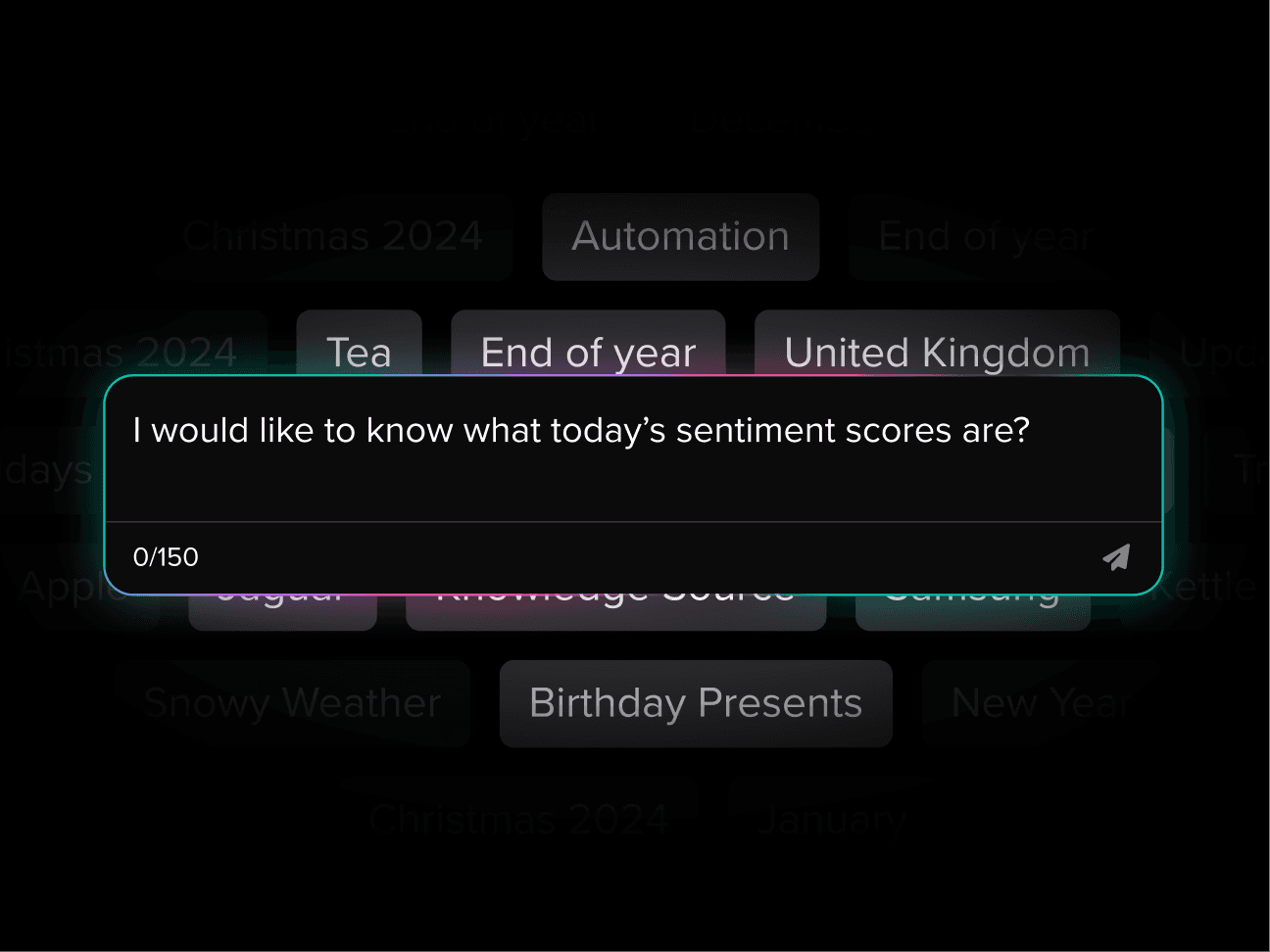
This tool monitors the tone, pitch, and pace of the interaction to detect emotional shifts. If a customer's sentiment moves from neutral to frustrated, the system can automatically alert a supervisor for an immediate "whisper coaching" intervention.
What businesses should use Sentiment Analysis? Centers dealing with high-stress or sensitive topics, such as collections, healthcare, or high-tier technical support.
Agentic AI Assistants
An AI Agent goes beyond simple conversational response; it can autonomously plan and execute multi-step workflows. For instance, if an agent is on a call regarding a refund, the agentic AI can automatically pull up the customer's purchase history and prepare the refund form in the background.
What businesses should use AI Agents? Enterprises looking to automate complex back-office processes and reduce the manual data-entry burden on agents.
Real-Time Script Adherence and Compliance
These tools track whether an agent is following mandatory workflows or legal disclosures in real-time. If a required statement is missed, the software provides an instant visual prompt to the agent to rectify it before the call ends.
What businesses should use Compliance Tools? Regulated industries such as Banking, Financial Services, and Insurance (BFSI) or telecommunications.
Automated Summarization
This feature uses generative AI to create a concise, accurate summary of the interaction immediately after it concludes, reducing the need for manual note-taking.
What businesses should use Automated Summarization? Centers with high call volumes where "After-Call Work" (ACW) is a significant bottleneck to productivity.
While these individual tools are powerful, their true value is unlocked through integration with your broader technology stack.
How Do Integrations Amplify Your Monitoring Strategy?
Monitoring software does not operate in a vacuum; it is most effective when it serves as the integration layer for your entire customer journey. A primary challenge in modern centers is data fragmentation—the average organization manages nearly four different technologies, but only 3% operate on a single, unified platform.
CRM and Omnichannel Integration
Integrating your monitoring software with your Customer Relationship Management (CRM) system allows the AI to pull context from across the customer lifecycle. Only 36% of contact centers currently operate a true omnichannel setup where data flows seamlessly between voice, chat, and email. When integrated, the monitoring tool can present the agent with a single, unified view of the customer's previous interactions, preventing the 26% of call abandonments caused by customers having to repeat themselves. Platforms like ConnexAI address this by unifying the stack, eliminating silos between voice and digital channels.
WFM and Gamification
Workforce Management (WFM) integrations tie real-time performance data to agent rewards and development. By integrating gamification, you can turn real-time KPIs into friendly competition. For example, high FCR scores can trigger instant recognition on a live dashboard, which has been shown to improve engagement and reduce churn.
Predictive Analytics and Resource Planning
When real-time monitoring data is fed into predictive analytics engines, it allows for "Ambient Visibility." This means leadership can move toward proactive resource planning, identifying potential volume spikes or performance dips across a global workforce before they occur.
In the next section, we will see how these integrated technologies are applied across different sectors to solve industry-specific challenges.

Where Is This Technology Making the Biggest Impact?
Real-time monitoring is transforming diverse sectors by addressing unique operational pressures.
Banking, Financial Services, and Insurance (BFSI)
The BFSI sector faces extreme regulatory scrutiny and high-stakes interactions. Monitoring software addresses the challenge of compliance by providing 100% real-time script adherence tracking. For example, a major UK insurer could use real-time alerts to ensure every agent provides the necessary "Terms and Conditions" disclosures, eliminating the risk of multi-million pound fines.
Technology and SaaS Support
SaaS companies deal with the "complexity paradox" more than most, as users typically solve easy problems through online documentation. Agents are left with complex technical troubleshooting. Here, agentic AI assistants reduce the cognitive load by automatically surfacing technical manuals based on the live conversation.
Healthcare and Emergency Services
In healthcare, sentiment detection is literally a matter of life and death. Real-time monitoring identifies "Sentiment Shifts" in callers, allowing supervisors to intervene in crisis situations immediately. For example, a telehealth provider might see increases in patient satisfaction scores (CSAT) by using real-time coaching to improve agent empathy during difficult medical discussions.
Retail and E-commerce
Retailers face massive seasonal volume spikes. Real-time monitoring allows for "skill compression," enabling temporary seasonal staff to perform at the level of permanent employees by providing them with real-time knowledge prompts. A realistic scenario for a large retailer might involve achieving a 14% increase in issue resolution per hour during the "Black Friday" period, directly impacting the bottom line through increased sales and reduced churn.
Government and Public Sector
With public sector compensation often under scrutiny relative to private-sector benchmarks, organizations face growing pressure to demonstrate value for money. Many are using real-time call monitoring tools to improve agent performance and streamline interactions with citizens and service users.
How can real-time monitoring help banks identify compliance risks during customer interactions?
What are the most valuable real-time monitoring use cases for insurance contact centers?
How can real-time monitoring improve technical support for SaaS companies?
How can real-time monitoring support healthcare contact centers without replacing human judgement?
How can retailers use real-time monitoring during Black Friday and other demand spikes?
How Do You Build a Roadmap for Implementation?
Successfully adopting real-time monitoring requires a structured framework to manage the technological and psychological shift for your workforce.
Establish Rigorous Baselines (Pre-migration): Before deploying any tool, you must establish "before" metrics. Collect six months of data on AHT, FCR, and CSAT. Identify which specific workflows are most difficult for agents; these will be your initial targets for real-time "whisper coaching".
The Parallel Run Phase: Do not switch your entire center over at once. Implement a slow cutover—starting with 20% of your call volume—while monitoring performance daily. This allows you to identify friction points in the software's intent classification or transcription accuracy.
Manage the "Implementation Dip": Quantitative research shows that during the first month of migration, AHT can actually increase by up to 23% as agents learn the new system. During this phase, deploy "floor walkers" and prioritize FCR over speed to build agent confidence.
Adopt a Skills-Based Framework: Shift from monitoring roles to monitoring skills. Use the software to map a "Skills Graph" of your workforce, identifying which agents excel at empathy and which need help with technical resolution.
Prioritize Algorithmic Transparency: To maintain trust, agents need to understand why they receive a specific real-time score or why the AI recommends a given action. Your contact center analytics platform should clearly expose the reasoning behind its prompts and outputs.
Continuous Recalibration: After the stabilization period (usually month four), return to your service level targets and recalibrate. By month 12, a successful implementation should yield significant improvements in FCR and CSAT.
Conclusion: The Future of the "Super Agent"
The contact center of 2026 is a dynamic, AI-orchestrated ecosystem where human empathy is continuously supported by machine intelligence. Rather than acting as a layer of surveillance, real-time monitoring becomes an enabling capability that helps teams respond faster, prioritise more effectively, and maintain consistency across every customer interaction. Agents are no longer left to navigate fragmented systems or search across disconnected tools; instead, supported by AI Agents, they operate within a guided environment that reduces friction and allows more time for meaningful customer engagement.
As this shift takes hold, the focus moves away from isolated metrics and towards a more fluid understanding of performance, coaching, and experience quality in real time. Supervisors gain clearer visibility into operational flow, while agents benefit from timely prompts, contextual support, and a more stable working rhythm that reduces unnecessary cognitive load.
ConnexAI provides the unified platform necessary to support this evolution, bringing together data, workflows, and intelligence into a single operational layer. The result is a more coherent and adaptive contact center environment, designed to evolve continuously with the needs of both customers and teams.
Ready to transform your agent performance in real-time?
Book a demo with ConnexAI today to see our live monitoring and AI-co-pilot features in action.
Conclusion
75% of service and support leaders have increased their AI-specific budgets year-over-year (Gartner)
77% of agents now face more complex workloads than they did just one year ago (Salesforce)
Speech recognition accuracy over 95% (International Journal on Science and Technology)
AI Monitoring enabling 14% increase in issues resolved per hour on average (NBER)
More than 20% cost reduction in service operations after implementing AI (McKinsey)
36% of contact centers currently operate a true omnichannel setup (CX Today)