How CX Analytics Creates Value Across the Customer Journey
Every customer interaction holds signals about what works, what doesn’t, and what customers will do next. The problem isn’t data, it’s making sense of it. Customer experience analytics closes that gap. Customer experience analytics (CX analytics) is the discipline of collecting, integrating, and interpreting data generated across every touchpoint in the customer journey (before, during, and after a transaction) in order to identify friction, measure sentiment, understand behaviour, and guide strategic and operational decisions. It is, in essence, the intelligence layer that sits between your raw interaction data and the decisions your leadership team makes about how to serve customers better.
Customer experience analytics (CX analytics) is the practice of turning interaction data into something operationally useful. It pulls together signals from across the customer journey (before, during, and after each interaction) and uses them to surface where processes break down, how customers actually behave, and what is driving outcomes. Rather than sitting as a passive reporting layer, it functions as a decision system: it connects what customers are saying and doing to the actions the business takes in response.
The Big Knowledge Gap: Why Customer Experience Analytics Are So Important
The data on the prevalence of this problem is unequivocal. According to Gartner, 42% of customer service and support organizations report an inability to connect their interaction data to information held by other departments such as marketing and sales, which means nearly half of all businesses are making experience decisions on fundamentally incomplete information. Deloitte's CX Study 2025 found that, although 94% of companies consider the link between CX metrics and ROI to be essential for investment decisions, only 20% of them have successfully established a clear link between customer satisfaction metrics and business ROI, leaving the vast majority unable to measure, let alone prove, the financial return on their service investment. And the commercial cost of getting this wrong is significant: research on personalization confirms that fast-growing companies generate 40% more of their revenue from personalized customer interactions than their slower-moving competitors, a performance gap that widens with every quarter a business delays building the analytical foundation that makes personalization possible.
This article will give you everything you need to act on that. We will define CX analytics precisely, explain how its core mechanisms work, map out the key types and what each is best suited for, make the case for its most significant business benefits, and give you a practical implementation roadmap. If you want to stop guessing and start knowing, keep reading.
What Exactly Is CX Analytics and How Does It Work?
Customer experience analytics is the systematic process of capturing, unifying, and analyzing interaction data across all customer-facing channels including voice calls, live chat, email, messaging, AI Call Analytics, self-service portals, and post-interaction surveys to generate insight that improves the quality, efficiency, and consistency of the customer experience.
How does the process actually work? At its core, CX analytics follows a four-stage cycle that converts raw interaction signals into actionable intelligence.
Data capture is the first stage. Interaction data is collected from all active channels including call recordings, chat transcripts, email threads, customer feedback forms, social media mentions, and CRM activity logs. The range and quality of this input determines the scope of everything that follows.
Integration and normalization is next. Raw data from different systems is consolidated in a shared environment, typically a customer data platform (CDP), customer analytics software, or contact center analytics platform, where records are linked to individual customer profiles using a common identifier. This is often where organizations face their first major challenge: disconnected systems, inconsistent data labelling, and no unified customer ID across platforms.
Analytical processing is where intelligence is extracted. Depending on the platform and use case, this may involve natural language processing (NLP), a form of artificial intelligence that enables systems to interpret human language from text or speech, to analyze conversation content and sentiment; machine learning models that identify behavioural patterns in large data sets; or rule-based scoring systems that apply predefined criteria to flag compliance issues, quality problems, or escalation risks.
Insight delivery is the final stage. Findings are surfaced through dashboards, automated alerts, performance reports, or predictive scoring models that direct human attention and, in more mature implementations, trigger automated actions.
It is important to note that no two CX analytics implementations look the same. The sophistication of the analytical layer, the range of channels covered, and the degree of automation all vary considerably depending on the platform selected and the data maturity of the organization deploying it.
What’s the difference between Customer Experience Analytics, Customer Analytics, and Customer Satisfaction?
It is worth separating this from two terms it is commonly conflated with. Customer analytics, in its traditional sense, refers primarily to demographic and purchasing data used for segmentation and marketing targeting. CX analytics is broader: it focuses on the character and quality of interactions rather than solely on transactional outcomes. It also differs from customer satisfaction measurement, the periodic use of survey instruments such as Net Promoter Score (NPS), Customer Satisfaction Score (CSAT), or Customer Effort Score (CES). Satisfaction surveys are point-in-time, self-reported, and limited by response rates. CX analytics is continuous, multi-source, and covers the full population of interactions, not just those from customers who chose to respond to a survey. Survey data can be one input into a CX analytics framework; it should not be confused with the framework itself.
How do companies know if their CX analytics setup is actually working?
What types of customer problems does CX analytics uncover that traditional reporting usually misses?
Why do CX analytics initiatives fail even when the technology is in place?
How does CX analytics contribute to revenue growth rather than just operational efficiency?
Summary
CX analytics is the continuous collection and interpretation of interaction data across all customer touchpoints — distinct from satisfaction surveys and demographic analytics in its scope, continuity, and operational depth. It works through a four-stage cycle of data capture, integration, analytical processing, and insight delivery. Implementation complexity varies widely, and the quality of output is directly dependent on the completeness and consistency of the data that feeds it.

What Does CX Analytics Actually Deliver for the Business?
The business case for CX analytics needs to be grounded in outcomes that appear on a balance sheet or an operational scorecard. Here are the most significant and well-evidenced benefits, each tied to a measurable result.
Pinpointing Journey Failures Before They Compound
The most immediate operational value of CX analytics is diagnostic. When your organization can analyze interactions across channels continuously and systematically, patterns of friction emerge that are invisible to manual observation. A recurring spike in repeat contacts following a specific resolution type. A sentiment deterioration that consistently appears in conversations about billing. A transfer rate that doubles on certain call categories. Without analytics, these patterns either surface slowly through escalation trends or not at all.
The scale of the invisible problem is captured in one finding from CMO Council: only 13% of consumers report that their history and context carry over fully when they switch between channels. That number is not a technology failure; it is a data connectivity failure. CX analytics, by unifying interaction data across channels, is what makes cross-channel journey failures visible in the first place.
A Direct and Measurable Contribution to Revenue
McKinsey's research on personalization is specific: 71% of consumers expect personalized interactions from the brands they deal with, and 76% report frustration when those expectations are not met. CX analytics creates the data foundation that makes Customer Experience Management and personalization at scale possible, surfacing individual customer histories, preferences, and behavioural signals from interaction records so that agents and automated systems can respond with relevance rather than uniformity. The commercial consequence is material: fast-growing companies generate 40% more of their revenue from personalized interactions than their slower peers. That gap does not emerge from a single campaign; it accumulates across every interaction that either reinforces or erodes the customer relationship.
Significant Reductions in Operational Cost
Analytics-driven service operations are not just more effective; they are demonstrably more efficient. A transformation of service operations enabled by AI analytics can reduce operational costs dramatically. The mechanism is straightforward: when you can see which contact types are highest volume, which are most frequently misrouted, and where agents are spending disproportionate time, you have a concrete basis for redesigning processes, targeting automation, and allocating resources more accurately. Cost reduction at this level is not the product of incremental tweaks; it comes from structural insight that only systematic analytics can provide.
Proactive Retention That Intervenes Before Customers Leave
Churn is almost always preceded by observable signals: a rising volume of contacts on the same unresolved issue, a deteriorating sentiment trend over successive interactions, a pattern of shorter and less engaged sessions. CX analytics, and particularly predictive modelling built on customer interaction analytics data, enables organizations to identify these at-risk customers before they make the decision to leave, creating the opportunity for proactive outreach and targeted intervention. The economics of this are well established: retaining an existing customer consistently costs less than acquiring a new one, and the earlier the intervention, the higher its success rate.
Performance Development That Actually Reflects What Agents Are Doing
This benefit is often underweighted in business cases, but it has a significant and measurable effect on operational performance. When customer interaction analytics covers all activity rather than a manually reviewed sample, performance management becomes evidence-based in a way that periodic QA sampling cannot match. Managers can identify coaching opportunities from actual conversation patterns, give agents specific and substantiated feedback, and track improvement over time with genuine statistical confidence.
McKinsey's research on AI-enabled customer care found that organizations in the top tier of CX performance improved their overall experience scores by 40% within twelve months, a result that reflects both technology investment and the quality uplift that comes from agents who receive better, more targeted development. Analytics is the enabler of that coaching quality.
Closing the Accountability Gap Between CX and Business Performance
One of the most persistent frustrations in CX leadership is the inability to connect experience data to financial outcomes in a way that holds up in a boardroom. The Deloitte CX Study 2025 found that while 94% of companies view the link between customer experience metrics and ROI as essential for investment decisions, only 20% have successfully connected customer satisfaction to measurable business outcomes. CX analytics, when properly integrated with commercial data, creates that linkage by correlating interaction quality metrics with downstream outcomes: renewal rates, average order value, upsell conversion, and customer lifetime value. This transforms CX from a function that reports on satisfaction into one that can account for its contribution to growth.
How does predictive churn detection differ from traditional customer retention strategies?
Why is connecting CX metrics to financial performance still difficult for most organizations?
Where do cost reductions actually come from in analytics-driven service operations?
If CX analytics is mainly diagnostic, how does it move beyond simply “finding problems”?
Summary
CX analytics turns customer interaction data into measurable business value by exposing friction in journeys, enabling personalization, improving efficiency, and linking experience to financial outcomes. It identifies hidden issues like repeat contacts, sentiment decline, and misrouting, while supporting revenue growth through more relevant, data-driven interactions. It reduces operational costs by revealing process inefficiencies and automation opportunities, and improves retention by detecting early churn signals. It also strengthens agent performance through full interaction analysis and targeted coaching. Finally, when integrated with commercial data, it connects CX metrics directly to outcomes such as revenue, retention, and customer lifetime value, closing the gap between experience and financial performance.
What Are the Main Types of CX Analytics, and Which Ones Do You Need?
CX analytics is not a single tool but a family of related capabilities, each designed to surface different types of insight from different kinds of data. Understanding the distinctions is what allows you to build a capability that matches your actual operational needs rather than deploying technology for its own sake.
Speech Analytics
What it is: Speech analytics is the automated analysis of voice interactions, either from recorded calls or in real time, using natural language processing and machine learning to transcribe audio, identify topics, detect sentiment, flag compliance issues, and score agent behaviour.
How it works: Audio data is passed through an automatic speech recognition (ASR) engine that converts spoken language to text, which is then processed by Natural Language Processing (NLP) models. These models identify keywords, thematic clusters, emotional signals, and structural patterns in conversation. Advanced implementations also analyze prosodic features, like variations in pitch, pace, and volume, to detect emotional states such as frustration or urgency. Post-call systems process recordings after the interaction ends; real-time systems surface insight during the call itself, enabling live agent guidance.
Advantages and limitations: The most significant advantage of speech analytics is its coverage: rather than reviewing a manually selected sample of calls, an organization can analyze its entire recorded interaction volume systematically. For quality assurance and compliance monitoring, this is transformative. The limitation is accuracy sensitivity: transcription quality is affected by accents, background noise, and specialist vocabulary, and keyword-based models can miss nuances that more sophisticated NLP handles better. Implementation quality varies considerably between platforms.
What businesses should use speech analytics? Contact centers with high inbound voice volumes, particularly those in financial services, telecoms, utilities, and regulated sectors where compliance monitoring is a legal requirement, benefit most directly. It is also well suited to any operation where manual QA sampling has reached its practical limit and consistent performance assurance across all agents has become difficult to maintain.
Sentiment Analysis
What it is: Sentiment analysis is a specific application of NLP that classifies the emotional tone of spoken or written language, typically along a spectrum from negative to positive, and, in more sophisticated implementations, identifies granular emotional states such as frustration, confusion, urgency, or satisfaction within a single interaction.
How it works: Models are trained on large labelled datasets of customer interaction language and apply probabilistic scoring to new inputs. Modern systems have moved well beyond simple positive/negative binary classification toward aspect-based sentiment analysis, which attributes emotional signals to specific topics within the same conversation. A customer might express satisfaction with how quickly their issue was resolved while simultaneously expressing frustration with the process of getting there. Aspect-based models capture both signals independently.
Advantages and limitations: Sentiment analysis enables organizations to track the emotional quality of their customer base at population scale, revealing trends that aggregate satisfaction scores cannot detect. Its primary limitation is context sensitivity: sarcasm, cultural variation in emotional expression, and domain-specific language can produce misclassification. Results are most reliable when interpreted alongside other data signals rather than in isolation.
What businesses should use sentiment analysis? Organizations managing high volumes of text-based interactions will find sentiment analysis particularly well aligned to their data environment. It is also a natural complement to speech analytics in voice-heavy operations, and a useful tool for any business running structured CX improvement programmes that need to prioritize pain points by emotional significance.
Journey Analytics
What it is: Journey analytics maps and analyzes the sequences of interactions a customer has with an organization across all channels and over time, identifying common pathways, decision points, drop-offs, and friction moments at a population level rather than within individual incidents.
How it works: Interaction records from disparate systems (CRM, contact center platform, web analytics, email tools, self-service applications) are unified under a single customer identifier and sequenced chronologically to reconstruct the customer journey map. Analytical models then identify which pathways correlate with desired outcomes such as resolution, renewal, or purchase, and which are associated with negative outcomes such as escalation, repeat contact, or churn.
Advantages and limitations: Journey analytics is uniquely positioned to surface systemic issues that remain hidden in individual interactions but become clear when analyzing patterns across thousands of customer journeys. Its principal limitation is its dependence on data integration: it requires a complete, connected view of interactions across all channels, which is precisely the challenge that 42% of organizations are currently unable to meet. Journey analytics is the most powerful diagnostic tool available to CX leaders; it is also the tool that most requires your data estate to be in order before it can deliver its full value.
What businesses should use journey analytics? Organizations experiencing high escalation rates, unexplained churn, or persistent repeat contact patterns, particularly those operating across multiple channels, should prioritize journey analytics once their data connectivity foundation is solid. It is the right instrument for diagnosing structural journey problems that interaction-level tools cannot see.
Predictive Analytics
What it is: Predictive analytics uses machine learning on historical interaction and outcome data to forecast future customer behaviour, most often churn, escalation, or conversion within a set time horizon.
How it works: Models are trained on historical data, learning the combinations of signals (recent contact frequency, sentiment trend, issue type, resolution history, channel behaviour…) that reliably precede specific outcomes. Once trained, the model scores current customers against those patterns, generating a probability estimate that can trigger automated actions such as priority routing, proactive outreach, or targeted retention offers.
Advantages and limitations: The operating model that predictive AI analytics makes possible (intervening before a customer churns rather than reacting after the fact) represents a qualitatively different approach to retention. The limitation is data dependency: predictive models require significant volumes of high-quality, consistently structured historical data, and their accuracy degrades when underlying customer behaviour shifts significantly, as it does during major operational changes or market disruptions.
What businesses should use predictive analytics? Organizations with sufficient data maturity (meaning consistent, well-structured interaction records over a multi-year period) and a specific commercial use case, such as retention in subscription services, telecoms, or insurance, will realize the strongest and most immediate returns. It is not the right starting point for organizations still working through fundamental data quality issues; the model is only as reliable as the historical data it learns from.
Text and Digital Interaction Analytics
What it is: Text analytics covers the systematic analysis of written customer interactions using NLP techniques to extract topic, intent, sentiment, and outcome signals from unstructured text at scale.
How it works: Text data is ingested, cleaned, and processed through NLP pipelines that apply intent classification, topic clustering, and sentiment scoring. Unlike voice data, text is already in a machine-readable format, which simplifies processing and generally improves accuracy. Topic clustering models group similar interactions automatically, making it straightforward to identify which contact reasons are driving the highest volume on any given channel and to track how those distributions shift over time.
Advantages and limitations: Text analytics is typically faster to deploy and less computationally intensive than speech analytics, making it a highly accessible entry point for organizations beginning their CX analytics journey. Its inherent limitation is that it captures only the literal content of a message, not the emotional delivery or non-verbal context that voice data can provide through prosodic analysis.
What businesses should use text and digital interaction analytics? Any business running high-volume digital customer service (particularly in e-commerce, financial services, SaaS, or any sector with a significant live chat or email operation) should treat text analytics as a core capability rather than an optional supplement. For organizations whose contact mix is shifting toward digital channels, this is the foundational analytical tool.
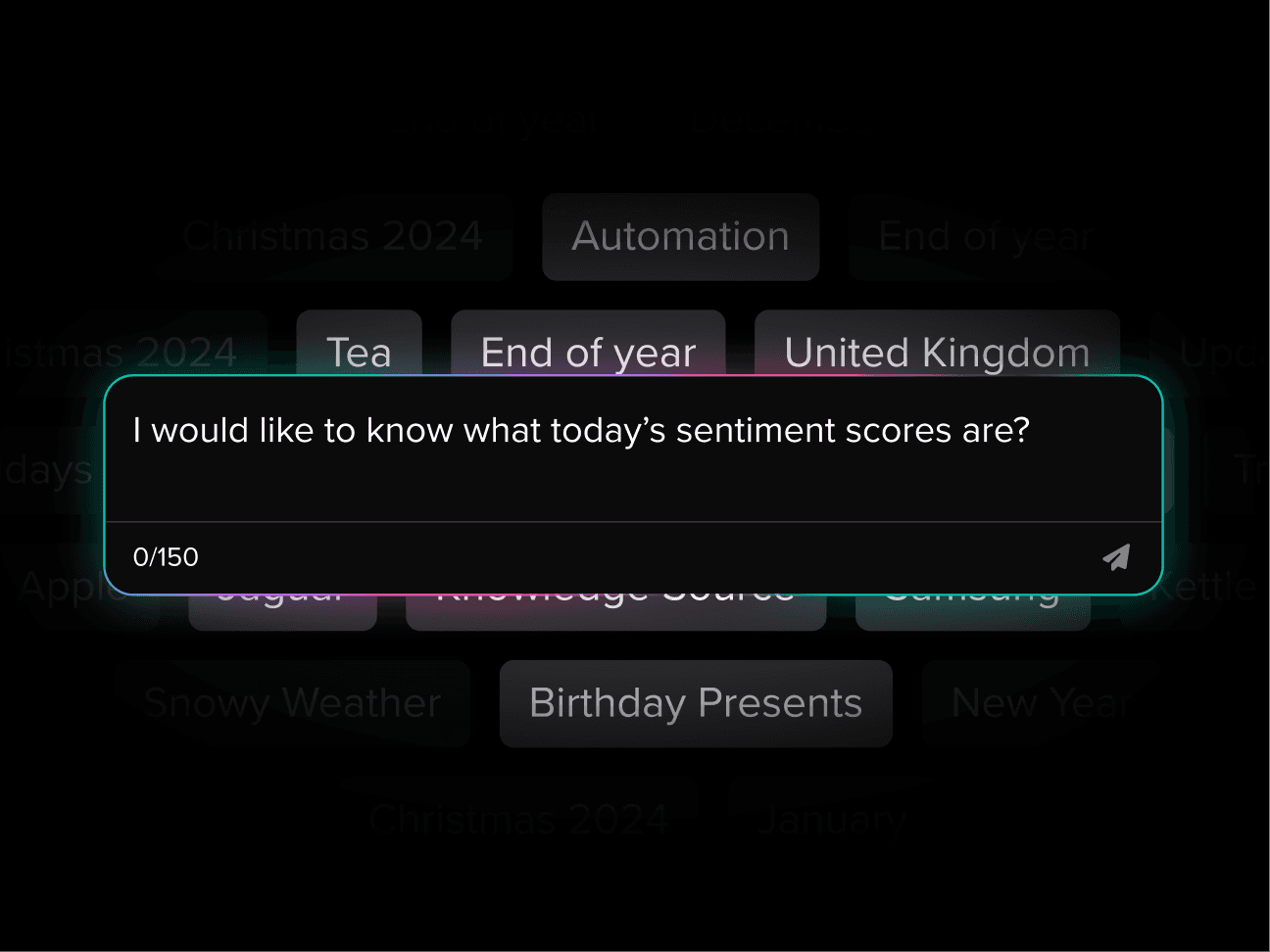
What Tools Improve Customer Experience (CX) Analytics?
CX analytics generates its strongest returns when it is embedded within a connected operational ecosystem rather than running as a standalone reporting function. Here are the integrations and complementary capabilities that consistently deliver the greatest combined value.
CRM Integration
A customer relationship management platform stores all non-live customer data, including purchase history, account status, service contacts, contracts, and communication preferences. When CX analytics is integrated with CRM data, insights extend beyond the current interaction and are grounded in the full customer relationship. A frustration signal in a call carries more weight if the CRM shows three unresolved contacts in the past fortnight. Churn prediction also improves when account tenure and product usage are combined with sentiment trends. The main challenge is data connectivity: Gartner reports that 42% of customer service organizations cannot connect interaction data to other departmental systems, meaning CRM integration often requires upfront investment in data infrastructure before delivering analytical value.
Automated Workflow Triggers and AI Agents
When CX analytics is connected to an automation layer, such as an AI agent, robotic process automation (RPA) tool, conversational AI model, or case management system, insights can trigger operational responses rather than simply informing later review. A high churn score can automatically route a customer to a retention specialist. Negative sentiment in a live chat can escalate the interaction to a senior agent. A spike in contacts about a specific issue can trigger proactive notifications to affected customers before queues build.
AI agents sit at the center of this customer experience automation model, drawing directly from CX analytics to decide how interactions should be handled in real time. Intent classification identifies what the customer is trying to achieve, sentiment signals determine how the interaction is progressing, and CRM context ensures responses reflect the broader relationship. This allows automated systems not just to respond, but to respond appropriately, escalating, resolving, or rerouting based on live analytical input rather than static rules.
This shifts analytics from retrospective reporting to active operational control. Improvements in the analytical layer translate directly into better customer service automation, expanding the range of issues that can be resolved without human intervention while improving escalation quality for more complex cases. As noted by Gartner, by 2029 AI agents are expected to autonomously resolve 80% of common customer service issues, with that level of performance dependent on real-time, integrated analytical infrastructure.
Real-Time Agent Assist
One of the most operationally immediate uses of CX analytics is providing live, in-conversation guidance to agents as interactions unfold. Real-time agent assist tools use sentiment signals, intent classification, and topic detection to surface relevant information in the moment, such as a knowledge base article, a compliance prompt, or a coaching nudge when sentiment declines. This reduces the need for agents to switch between systems while managing a conversation, improving performance consistency. ConnexAI’s platform extends this capability across voice and digital channels, turning analytics from a post-event reporting tool into real-time performance support. The result is improved first-contact resolution, lower average handling time, and more consistent quality adherence without increasing agent cognitive load.
Unified Omnichannel Reporting
For organisations operating across voice, live chat, email, SMS, and social messaging, consolidating performance data into a single environment is an operational necessity. Without it, channels are measured in isolation, leaving cross-channel journey issues largely invisible. Unified reporting dashboards combine metrics across all channels in a common framework, allowing leaders to identify journey failures, compare channel performance consistently, and allocate resources based on where demand and quality issues are concentrated. ConnexAI’s platform provides this omnichannel visibility natively, supporting contact centers as they shift from high-volume voice to expanding digital channels while maintaining consistent performance measurement across both.
What Industries Can Benefit the Most From CX Analytics?
CX analytics delivers the strongest returns in sectors characterized by high interaction volumes, multi-step customer journeys, significant operational complexity, or elevated regulatory risk. Here is where the commercial evidence is most developed.
How CX Analytics Drives Value in Financial Services
Banks, insurers, and wealth management firms face a distinctive challenge: their customers rarely contact them unless something is financially significant or emotionally charged. Every service interaction therefore carries disproportionate weight in the customer relationship. CX analytics in financial services is most commonly applied across three areas: compliance monitoring, complaint root-cause analysis, and churn prediction. Speech analytics, specifically, enables institutions to monitor 100% of recorded call activity for regulatory language requirements and prohibited conduct; a capability that manual sampling at even the most rigorous rates cannot match at scale. For compliance-sensitive operations, the ability to demonstrate comprehensive interaction monitoring is increasingly moving from best practice to regulatory expectation.
How Telecom Providers Can Benefit From CX Analytics
Telecoms is one of the sectors where the commercial application of CX analytics is most direct, because churn is expensive, frequent, and, importantly, predictable. Customers who are about to switch providers typically exhibit observable behavioural patterns: increasing contact frequency on billing or service quality issues, deteriorating sentiment across multiple interactions, reduced engagement with self-service channels. Predictive analytics trained on this historical interaction data can identify at-risk customers weeks or months before they act, enabling retention teams to intervene proactively at a fraction of the cost of a win-back campaign. The scale of the operational challenge also makes analytics a practical necessity: large telecom providers handle tens of millions of interactions annually, making any manual approach to quality assurance or journey analysis statistically meaningless. Systematic, automated analytics across voice and digital channels is the only viable operating model at that volume.
How Retail and E-commerce Businesses Realize ROI from CX Analytics
The retail sector faces a specific pain point that CX analytics is well positioned to address: the disconnect between the digital shopping experience and the contact center. Customers who contact support after a frustrating online journey arrive already dissatisfied, and without data linking what happened on the website or app to the contact that followed, agents lack context. Journey analytics links digital behaviour, chatbot transcripts, and agent interactions into a unified customer view, allowing retail teams to identify which upstream digital failures are driving downstream contact volume. This makes it possible to fix issues at the source rather than manage them in the queue. The urgency is clear: online shoppers in the European Union are over 60% more likely to experience problems than those shopping offline, making contact reduction through root cause analysis a commercial priority.
How CX Analytics Improves Efficiency in Healthcare Administration and Insurance
In healthcare administration and insurance, the most valuable applications of CX analytics lie in case management and claims handling, processes that are multi-step, emotionally sensitive, and often involve customers under significant stress. Sentiment analysis applied to claims interactions can flag distress signals for priority handling before issues escalate. Journey analytics identifies which steps in the claims process drive the highest rates of repeat contact, a clear indicator of unnecessary complexity, and provides the evidence needed for process redesign. Strict compliance requirements in both sectors also drive demand for comprehensive interaction monitoring, where documenting conversations supports risk management, regulatory obligations, and continuous service improvement.
How CX Analytics Drive ROI for BPO and Contact Center Operations
For business process outsourcing providers, CX analytics is both an operational capability and a commercial differentiator. BPOs managing contact center programmes for multiple clients require granular, programme-level performance data to demonstrate contractual compliance, track quality trends, and develop agent capability across different environments. Contact center analytics platforms and call center monitoring software tools that enable real-time oversight at agent, team, and programme level, including interaction quality scoring, AI call analytics, predictive volume forecasting, and cross-channel visibility, are central to how leading BPOs demonstrate their value. As AI reshapes contact center expectations, analytics becomes the mechanism through which BPOs evidence not just cost efficiency, but service quality.

CX Analytics Implementation Guide: A Step-by-Step Framework for Operational Success
The gap between deploying a CX analytics platform and deriving consistent operational value from it is where many implementations fail. Here is a sequenced, practical approach that addresses the most common failure points from the outset.
Step 1: Define the Business Questions First, Technology Second
The strongest predictor of whether a CX analytics project delivers results rather than reports is the clarity of the business questions it is built to answer. Before selecting a platform, designing integrations, or mapping data sources, leadership should align on three to five core questions about the customer experience, such as where first-contact resolution is breaking down, which contact types drive excess handling time and cost, and which agent behaviours are linked to better outcomes.
Starting with these questions determines which data to prioritize, which analytical capabilities matter most, and how success will be measured. Programmes that begin with technology tend to produce data volume; those that begin with clear questions tend to drive operational change.
Step 2: Audit Your Data Estate Honestly
Before analysis can begin, you need a clear and accurate view of the data you currently capture, where it is stored, how it is structured, and what is missing. This involves inventorying active channels such as voice, live chat, email, messaging, and self-service, and confirming whether each generates interaction records that are consistently logged, accessible, and linkable to a shared customer identifier. It also requires assessing data quality, including whether call recordings are complete, chat transcripts are stored in usable formats, and a single customer ID connects interactions across systems.
The finding that 42% of organizations cannot connect their service data to other departments reflects how common and consequential this connectivity problem is. Addressing it is a prerequisite, not a parallel workstream.
Step 3: Match Capability to Need at the Starting Point
Not every organization needs the full spectrum of CX analytics tools at once, and deploying more capability than it can operationalize is a common reason projects stall. A voice-heavy operation focused on quality assurance and compliance should start with speech analytics and automated QA scoring. A digital-first business with high chat and email volumes should prioritize text analytics and sentiment tracking. An organization with a clear retention challenge in a subscription model should focus on predictive analytics from the outset.
ConnexAI’s platform supports this staged approach, allowing organizations to activate the capabilities most relevant to their current priorities while progressively building toward a more integrated, multi-channel view as data maturity increases.
Step 4: Build the Cross-Functional Governance Structure Before You Need It
CX analytics fails more often at the organizational level than at the technical one. The insight it produces does not stay within the contact center; it reaches product, marketing, operations, and technology, and acting on it requires sustained cross-functional coordination.
Setting up a cross-functional steering group at the outset, with clear accountability in each department for acting on findings, helps prevent insights from being acknowledged but not implemented. The Deloitte CX Study 2025 finding that 42% of organizations identify rigid internal processes as their primary CX obstacle points to a governance issue, and governance challenges are best addressed before cross-functional findings begin to surface.
Step 5: Establish Baselines and Define Success Metrics Before Go-Live
Once the platform is live and data is flowing, the immediate priority is establishing baseline performance within the first 30 days. Define core KPIs in advance, including first-contact resolution, average handling time, CSAT or NPS, escalation rate, agent quality scores, and repeat contact rate, and configure reporting to track them consistently.
Set a structured review cadence at 30, 60, and 90 days to assess whether early data behaves as expected, whether insights are translating into operational actions, and whether performance is improving against the baseline. This initial measurement also provides the evidence needed to support ongoing investment and expansion of the analytics capability.
Step 6: Embed a Continuous Improvement Operating Rhythm
CX analytics is not a deployment project with a fixed end date; its value grows over time as models improve with more data, baselines evolve, and the organization becomes better at responding to the signals it receives. The final step is therefore an operating rhythm rather than a one-off action: a regular cadence of insight review, hypothesis testing, operational intervention, and outcome measurement.
Organizations that see the strongest long-term returns from analytics investment treat it as an ongoing capability rather than an IT project. McKinsey’s research on CX leaders highlights the cultural gap between mature and lower-performing organizations: only 4% of leading CX organizations are uncomfortable with AI-enabled decision-making, compared with 37% of lower-performing organizations. That gap reflects years of investment in analytics maturity, data culture, and operational agility, and it starts with the decision to treat the first implementation not as something to complete, but as a capability to build.
Can CX analytics actually identify the “silent majority” of customer friction?
How should organizations prioritize insights when CX analytics produces too much information?
How does CX analytics change the role of frontline teams?
How do you measure ROI when CX analytics impacts are indirect or delayed?
Summary
CX analytics extends operational understanding beyond escalations and visible complaints by revealing broader, lower-level friction across the full customer population that instinct alone often misses. However, it does not replace human judgement: it shows patterns in past behaviour, while prioritization, action, and organizational change remain leadership responsibilities. Its effectiveness is also limited by data quality and organizational factors such as fragmented systems and rigid processes, which industry research consistently identifies as major barriers to CX improvement. As a result, value depends less on technology alone and more on clear business questions, usable data foundations, phased capability rollout, strong cross-functional governance, and continuous operational adoption rather than one-off implementation.
Conclusion
Customer experience analytics is not a reporting upgrade, but a shift in how organizations understand and manage customers. It combines speech analytics, sentiment analysis, journey analytics, predictive modelling, and text analytics, each designed to answer different operational questions. Its value grows further when integrated with CRM systems, automation layers, and unified reporting environments.
The business case is well established. It shortens the time between issue and diagnosis, strengthens the data foundation for profitable personalization, reduces operational costs through structural insight, and enables proactive retention that reactive service models cannot match. For the 80% of organizations that still cannot link customer satisfaction to measurable ROI, it closes a critical gap.
Thousands of customer conversations pass through contact centers every day. Without systematic analysis, most of that signal is lost. The question is not whether CX analytics delivers value, but how much is being missed.
ConnexAI’s platform brings speech analytics, sentiment analysis, AI Agents, real-time agent assist, and omnichannel reporting into one environment, helping teams move from fragmented reporting to live operational insight. The fastest way to see the impact is on your own data. Book a demo with the ConnexAI team and turn customer interactions into actionable intelligence.