What Is Natural Language Processing (NLP)? Unlocking the Power Behind Intelligent AI Chatbots
Natural Language Processing (NLP) is a vital element within the field of Conversational AI, playing a key role in Conversational AI models’ capacity to understand and respond to human language. NLP provides chatbots and AI Agents with the ability to grasp the complexities of language, covering syntax, semantics, and context.
NLP has become an essential component within the recent and rapid advances in the development of Conversational AI. In previous articles, we have described the different technologies that come into play when it comes to making AI Chatbots truly intelligent conversationalists, the most important being:
Machine Learning (ML): Gives chatbots the ability to learn from interactions, anticipate user needs, and make decisions without being explicitly programmed, which boosts their adaptability.
Deep Learning (DL): Helps chatbots detect complex patterns in conversations, leading to more accurate and nuanced understanding of user input.
Natural Language Understanding (NLU): Allows chatbots to interpret human language in context, grasp user intent, and deliver responses that are relevant and context-aware, making interactions feel more natural.
Transformers: Architectures like GPT and BERT process all words in a sentence at once and retain context over long dialogues, enabling them to produce coherent, contextually appropriate responses.
Self-Supervised Learning: Trains chatbots on vast amounts of unlabelled text by predicting missing elements, giving them broad linguistic, factual, and grammatical knowledge without costly manual annotation. This results in more fluent and well-informed responses.
Reinforcement Learning from Human Feedback (RLHF): Refines chatbot behavior using human-ranked examples, aligning outputs with user expectations and improving safety, relevance, and coherence.
Retrieval-Augmented Generation (RAG): Combines language generation with real-time information retrieval, enabling chatbots to deliver accurate, up-to-date, and domain-specific answers beyond their original training data.
However, one can argue that NLP is not only the foundation for all of these to be possible but also the cornerstone of several other functionalities that contribute to enhancing what Chatbots can do; or, in other words, what queries they are able to address and how. More on this later.
Through advanced algorithms, AI chatbots employing NLP can interpret user input, discern the underlying intent, and extract relevant information from the conversation. This technology goes beyond simple keyword recognition, enabling chatbots to engage in more sophisticated and contextually aware conversations.
NLP is instrumental in bridging the gap between machine and human communication, allowing chatbots to not only recognize explicit commands but also grasp the subtleties and nuances inherent in natural language. The integration of NLP into AI Contact Centre Chatbots contributes significantly to their effectiveness in delivering personalised and meaningful interactions, ultimately enhancing the overall user experience.
But how exactly does NLP work? Let’s go through it in the next section.
Summary
Natural Language Processing (NLP) is a cornerstone of Conversational AI, enabling chatbots to understand, interpret, and respond to human language with context and nuance. Working alongside Machine Learning, Deep Learning, and Natural Language Understanding, NLP allows AI to discern intent, learn from interactions, and capture subtle patterns, making conversations more natural and personalized. This capability bridges the gap between human and machine communication, enhancing the overall effectiveness of AI-driven customer experiences.
How does NLP (Natural Language Processing) work?
As you may know, the discipline of Natural Language Processing, or the problem of whether and how we can make machines that can understand and use human language in an intelligent way, is almost as old as the question of what is Artificial Intelligence.
It all dates back to the 50s, when Alan Turing, usually acknowledged as the “father” of AI as a field, proposed a thought experiment known as “the Turing test”. The essence of this thought experiment is simple: Turing stated that a machine can be considered intelligent if it can carry on a conversation so convincingly that a human cannot distinguish whether they are interacting with a machine or another person. The Turing test serves as a benchmark to assess a machine’s intelligence: if a machine is proficient enough at keeping a conversation with a human and at making the human think that they’re talking to another human rather than, for example, a computer program, then that machine can be considered to be intelligent.
Soon enough after Turing proposed his test, several attempts were made at creating Artificial Intelligence or, in other words, a computer program that was able to hold conversations with human users in a convincing, intelligent way. One example is ELIZA, one of the first chatbots in history, which was programmed in the 60s to simulate conversations between psychotherapists and their patients.
However, until the 1980s, the majority of natural language processing systems relied on intricate sets of manually crafted rules. But things changed a lot in the late 1980s when machine learning algorithms designed for understanding language were introduced, revolutionising Natural Language Processing.
Today, the most advanced NLP programs leverage deep learning models, such as Recurrent Neural Networks (RNNs) and transformers.
RNNs work as language processors that read a text one word at a time, maintaining a memory of the words it has encountered so far. This memory helps it understand the context of the language, making connections between words as it goes along.
Transformers, on the other hand, process the entire piece of text at once. They don’t read word by word; instead, they analyse the entire context simultaneously. Transformers are effective at understanding both local and global relationships in language, allowing them to capture information from different parts of the text more efficiently than RNNs.
Pre-training and fine-tuning are integral steps in neural NLP. Models are first pre-trained on vast amounts of unlabeled data, learning the underlying structures and representations of language. Transfer learning is then employed by fine-tuning these pre-trained models on smaller, task-specific datasets, tailoring them for specific applications. This approach allows neural NLP models to benefit from the generalisation power gained during pre-training while adapting to specific language tasks.
Some of the core functionalities that fall under the broader category of NLP are:
Tokenisation
Tokenisation is the fundamental process of segmenting text into discrete units, such as sentences, words, or subword components. It serves as the foundation for virtually all NLP pipelines, enabling models to process and analyze textual data effectively. Advanced tokenization approaches, such as subword tokenization, are particularly useful for handling rare or out-of-vocabulary terms and improving model generalization.
Part-of-Speech Tagging (POS)
POS involves assigning each token its grammatical category, including nouns, verbs, adjectives, and other syntactic roles. This step allows models to interpret not only the semantic meaning of words but also their functional roles within a sentence. POS tagging underpins subsequent processes such as syntactic parsing, disambiguation, and information extraction.
Named Entity Recognition (NER)
NER identifies and classifies real-world entities within text, including persons, organizations, locations, dates, and numerical quantities. NER transforms unstructured text into structured information, facilitating tasks such as knowledge graph construction, question-answering systems, and advanced search applications.
Parsing
Parsing refers to the analysis of syntactic structure within a sentence. Constituency parsing reveals hierarchical phrase structures, whereas dependency parsing captures grammatical relationships between words, delineating roles such as subject, object, and modifier. Parsing is essential for accurate syntactic and semantic interpretation, enabling downstream applications that require a deep understanding of sentence structure.
Lemmatization and Stemming
These are processes designed to reduce words to their canonical or root forms. Stemming applies heuristic rules to truncate word endings, while lemmatization relies on morphological analysis and lexical resources to produce linguistically valid base forms. These operations enhance text normalization, reduce vocabulary size, and improve the performance of tasks such as information retrieval, clustering, and topic modeling.
Language Modeling
Language Modeling involves estimating the probability distribution of sequences of words and predicting the likelihood of subsequent tokens. Language models are fundamental to modern NLP, as they encode syntactic, semantic, and contextual knowledge, supporting a wide range of applications from text generation to comprehension. Contemporary large-scale language models are sophisticated probabilistic systems capable of capturing complex linguistic patterns.
Text Normalization
Text normalisation encompasses a series of preprocessing steps to standardize textual data. This includes lowercasing, punctuation handling, spelling correction, contraction expansion, and normalization of special characters. Normalization reduces variability in text input, ensuring that downstream models operate on a consistent and coherent representation of language.
Coreference Resolution
Coreference resolution identifies when multiple expressions in a text refer to the same entity. Accurately resolving coreferences, such as recognizing that “she” refers to “Maria” or “the organization” refers to “Google,” is critical for coherent text interpretation. This functionality underpins advanced NLP tasks such as summarization, multi-sentence reasoning, and narrative analysis.
What is NLP?
What makes NLP so critical for Conversational AI?
How do Machine Learning and Deep Learning complement NLP?
How does NLP enhance AI contact center chatbots specifically?

What are some key applications of NLP (Natural Language Processing) for businesses?
Customer Service Automation
NLP enhances customer service by powering AI chatbots, AI Agents, and AI analytics. Chatbots engage directly with customers, answering routine questions and guiding them through common processes, reducing the need for human intervention while allowing agents to focus on complex issues. AI assistants support human agents by suggesting responses, summarising interactions, and recommending solutions, improving speed and accuracy. Additionally, NLP enables customer interaction analytics, extracting insights from emails, chats, and social media to detect sentiment, recurring issues, and trends, helping businesses proactively improve satisfaction, service, and product offerings.
Automated content generation
NLP can produce written content automatically, such as product descriptions for e-commerce, marketing copy, financial or business reports, and social media posts. This saves time for employees, ensures consistency in messaging, and can scale content production rapidly. Advanced NLP models can even tailor the tone and style to match the brand voice.
Personalised marketing and recommendations
NLP analyses customer interactions, reviews, search queries, and browsing behaviour to understand preferences and intent. This enables businesses to deliver personalised product recommendations, targeted promotions, and customised content, improving conversion rates and customer engagement. It can also optimise email marketing or push notifications by using language patterns that resonate with each segment.
Document summarisation
NLP can read and distil lengthy documents, contracts, reports, or research papers into concise summaries, highlighting the key points or action items. This drastically reduces the time employees spend reviewing documents, improves decision-making speed, and ensures that critical information isn’t overlooked. Both extractive (pulling key sentences) and abstractive (rephrasing the main ideas) summarisation techniques are used.
Fraud detection and compliance monitoring
NLP can analyse emails, chat logs, transaction notes, contracts, and other text-based data to detect irregularities, suspicious patterns, or non-compliance with regulations. By flagging unusual activity or risky language early, businesses can prevent fraud, avoid fines, and ensure adherence to legal and industry standards. It can also help in monitoring insider threats or communication breaches.
Lead Generation
Chatbots assist in lead assessment, engaging users with interactive conversations to gather information and qualify leads based on predefined criteria. This streamlines the sales process, enhances efficiency, and offers real-time assistance tailored to individual user interests. Research by Salesforce reveals that a majority of sales professionals see generative AI leveraging NLP as a powerful tool: 61% believe it helps them serve customers better and sell more efficiently, while many actively use it in their daily work—82% for basic content creation, 74% to analyse market data, and 71% to automate personalised sales communications.
Multilingual Support
NLP enables seamless multilingual customer service by translating queries and responses in real time. A French-speaking customer can submit a question in Spanish, which the system translates for an English-speaking agent, who can then respond in English. The system can translate the reply back into Spanish for the customer, making global support efficient and smooth.
How does NLP improve the balance between automated support and human agents?
How precise are NLP-driven recommendations in understanding customer intent?
Can NLP summarize documents across languages or highly technical fields?
How can NLP improve lead qualification without feeling intrusive to users?
How does Natural Language Processing enhance Customer Service Automation?
Chatbots
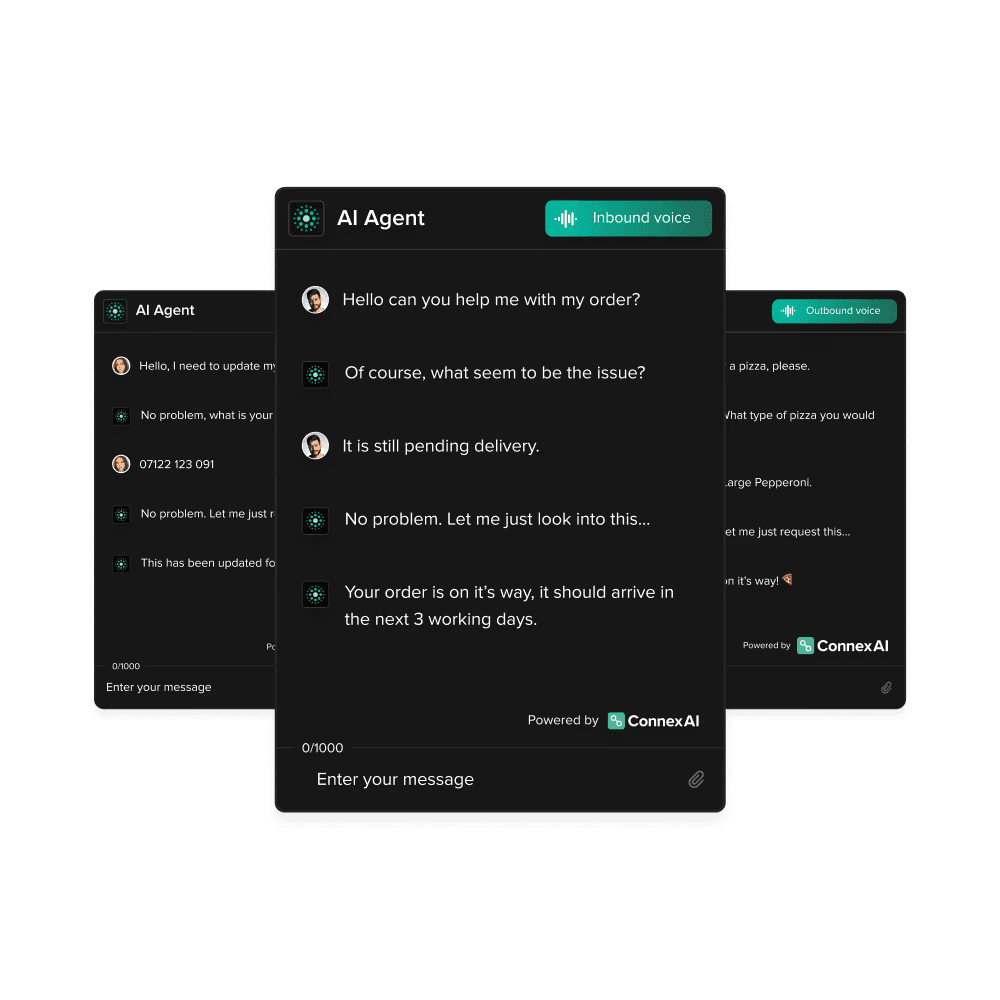
Chatbots are one of the most visible applications of NLP in customer service. Studies by Salesforce show that 30% of customer cases were resolved by Conversational AI in 2025 and, by 2027, that number is expected to go up to 50%. These systems can engage directly with customers in natural language, answering routine questions and guiding users through common processes. For example, a customer asking, “Where is my order?” can receive an immediate, accurate response because the chatbot understands the intent of the question and can retrieve the relevant information from backend systems. AI Chatbots reduce the need for human intervention in repetitive tasks, ensuring that customers get quick answers while freeing human agents to focus on more complex or sensitive issues. With agentic capabilities, these chatbots become AI agents, able to take initiative, manage multi-step tasks, and proactively suggest solutions, making customer interactions more intelligent, seamless, and self-sufficient.
AI Assistants
Beyond interacting directly with customers, NLP can power Conversational AI assistants that support human agents behind the scenes. These tools analyze incoming messages, suggest responses, summarize past interactions, and even recommend solutions based on previous cases. For instance, if a customer emails a complaint about a defective product, the AI assistant can highlight relevant troubleshooting steps, policies, or knowledge base articles for the agent to use. This not only speeds up response times but also reduces errors, ensuring a more consistent and accurate service experience. 79% of agents believe having AI as an assistant supercharges their performance, enabling them to deliver superior customer service, according to research by Zendesk.
Customer Interaction Analytics
Advanced Natural Language Processing (NLP) is transforming how businesses analyze customer interactions. Techniques like Sentiment Analysis and Entity Recognition extract insights from unstructured data like emails, chats, social media, and call transcripts, revealing emotions, recurring issues, and trends in real time.
Sentiment Analysis evaluates tone, vocabulary, and inflection to gauge customer emotions and agent performance. Integrated into AI Analytics like the one included in the ConnexAI suite, it enables targeted coaching, improved agent skills, and higher customer satisfaction by fostering a more empathetic service environment. Entity Recognition identifies key mentions of products, brands, or companies, allowing real-time tracking, organization, and actionable insights that guide marketing, product development, and strategy.
Together with techniques like topic modeling, NLP uncovers subtle cues such as sarcasm or urgency, giving businesses a deeper understanding of customer intent. Leveraging these tools enhances service quality, anticipates issues, and enables exceptional customer experiences.

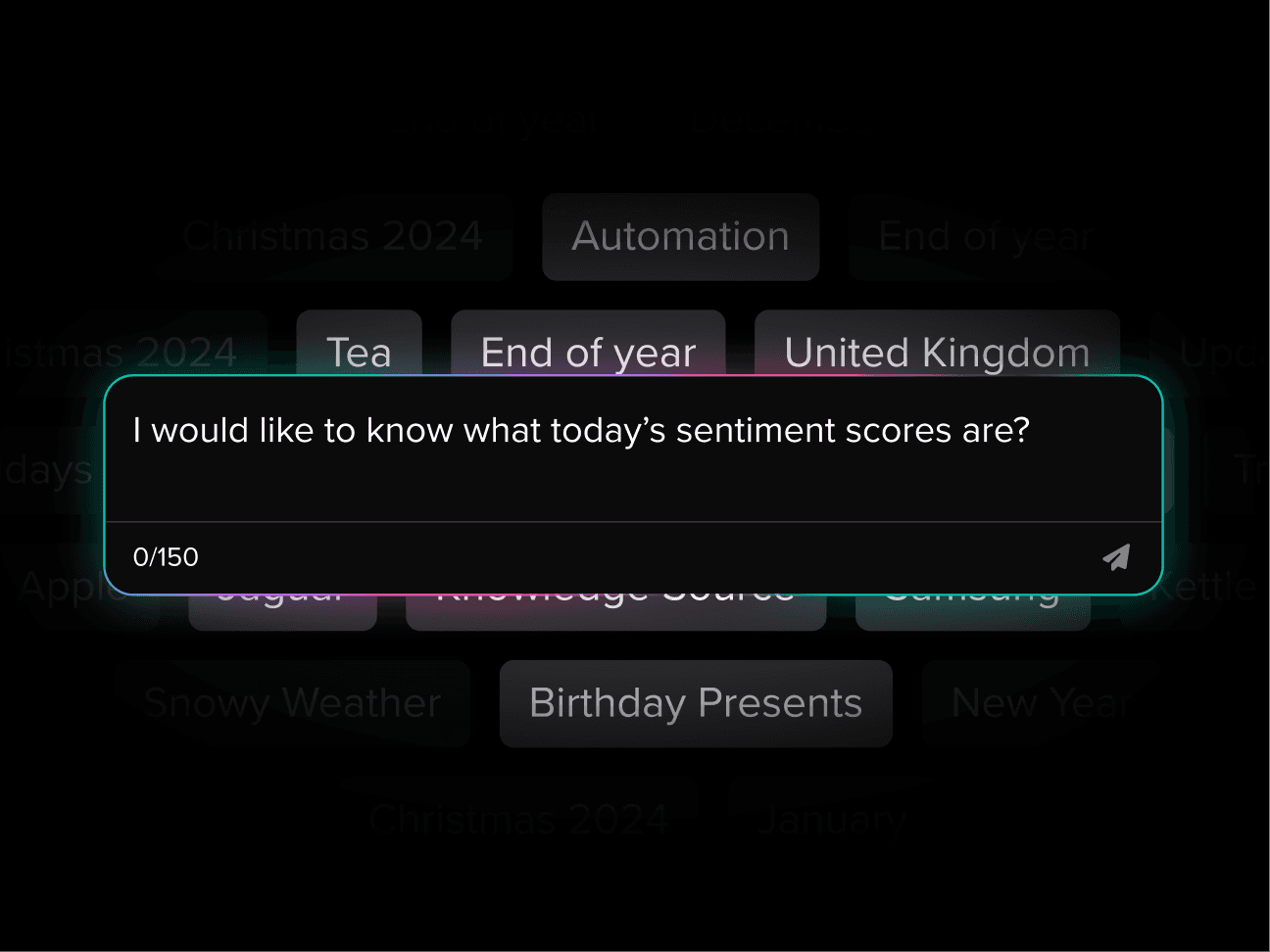
Additionally, Natural Language Processing and Conversational AI can be paired with AI Analytics to make discovering and extracting insights faster, easier, and more comprehensive. Clara, ConnexAI’s intelligent Conversational AI Analytics assistant, transforms the way you interact with data. By using natural language prompts, she delivers instant, human-centric insights, clear visualizations, and personalized analyses—so you can bypass spreadsheets and get answers in the format you prefer.
Clara can generate custom charts, tables, and summaries in seconds, while allowing you to bookmark, export, and visualize exactly what you need. With powerful AI recall, she retrieves past analytics, integrates them with current data, and provides deeper, more accurate insights—complete with intuitive navigation and helpful reference points.
Ticket Categorization and Routing
Workflow automation powered by NLP can automatically classify and route incoming customer requests to the most appropriate department. For instance, a message like “I need help with my billing statement” can be accurately identified as a billing-related issue and forwarded to the right team without any manual intervention. This not only speeds up response times and reduces errors in ticket assignment but also streamlines operations, allowing customer service teams to focus on resolving issues rather than sorting them.
Knowledge Base Enhancement
NLP improves the usability of FAQs and support documentation by enabling context-aware searches. Instead of relying solely on keywords, NLP can understand the intent behind a customer’s question. For example, a search for “how do I cancel my subscription?” could return relevant results even if the documentation uses the phrase “terminate account.” This helps customers find solutions faster and reduces the number of repetitive support requests.
Voice Recognition IVRs
NLP, playing a pivotal role in speech analysis, is increasingly applied to voice interactions, including ASR-powered transcriptions and IVR systems. Calls can be transcribed and analyzed in real time, enabling systems to detect key topics, customer sentiment, and compliance risks while guiding agents with suggested next steps. In IVR contexts, NLP can interpret caller intent, route requests more accurately, and even automate responses for common inquiries. Managers can also analyze trends across calls to identify recurring issues, optimize IVR flows, and improve agent training. The result is more efficient support, smoother self-service experiences, and an overall better customer experience.
Looking ahead, AI Voice Agents are poised to transform customer service even further. According to research by Zendesk Zendesk, 74% of customers believe that AI-powered voice interactions would significantly enhance their experience, suggesting a major shift toward conversational AI that can handle increasingly complex tasks, provide personalized guidance, and deliver seamless, human-like interactions at scale.
Appointment Scheduling
Chatbots streamline appointment scheduling by engaging users in natural language conversations, understanding preferences, and providing real-time options. With 24/7 availability, they contribute to enhanced customer satisfaction and operational efficiency.
How effective are chatbots in resolving customer issues today, and what’s the expected trend?
Can AI assistants handle context-specific or historical cases effectively?
How can NLP uncover subtle insights in customer interactions?
How does NLP improve voice-based customer support?