Introduction
Healthcare organizations face a critical challenge at the initial point of patient contact. In 2024, 60% of medical group leaders reported an increase in their practice's claim denial rates compared to the previous year (MGMA), with patient registration errors identified as the leading cause of these costly denials. More than a quarter of respondents now report that at least 10% of denials result from inaccurate or incomplete data collected at patient intake (Experian). Meanwhile, the average wait time for a new patient appointment has increased to 31 days, up 19% since 2022, (AMN Healthcare) with nearly one in five physician practices unable to even provide appointment availability information when contacted.
This creates multiple problems for healthcare providers: lost revenue from registration errors contributing to the millions of dollars in denied claims, competitive disadvantage from intake processes that can't keep pace with patient expectations, and administrative burden that prevents care teams from focusing on clinical excellence. In an environment where 42% of appointments are now booked outside standard business hours (Zodoc) and patients expect immediate, convenient access, traditional business-hours-only intake processes cost providers both patients and revenue.
AI agents address these challenges through intelligent automation that completes patient registration instantly, accurately, and continuously, transforming intake from a bottleneck into a competitive advantage that improves both revenue cycle performance and patient satisfaction.
Understanding AI Agents in Healthcare Intake
Intake represents a critical juncture in the patient journey; it’s the moment when initial interest converts to active engagement. Yet in healthcare, traditional intake processes often introduce friction at exactly the moment when efficiency and professionalism matter most, while also generating errors that ripple across the entire revenue cycle.
How AI Agents Transform Intake
AI agents manage the entire intake process autonomously, from initial information gathering through to patient record creation and handover to your care team. Agentic AI solutions like ConnexAI can integrate with your EHR, practice management system, and insurance verification databases to:
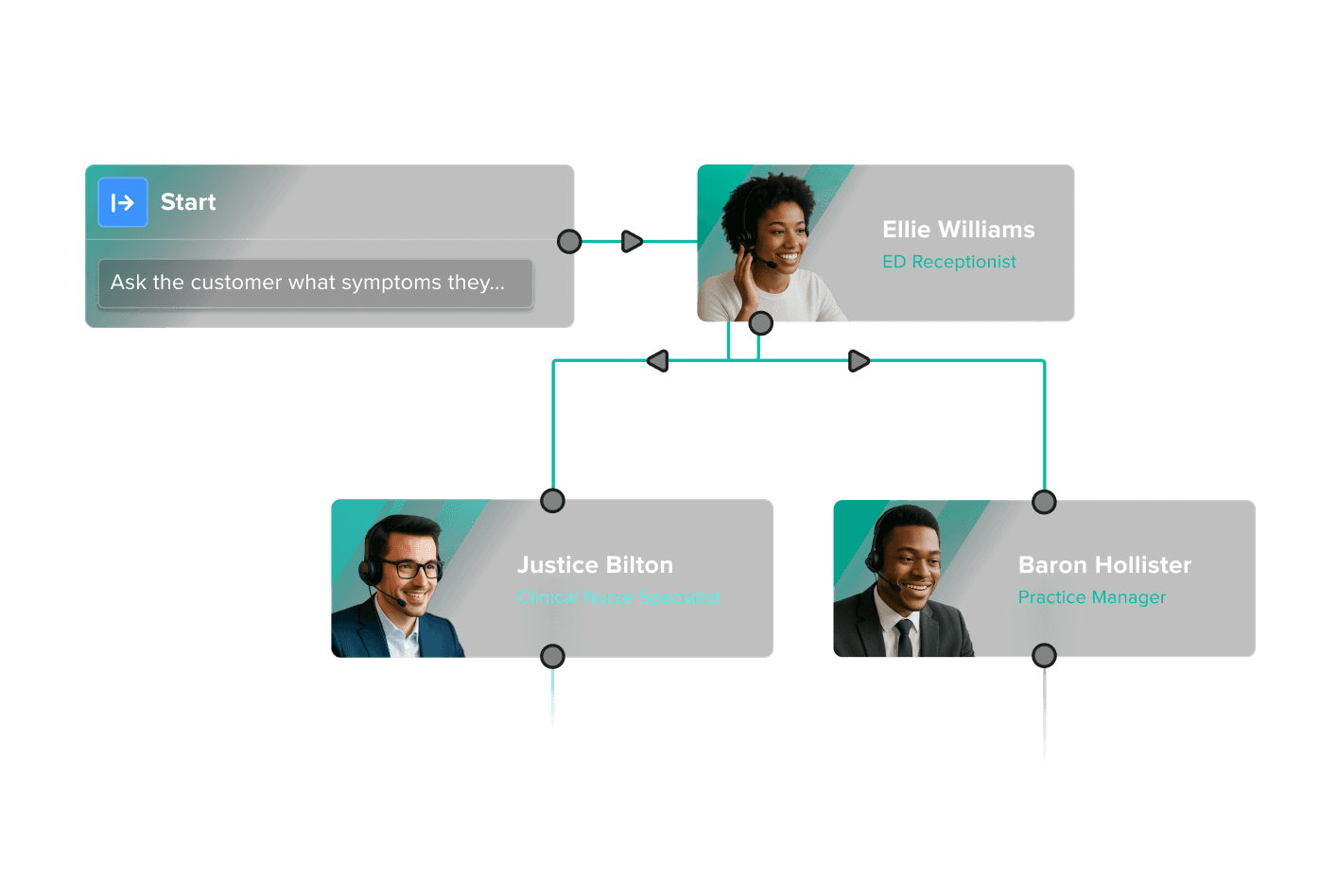
Collect required information conversationally across any channelVerify insurance eligibility and coverage in real-timeComplete necessary demographic and medical history checksCreate properly structured patient records in your systemsRoute to appropriate team members based on specialty, urgency, and availability
Implementation in Healthcare
AI agents connect to your existing infrastructure without requiring system replacement. Agentic AI can quickly learn your unique intake requirements, including HIPAA compliance, insurance verification, medical necessity screening, and documentation standards, and start processing new patients immediately. Whether someone contacts you at 2 AM on Sunday or during your busiest afternoon clinic hours, the AI agent completes the full intake process, ensuring you never lose a potential patient to a competitor with faster onboarding.
Use Case: New Patient Registration
Scenario:
On a Saturday morning, a patient calls a primary care practice to register and book an appointment for a persistent health concern.
Traditional Process Challenges:
The process depends on front desk staff being available during business hours, involves multiple verification steps across different systems, requires time-consuming form completion and insurance checks, and often leads to high abandonment rates when patients face delays or are asked to call back later.
AI Agent Solution – Step-by-Step
Initial Contact:Whether by phone, web chat, or patient portal, the patient reaches out to the practice to establish care and schedule an appointment. The AI agent responds instantly, even on a Saturday morning when the office would normally be closed.Preliminary Assessment:The agent conducts a conversational assessment of the reason for visit, asking targeted questions to determine urgency level and appropriate provider type, capturing chief complaint details to ensure proper appointment allocation.Insurance Verification:The agent performs real-time insurance eligibility verification, confirming active coverage, identifying copay amounts and deductible status, checking for referral requirements, and flagging any prior authorization needs before the visit.Information Gathering:Through natural conversation, the AI Agent collects all required details including demographic information (name, date of birth, address, contact preferences), insurance details (policy numbers, subscriber information, secondary coverage), medical history (current medications, allergies, existing conditions, previous procedures), and emergency contact information, adapting its questions based on responses to ensure comprehensive information capture.Verification:The agent verifies provided information by cross-referencing insurance databases for coverage confirmation, validating patient identity through standard verification questions, checking for duplicate records in the system, and ensuring data completeness against registration requirements.EHR Integration:The agent creates a complete patient record in your EHR and practice management system, populating all required demographic fields, documenting insurance verification results, recording medical history responses, and ensuring the record meets meaningful use standards and compliance requirements.Documentation:The AI Agent generates and sends new patient welcome materials electronically, including practice policies and patient rights notices, HIPAA privacy documents for electronic acknowledgment, new patient forms for review and e-signature, and clear instructions for the upcoming appointment including location, parking, and what to bring.Team Assignment:Based on the patient's stated concerns, insurance network participation, provider availability, and appointment urgency, the AI Agent schedules the appropriate appointment slot, assigns the patient to a suitable provider, notifies the care team with a complete intake summary including relevant clinical flags, and creates pre-visit preparation tasks in the system.Automated Follow-Up Workflow:The agent schedules a 48-hour appointment reminder via the patient's preferred communication method, creates tasks for any outstanding documentation or forms, sets up insurance verification completion reminders if additional information is needed, establishes pre-visit screening protocols if clinically indicated, and maintains engagement through the appointment date with helpful preparation information.
Beyond Initial Intake: Broader AI Agent Capabilities
AI agents extend their value well beyond the initial intake moment, supporting the complete patient lifecycle in healthcare:
Appointment Management: AI agents handle appointment scheduling, rescheduling, and cancellations across multiple providers and locations, automatically filling canceled slots by notifying waitlisted patients, sending customized appointment reminders with preparation instructions, and managing complex scheduling requirements like recurring appointments or procedure bookings.
Pre-Visit Preparation: Agents ensure patients complete required forms and documentation before appointments, verify insurance coverage remains active as appointment dates approach, conduct pre-visit screening for symptoms or exposure concerns, coordinate necessary pre-authorization approvals with insurance carriers, and ensure patients understand financial responsibilities before service delivery.
Revenue Cycle Support: AI agents improve collections by verifying insurance eligibility before every visit to prevent denials, capturing accurate demographic and coverage information to ensure clean claims, identifying patient financial responsibility and collecting copays at point of service, flagging coverage issues that require resolution before treatment, and maintaining updated insurance information as policies change.
Patient Engagement: Agents maintain continuous communication through post-visit follow-up to check on recovery and medication adherence, chronic disease management support with medication reminders and lifestyle guidance, preventive care outreach for overdue screenings and wellness visits, patient satisfaction surveys to identify improvement opportunities, and personalized health education delivered based on diagnoses and care plans.
The intake process establishes the foundation for the entire patient relationship. AI agents ensure this foundation is solid regardless of when someone makes contact or how busy your front desk is with existing patients. During seasonal flu peaks, post-marketing campaign surges, or unexpected community health events, the technology maintains consistent intake capacity whilst your team focuses on delivering exceptional clinical care.
For healthcare practices, this means converting more inquiries to scheduled patients without hiring additional registration staff. For hospital systems, it means reducing the administrative burden that contributes to the 43.2% of physicians reporting burnout in 2024 (American Medical Association). For revenue cycle management, it means preventing the registration errors that lead to denied claims and delayed reimbursement.
Real-World Impact: A National Healthcare Provider Success
CareGuide, a healthcare cost advocacy service that helps millions of Americans save billions through medical bill negotiation and affordable care navigation, faced a critical intake challenge: an overwhelming surge of new member enrollment requests and initial eligibility assessments that threatened to slow their ability to onboard families needing urgent financial assistance. With members contacting them at all hours seeking help with medical debt and healthcare costs, the traditional business-hours intake process created barriers precisely when families needed immediate support.
To maintain service quality while scaling their member base efficiently, CareGuide turned to ConnexAI's agentic AI solution to transform their intake process. The AI agent now handles the complete enrollment workflow, collecting member information, verifying eligibility for cost advocacy services, gathering initial billing concerns and healthcare cost challenges, creating properly structured member records, and routing new members to Care Advocates with comprehensive intake summaries. This automation freed Care Advocates from repetitive data collection tasks, allowing them to focus immediately on what they do best: complex medical bill negotiations, identifying financial assistance opportunities, and securing cost reductions that directly impact member savings.
Results:
Cost savings doubled year over year as Care Advocates dedicated more time to high-impact negotiation work
Data processing capacity rose by 10-12% to support advocate workflows with complete, accurate intake information
Missed interactions dropped to zero, ensuring that every enrollment inquiry is addressed promptly, regardless of when the contact occurs
In short, ConnexAI allowed CareGuide to operate with greater precision, scale, and care, ensuring every family receives immediate enrollment support while empowering Care Advocates to focus on the high-impact advocacy work that reduces healthcare costs and protects families from financial hardship.
Conclusion
Healthcare organizations that streamline their intake processes gain distinct competitive advantages. In markets where patients compare multiple providers, the speed and professionalism of your intake process directly influences conversion rates. With 42% of healthcare appointments now booked outside standard business hours (Zodoc) and 33% of patients reporting inability to see a doctor in the past year due to availability issues (Tebra), organizations still relying on business-hours-only registration, callback-dependent processes, and manual data entry systems lose opportunities to competitors offering immediate, frictionless intake.
AI agents address the fundamental intake challenge: providing fast, professional onboarding whilst maintaining the thoroughness required for accurate insurance verification, HIPAA compliance, and comprehensive medical history capture. The technology delivers instant intake completion regardless of time or team availability and significantly higher conversion rates from inquiry to scheduled patient, directly impacting revenue whilst reducing the administrative burden that contributes to healthcare staffing challenges.
For healthcare organizations seeking to grow their patient base without expanding front office staff, eliminate the registration errors that cause claim denials, reduce time-to-appointment, and scale efficiently during demand surges, AI agents transform intake from an operational bottleneck into a competitive advantage.
Kickstart Your AI Journey in Healthcare
Discover how ConnexAI’s agentic AI platform can streamline patient intake and optimize healthcare operations.
Request a demo of our Healthcare AI technology: connex.ai/contact-usLearn more about our Agentic AI solutions for healthcare providers: connex.ai/solutions/healthcare