Why Autonomous Call Handling Matters for Modern Contact Centres
The traditional contact centre model is facing a breaking point. For decades, businesses have relied on a linear relationship between call volume and headcount, but that math no longer works in an era of skyrocketing consumer expectations and volatile labour markets. AI autonomous call handling, the deployment of conversational AI, virtual voice agents, and generative AI systems to resolve customer interactions end-to-end without human intervention, has transitioned from a futuristic concept to an operational necessity. It is the solution to a compounding crisis where 57% of customer care leaders expect call volumes to rise by as much as 20% in the next two years.
Imagine your contact centre as a high-pressure valve. In the past, when pressure (call volume) rose, you simply added more valves (agents). However, with global agent attrition averaging 52% in 2023, the talent pool is evaporating just as demand peaks. This creates a vivid operational bottleneck: overwhelmed agents navigating fragmented systems while customers wait in long queues for simple resolutions. This isn't just an efficiency problem; it’s a cost catastrophe, considering that labour represents up to 95% of total contact centre operating expenses.
This article explores how shifting from "agent-first" to "AI-first" workflows allows businesses to break the link between volume and cost. We will define the mechanics of autonomous systems, categorize the technologies available, and provide a roadmap for moving from early experimentation to full operational integration.
What exactly is AI autonomous call handling and how does it function?
AI autonomous call handling refers to a suite of technologies that allow a system to understand, process, and resolve a customer’s request over the phone without a human agent ever touching the ticket. It is critical to distinguish this from the legacy Interactive Voice Response (IVR) systems of the past. Traditional IVRs are rigid, "press 1 for sales" decision trees that often frustrate users. In contrast, autonomous call handling utilizes Generative AI (GenAI) and Large Language Models (LLMs) to engage in fluid, natural language conversations.
The mechanics of a modern autonomous call follow a sophisticated four-step loop:
Speech-to-Text (STT) & Natural Language Understanding (NLU): The Voice Recognition system captures the caller's audio and converts it into structured text. It doesn't just look for keywords; it uses NLU to determine the caller's "intent" (what they want) and "sentiment" (how they feel).
Reasoning and Logic: Unlike a script, a GenAI-powered agent queries an internal knowledge base or database to formulate a logic-based response. It can "reason" through complex queries, such as explaining a billing discrepancy or troubleshooting a technical fault.
Natural Language Generation (NLG): The system generates a coherent, context-aware response in text form.
Text-to-Speech (TTS): The response is converted back into high-fidelity audio. Modern TTS and AI Voice Generation can replicate human-like prosody, pauses, and tone, making the interaction feel remarkably natural.
Implementation varies; some systems are "closed-loop," meaning they stay within specific guardrails to ensure compliance, while others are more "open," allowing for creative problem-solving. Despite the high adoption of AI tools, a significant gap remains: only 3% of organizations have successfully scaled GenAI into their everyday operations. Closing this gap requires moving beyond "chatbots" to integrated voice agents that can access CRMs and process transactions autonomously.
What is an AI autonomous call handling system?
How do autonomous call handling systems decide when to transfer a call to a human agent?
Which types of calls are best suited for autonomous resolution?
Can autonomous voice agents handle multiple tasks within the same conversation?
How can organizations measure the success of autonomous call handling?
Summary
AI autonomous call handling is the evolution of the contact centre from a menu-driven system to a reasoning-based interface. It uses LLMs and high-fidelity voice synthesis to resolve complex customer intents end-to-end without human intervention.

What tangible business benefits does AI autonomous call handling deliver?
Drastic Reduction in Labour Costs
The primary driver for AI adoption is the bottom line. Gartner predicts that conversational AI will reduce agent labour costs by $80 billion globally by 2026. By automating roughly one in ten interactions, businesses can redirect their remaining human capital toward high-value, emotionally complex tasks that require genuine empathy, rather than routine password resets or balance checks.
Accelerated Issue Resolution and Productivity
AI Autonomous call handling systems don't just work cheaper; they often work better. Research published by the National Bureau of Economic Research (NBER) found that deploying a generative AI assistant increased issue resolution by 14% per hour. Furthermore, the time spent handling each issue was reduced by 9%, allowing the business to process a much higher volume of inquiries with the same or less infrastructure.
Elimination of Agent Information Overload
A major pain point in modern service is that 75% of agents report being overwhelmed by too many systems and too much information. Autonomous AI call handling solves this by acting as a filter. It handles the data-heavy "drudge work" of looking up records across multiple legacy systems, ensuring that when a human agent does need to step in, they are presented only with the relevant facts.
Enhanced Employee Retention
High attrition is often a result of burnout from repetitive tasks. Companies currently deploying GenAI are 35% less likely to report that their agents feel overwhelmed. By removing the most monotonous 50% of call volume, AI allows human agents to focus on more engaging, rewarding work, which NBER research shows can reduce agent attrition by as much as 25%.
Superior Customer Satisfaction Through "Service Innovation"
The top 25% of service delivery performers, known as "service innovators," are 8x more likely to have deployed GenAI than their peers. These innovators are 4.6x more likely to report excellent customer satisfaction because their AI systems provide instant, 24/7 responses that eliminate the friction of waiting on hold.
How does autonomous handling affect scalability during peak demand periods?
Does autonomous handling improve consistency across customer interactions?
What impact does autonomous handling have on first-contact resolution rates?
Can autonomous handling generate valuable business intelligence?
How does autonomous handling support global operations?
How should we categorize the different types of autonomous AI tools?
1. Generative Voice Agents
Generative AI Voice Agents are the most advanced form of autonomous call handling. Powered by large language models (LLMs), AI Voice Generation and AI Voice Recognition or Automatic Speech Recognition technology, they can conduct fluid, unscripted conversations that adapt dynamically to the caller's responses. Unlike traditional IVR systems or rule-based chatbots, these AI autonomous support Agents can handle interruptions, clarifying questions, topic changes, and more nuanced conversational flows while maintaining context throughout the interaction.
Advantage: Delivers a more natural customer experience and can resolve a broader range of inquiries without human intervention.
Limitation: Requires extensive grounding, guardrails, and integration with enterprise systems to ensure responses remain accurate, compliant, and aligned with company policies.
Who should use it? Organisations dealing with complex, variable customer enquiries, such as technical support providers, insurers, financial services firms, and telecommunications companies.
2. Autonomous Transactional Agents
These AI Agents are designed to execute specific business actions rather than simply answer questions. Typical use cases include processing payments, updating customer information, scheduling appointments, handling order modifications, or initiating service requests. Their value comes from combining conversational capabilities with direct access to operational systems.
Advantage: Automates high-volume workflows with speed, consistency, and reduced risk of manual errors.
Limitation: Typically operates within tightly defined workflows and may struggle when conversations move beyond its authorised actions.
Who should use it? Retailers, utilities, healthcare providers, travel companies, and any organisation managing large volumes of repetitive customer transactions.
3. Triage and Intent Bots
These systems act as the front door of the customer interaction. Their primary role is to identify customer intent, authenticate users, gather key information, and determine the most appropriate resolution path. In many deployments, they work alongside other AI digital assistant tools or human representatives rather than attempting to resolve every issue themselves.
Advantage: Improves routing accuracy, reduces transfers, and shortens handling times by ensuring customers reach the right resource from the outset.
Limitation: Creates value primarily through efficiency gains rather than end-to-end resolution.
Who should use it? Large enterprises with multiple support teams, product lines, or service departments where misrouting is a significant operational challenge.
4. Autonomous Quality Assurance (QA) Agents
These AI Agents continuously analyse customer interactions across voice, chat, email, and messaging channels. Rather than reviewing a small sample of conversations, they can evaluate every interaction for compliance, adherence to scripts, customer sentiment, escalation risks, and service quality metrics.
Advantage: Provides comprehensive visibility into operational performance, compliance risks, and customer experience trends.
Limitation: Most deployments focus on post-interaction analysis, although real-time coaching capabilities are becoming increasingly common.
Who should use it? Highly regulated sectors such as financial services, healthcare, insurance, and telecommunications, where compliance monitoring is critical.
5. Hybrid Agent-Assist Systems
Rather than replacing human agents, these contact centre agentic AI tools augment them. During live interactions, the AI listens to conversations, retrieves relevant information, recommends responses, generates summaries, and suggests next-best actions. The human agent remains in control of the customer relationship while benefiting from AI-powered assistance.
Advantage: Combines the speed and consistency of AI with human judgement, empathy, and problem-solving capabilities.
Limitation: Does not eliminate staffing requirements and depends heavily on agent adoption and workflow integration.
Who should use it? B2B organisations, enterprise service desks, financial institutions, healthcare providers, and any environment where customer interactions are complex, high-value, or emotionally sensitive.
6. Multi-Agent Orchestration Systems
Agentic AI orchestration platforms coordinate multiple AI agents and enterprise applications to complete complex workflows spanning several systems, creating a fully self operating call centre. Rather than relying on a single agent, they allocate tasks to specialised agents, manage handoffs, monitor progress, and ensure actions occur in the correct sequence.
Advantage: Enables end-to-end automation of processes that cross departmental or system boundaries.
Limitation: Requires significant governance, integration work, and operational oversight.
Who should use it? Large enterprises seeking to automate complex customer journeys or business processes involving CRM, ERP, contact centre, and back-office systems.
Which features and integrations maximize the value of AI autonomous call handling?
Autonomous call handling does not exist in a vacuum. To move from a "cool demo" to a "productive tool," it must be woven into your existing technology stack.
CRM and Data Synchronisation
The most effective AI autonomous call handling agents are "context-aware." When a caller rings, the AI should instantly pull their history from a CRM (like Salesforce or HubSpot). This allows the AI to say, "I see you're calling about the order you placed yesterday," rather than asking for an order number. This integration is a core strength of platforms like ConnexAI, which emphasize a unified view of the customer across all touchpoints.
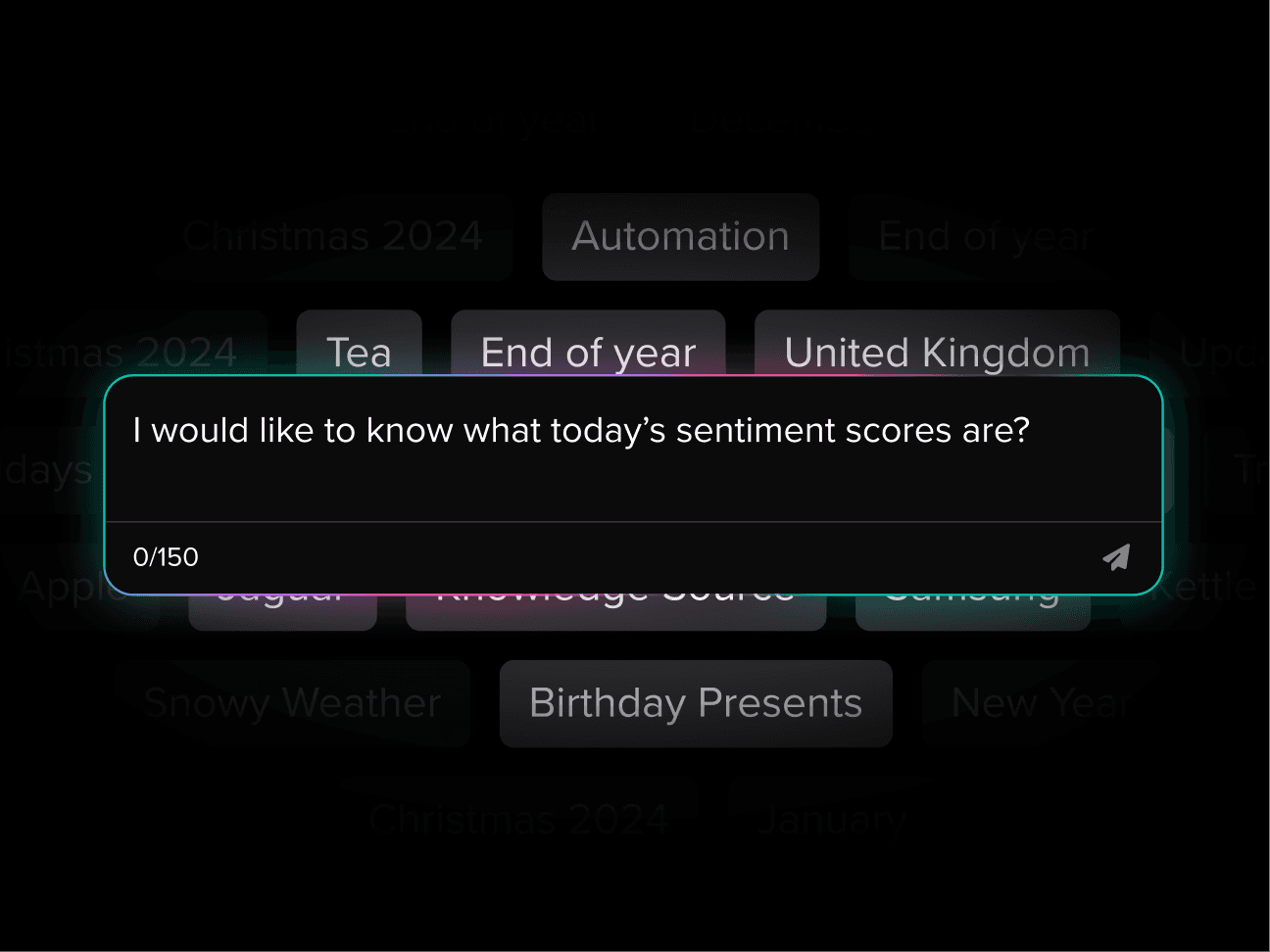
Sentiment Analysis
By combining autonomous handling with sentiment analysis, the system can detect when a caller is becoming frustrated or angry. It can then make an autonomous decision to "escalate" the call to a human supervisor immediately. This ensures that while the AI handles the bulk of the work, it never risks a PR disaster by ignoring a distressed customer.
Omnichannel State Management
Customers often switch channels; they might start on a web chat and move to a phone call. An omnichannel AI system maintains the "state" of the conversation across these channels. Deloitte found that companies adopting these omnichannel integration tools achieved a 9% reduction in cost per assisted contact. ConnexAI’s architecture is specifically designed to bridge these gaps, ensuring the AI agent knows what happened in the chat before the phone even rings.
Real-time Knowledge Base Sync
AI is only as good as the information it can access. Integrating your AI handler with a dynamic AI Knowledge base ensures that if a product manual is updated, the AI agent's "advice" is updated across every call in real-time, eliminating the "lag" that usually occurs when retraining human staff on new procedures.
Which industries are seeing the highest ROI from AI autonomous call handling?
Banking and Financial Services
Banks face intense regulatory pressure and high volumes of "status check" calls. Autonomous agents handle balance inquiries, card activations, and fraud alerts. By automating these, banks have seen generative AI reduce human-serviced contact volumes drastically.
Telecommunications
Telecom providers struggle with high churn and complex billing. AI handles the 24/7 nature of tech support and "plan upgrades." For instance, a major telco scenario might involve an AI agent autonomously running a line test and rebooting a router while the customer is on the phone, resolving a "no-internet" ticket without human intervention.
Utilities (Energy and Water)
Utility companies often deal with seasonal spikes (e.g., winter bill inquiries). AI allows them to scale capacity instantly without hiring temporary staff. In this sector, omnichannel integration has proven vital, with companies seeing significant reductions in cost per contact through better tool alignment.
Healthcare and Pharmaceuticals
In healthcare, AI handles appointment scheduling and prescription refills. This is particularly valuable because productivity gains from AI are most pronounced among less-experienced staff, helping newer administrative teams perform at the level of senior veterans.
Retail and E-commerce
Retailers use autonomous agents to manage "Where is my order?" (WISMO) calls, which often make up 30-40% of their volume. By resolving these via AI, they free up human agents to handle high-value sales consultations.
How does autonomous handling affect scalability during peak demand periods?
Does autonomous handling improve consistency across customer interactions?
What impact does autonomous handling have on first-contact resolution rates?
Can autonomous handling generate valuable business intelligence?
How does autonomous handling support global operations?

How do you successfully implement autonomous call handling?
Conduct a Volume Audit: Before buying a call centre management software platform, analyze your last 90 days of call logs. Identify the "top 5" intents that are high-volume and low-complexity (e.g., password resets). These are your prime candidates for autonomous resolution.
Define Success Metrics Beyond AHT: While Average Handle Time is important, focus on "First Call Resolution" (FCR) by the AI. Use the McKinsey benchmark of aiming for a 30-45% increase in overall customer operations productivity.
Choose a Cloud-Native CCaaS Foundation: Scaling AI on legacy hardware is nearly impossible. The global Contact Centre as a Service (CCaaS) market is projected to reach over $30 billion by 2034 because it provides the "plumbing" for AI. Ensure your provider, such as ConnexAI, offers a cloud-native environment.
Build "Human-in-the-Loop" Escalations: Define the exact "trigger points" where the AI should hand off to a human. This ensures a safety net.
Pilot and Iterate: Start with a "silent" pilot where the AI listens and suggests answers to agents, then move to "active" handling for a small segment of traffic. Monitor for "hallucinations" and refine the LLM's grounding before a full rollout.
Conclusion: Taking the Next Step Toward Autonomy
The transition to AI autonomous call handling is no longer a matter of if, but how fast. The data is clear: businesses that embrace these "service innovator" traits see 4.6x better customer satisfaction and significant relief from the 52% attrition rates currently crippling the industry. You have learned that the key to success is not just deploying a bot, but operationalizing a reasoning agent that is deeply integrated with your CRM and business logic.
As you look to reduce your labour costs—which Gartner reminds us can be 95% of your budget—the logical next step is a platform that simplifies this complexity. ConnexAI provides the unified, AI-first call center software infrastructure necessary to bridge the gap between promising technology and productive results.
Ready to see how autonomous call handling can transform your specific operation? Book a demo with a ConnexAI specialist today and let’s build your AI-first contact centre together.
Sources
57% of leaders expect call volumes to increase by as much as one-fifth (McKinsey)
Labour represents up to 95% of contact centre costs (Gartner)
Only 3% of organisations successfully scaled a generative AI use case in operations (McKinsey)
GenAI Adopters 35% Less Likely to Report Agent Overwhelm (Deloitte)
Gen AI can reduce human-serviced contacts by up to 50% (McKinsey)
Service innovators 8x more likely to deploy GenAI (Deloitte Digital)
Service innovators: 4.6x better CSAT, 2.5x better employee satisfaction (Deloitte Digital)
Omnichannel integration leading to 9% reduction in cost per assisted contact (Deloitte Digital)
30-45% productivity increase in customer operations (McKinsey & Company)
CCaaS market going from $7.08B in 2025 to $30.15B in 2034, 17.40% CAGR (Fortune Business Insights)