Why is AI Call Answering Essential for Your Business Today?
Every unanswered call represents a potential lost sale and a risk to customer loyalty. As responsiveness becomes central to brand trust, traditional business hours are increasingly restrictive. AI Call Answering Services encompass AI Voice automation, including conversational voicebots, agent-assist copilots, and workflow customer service automation. Using natural language processing (NLP), ASR (Automatic Speech Recognition) and conversational AI, these systems understand speech, respond naturally, and manage complex interactions with context and nuance.
Market trends reinforce the shift. McKinsey’s 2024 State of AI survey found that 78% of organisations use AI in at least one business function, with service operations among the leading areas for adoption. Gartner reported that 85% of customer service leaders planned to explore or pilot customer-facing conversational GenAI solutions by 2025. Furthermore, 77% reported direct pressure from senior leadership to deploy these tools amid staffing shortages and rising operational costs.
When callers encounter long waits or confusing "press one" menus, they may simply hang up and contact a competitor. AI call answering services address this with instant, 24/7 availability that scales with demand. AI voice assistant technology helps capture every lead, resolve routine queries without human intervention, and route complex issues to the right specialist with full context. By reducing wait times and repetitive data entry, AI call answering services enable businesses to meet always-on customer expectations. The following chapters explore how AI call answering services work, the ROI they can deliver, and how to integrate them into existing infrastructure.
How Do AI Call Answering Services Actually Work?
To understand AI call answering services, it helps to distinguish them from traditional Automated Attendant or Interactive Voice Response (IVR) systems. Traditional systems follow preset logic trees, requiring callers to navigate menus using buttons. Modern AI call answering services are intent-driven: it listens to natural speech, identifies the caller’s needs, and generates a contextually appropriate response in real time.
The process begins with AI Voice Recognition or Speech-to-Text (STT), which converts audio into a digital transcript. A Natural Language Understanding (NLU) engine then analyses the language to identify the caller’s intent. For example, "I’m moving next week and need to update my records" signals an address change. The AI Voice Agent uses this intent to access a Large Language Model (LLM) or knowledge base and formulate a response. Finally, AI Voice Generation or neural Text-to-Speech (TTS) engines convert the response into natural-sounding speech, completing the process in milliseconds.
Implementation depends on the business goal. Some systems handle calls from greeting to resolution, while others act as agent copilots, providing real-time suggestions, relevant documentation, and automated summaries. This hybrid approach lets the AI Voice Agent manage repetitive, data-heavy tasks while human agents focus on customer relationships and complex issues. Interaction data can also help refine performance over time, improving the system’s ability to understand and respond to customer needs.
What is an AI call answering service?
Can AI call answering transfer calls to a human?
Can AI call answering services book appointments?
What is the difference between AI call answering and traditional IVR?
Summary
AI Call Answering leverages Natural Language Understanding to transform spoken queries into actionable data. By moving beyond rigid menus to conversational intent recognition, these systems provide immediate, human-like resolutions to customer inquiries 24/7.

What Are the Quantifiable Benefits for Your Business?
The transition to AI call answering services provides measurable improvements across every major contact centre KPI. Because these systems handle the "heavy lifting" of routine interactions, the benefits ripple from the balance sheet to the individual agent’s desk.
Significant Increase in Agent Productivity
Integrating AI call answering services doesn't just replace tasks; it augments human capability. Research published by the National Bureau of Economic Research (NBER) found that using a generative AI assistant led to a 14% increase in issue resolution per hour. This productivity gain was most pronounced among less-experienced agents, as the AI autonomous call handling assistant acted as a "force multiplier," providing them with the expertise typically held by veterans. Furthermore, the time spent handling each issue fell by 9%.
Substantial Operational Cost Reduction
The financial impact of AI autonomous call handling is perhaps the most compelling driver for AI call answering services adoption. IBM research indicates that organisations implementing AI chatbots and virtual agents can reduce customer service operational costs by as much as 30%. This is achieved through "self-service deflection," where the AI resolves FAQ-style queries without ever involving a human agent. Looking at the broader market, Gartner predicts that conversational AI will reduce contact centre agent labour costs by a staggering $80 billion globally by 2026.
Drastic Reduction in Average Handle Time (AHT)
Speed is the ultimate customer service metric. When agents use AI voice assistants for knowledge retrieval, the time spent searching for information drops significantly. McKinsey documented a case study where a European telecommunications firm achieved a 65% reduction in handle time specifically for locating relevant internal information during live calls. By providing the right answer at the right second, AI digital assistant tools ensure that calls are resolved faster and more accurately.
Higher Customer and Employee Satisfaction
Happier agents lead to happier customers. Deloitte found that "service innovators" (companies that have fully operationalised AI) achieve 4.6x higher customer satisfaction scores than their peers. On the employee side, these same organisations report 2.5x higher employee satisfaction. By removing the burden of repetitive, "low-value" calls (like password resets or status checks), AI Voice technology and AI call answering services allows agents to focus on complex problem-solving, which reduces burnout. In fact, the NBER study noted a 25% reduction in agent attrition and manager escalations.
A Taxonomy of AI Call Answering Services: Which Type Fits Your Needs?
AI call answering services aren’t a single technology; it’s a stack, ranging from basic routing to autonomous execution. Understanding these layers helps organisations avoid over-automating simple use cases or underusing systems capable of resolving more complex tasks.
1. Conversational AI Voicebots (Autonomous Front-End Resolution)
Conversational AI contact center chatbots automate defined interactions, prioritising volume and consistency over complexity.
How they work
Speech is transcribed (STT), interpreted using NLU or LLMs, mapped to a predefined response or action, and delivered through text-to-speech (TTS). Most rely on constrained workflows connected to APIs and knowledge bases.
Advantages and limitations
Voicebots handle repetitive tasks such as order tracking, balance checks, and appointment booking consistently and at scale, reducing the need for human intervention. However, their capabilities depend on predefined intents and workflows. Requests requiring multi-step reasoning, unfamiliar scenarios, or coordination across systems can exceed their limits.
Who should use them
High-volume operations with predictable demand and clearly defined interaction types.
2. AI Agent Copilots (Real-Time Assistance)
AI copilots support human agents rather than replacing them, reducing the cognitive load of live interactions.
How they work
They transcribe and interpret calls, retrieve relevant information from knowledge bases, and surface context or suggested responses in real time.
Advantages and limitations
Copilot AI digital assistant tools reduce manual searching and information processing, potentially improving handling times, first-contact resolution, and agent efficiency. However, their effectiveness depends on the accuracy and consistency of the underlying knowledge. Outdated or fragmented information can produce unreliable suggestions, while over-reliance on recommendations can undermine human judgement in unusual cases.
Who should use them
Operations handling complex but well-documented interactions, such as insurance, banking, and technical support, where speed matters but human oversight remains essential.
3. Intelligent Virtual Assistants (Sophisticated Routing)
Intelligent Virtual Assistants (IVAs) sit between automation and orchestration. They structure requests and direct customers to the appropriate destination rather than necessarily resolving issues themselves.
How they work
IVAs identify intent, collect relevant details such as identity and account information, and route interactions using AI-driven classification rather than rigid IVR menus.
Advantages and limitations
By gathering information before transferring a call, IVAs reduce repeated questions and improve routing accuracy. However, customers may struggle to explain their needs at the start of an interaction, creating ambiguity that can lead to misclassification.
Who should use them
Large organisations with complex service structures where misrouting causes delays and inefficiencies.
4. Automated Post-Call Summarisation and Analytics
This layer turns completed conversations into structured data. AI analytics and customer interaction analytics connect individual conversations to operational insights and customer experience improvements.
How they work
After a call, AI processes the transcript to generate summaries and extract CRM updates, sentiment, outcomes, compliance indicators, and follow-up actions. These outputs support conversation intelligence, Customer Experience AI quality monitoring, and analysis of customer pain points and agent performance through tools such as AI call analytics.
Advantages and limitations
Call center monitoring software reduces manual note-taking, categorisation, and CRM updates, improving data consistency, compliance visibility, and insights from AI analytics, sentiment analysis, and customer experience analytics.
Its main limitation is that it works retrospectively. Rather than influencing live conversations, it improves future decisions and customer interaction management through better reporting and analysis.
Who should use them
Contact center analytics platforms are valuable for sales, retention, financial services, healthcare, and support teams. Combining customer interaction analytics with automated AI quality assurance helps organisations analyse interactions at scale rather than relying solely on manual reviews.
5. Agentic AI (Autonomous Resolution and Execution)
Unlike systems that primarily interpret and respond, agentic AI can plan actions, use connected tools, and execute multi-step workflows towards a defined goal.
How it works
Contact centre agentic AI breaks objectives into smaller tasks, interacts with APIs and external systems, maintains context, and adapts to new information or outcomes.
Rather than following a simple intent-to-response pattern, AI Agents operate through a dynamic cycle:
Goal → Planning → Execution → Evaluation → Adjustment
Advantages and limitations
The main advantage of AI Agents is their ability to complete workflows, not simply accelerate customer service automation. By automating the operational processes behind customer interactions, agentic AI call answering services can change how work is completed, rather than just reducing handling times.
McKinsey research estimates that generative AI could deliver productivity improvements equivalent to a 30–45% reduction in certain functions' operating costs, although actual results depend on the workflow, industry, and implementation.
Agentic Call Centre AI can coordinate across applications, retrieve information, execute actions, and verify outcomes, making it suitable for requests involving multiple systems and decision points.
However, greater Customer Service AI autonomy introduces risks around permissions, integration, and governance. Agentic AI AI call answering service deployments need appropriate oversight, security controls, and monitoring, particularly when AI Voice Agents interact with CRMs, databases, and operational platforms. Reliable execution depends on both the AI call center software and the readiness of the underlying systems and processes. Organisations must also account for potential errors when deploying AI Phone Agents.
Who should use agentic AI?
Agentic AI Voice automation is best suited to organisations with mature data environments, well-defined processes, and strong governance that can support workflow redesign.
For others, adoption can progress gradually, from agent assistance to controlled task execution and, eventually, greater autonomy.
How do you implement an AI call answering service?
How long does it take to implement AI call answering?
What information does an AI call answering service need?
Should you test AI call answering before launching it?
Maximizing AI Call Answering Services Value Through Integrations and Enhanced Features
An AI call answering service is only as powerful as the contact center software ecosystem it inhabits. To unlock the full 30–45% productivity increase McKinsey associates with GenAI in customer care, the system must be deeply integrated with your existing tech stack.
CRM and Database Synchronization
When an AI answering service is connected to your CRM (like Salesforce or HubSpot), it transforms from a generic bot into a personalized assistant. It can greet a caller by name, reference their last order, and verify their status instantly. ConnexAI’s AI Voice platform, for example, uses unified data streams to ensure that every interaction (whether via voice or text) is logged in a single "source of truth." This prevents the common frustration where a customer has to repeat their information to multiple agents.
Real-Time Sentiment and Predictive Analytics
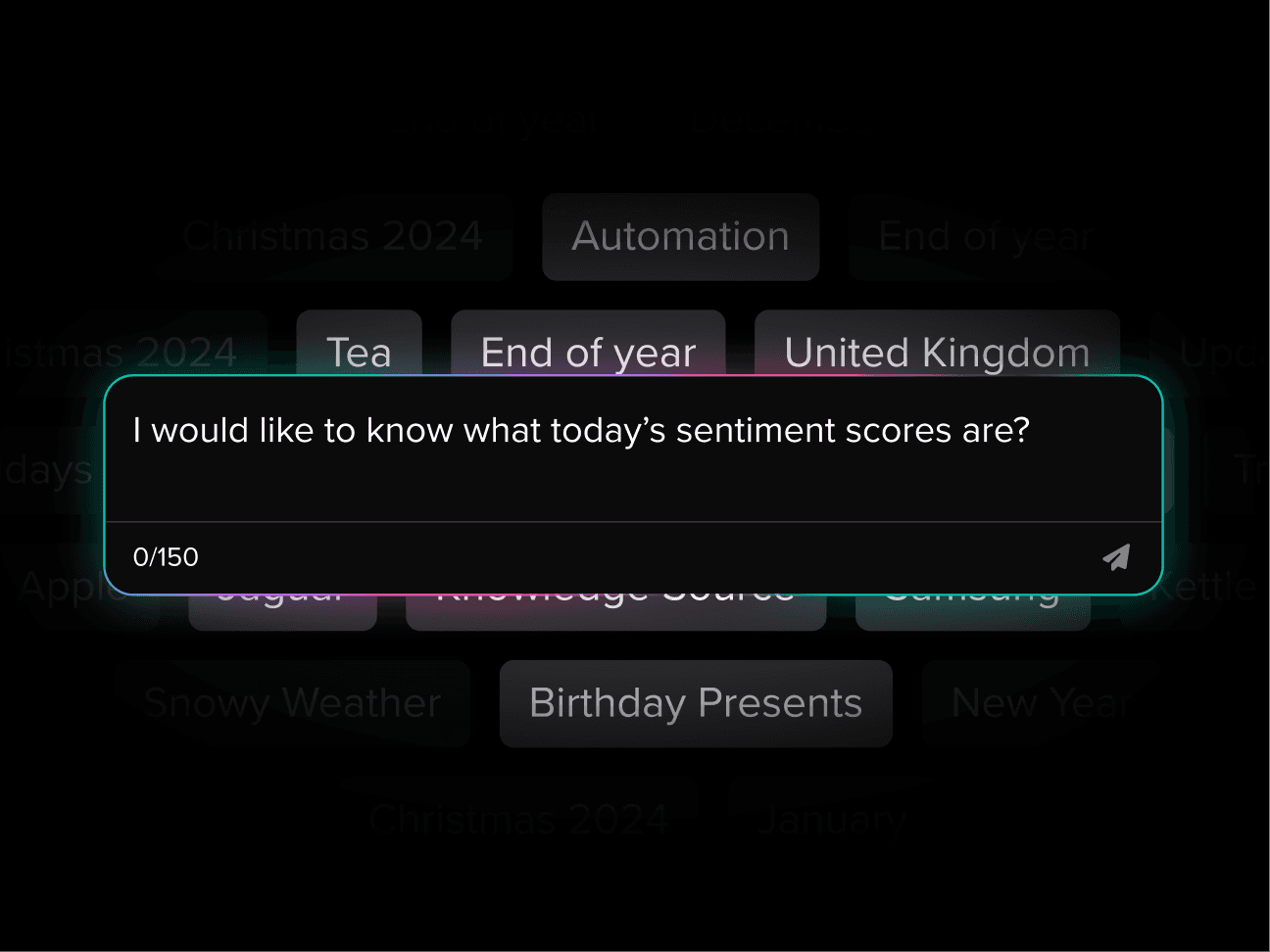
Advanced AI tools can detect subtle changes in a caller’s tone, pace, and vocabulary. If the AI detects escalating frustration, it can trigger an immediate "warm handoff" to a senior supervisor. Furthermore, predictive analytics can suggest proactive outreach. Since customers appreciate proactive service communications, combining AI call answering services with outbound automation creates a comprehensive service loop.
Omnichannel Continuity
Customers rarely stay on one channel. They might start a query on your website, follow up via email, and finally call to confirm a detail. Omnichannel AI call answering services integrations ensure that the AI Phone Agent answering the phone knows exactly what was discussed in the web chat five minutes prior. This level of Omnichannel continuity is what distinguishes a "service innovator" from a traditional business, leading to higher CSAT scores.
How Are AI Call Answering Services Transforming Specific Industries Today?
The benefits of AI Voice technology vary by industry, depending on the operational challenges it addresses. Retail leads conversational AI adoption with a 21.2% market share, followed by technology and healthcare, which has the fastest enterprise growth at a 20.1% CAGR. Here’s how four sectors use AI call answering to improve service and efficiency.
How AI Call Answering Helps Retailers Handle More Calls Without More Staff
In retail, seasonal peaks, product launches and fulfilment issues can overwhelm contact centres, leading to long waits and abandoned calls. AI voice assistants handle routine queries about order tracking, returns and store hours at scale, allowing human agents to focus on sales and complex customer issues. This helps retailers maintain service levels without relying on seasonal hiring.
How AI Call Answering Helps Banks Deliver Faster, More Secure Service
Financial services must balance quick access to account information with strict security and compliance requirements. Although 45% of finance functions are piloting generative AI, only around 6% have achieved full operational scale.
AI assistants can streamline call routing and identity verification, reducing manual steps while maintaining security protocols. McKinsey documented how ING's customer-facing chatbot eliminated wait times for around 20% of contact centre requests within seven weeks by resolving them without human intervention.
How AI Call Answering Improves Healthcare Access and Efficiency
Healthcare and life sciences face administrative staffing pressures and growing demand for round-the-clock patient access. Gartner reports that 61% of service leaders acknowledge a backlog of knowledge articles, making accurate, accessible information particularly important in healthcare.
AI voice assistants can schedule appointments, check availability, verify insurance details and send confirmations while following privacy requirements. Automating these tasks improves access and frees clinical staff to focus on patient care.
How AI Call Answering Helps Telecom Teams Resolve Calls Faster
Telecommunications teams handle complex queries involving technical faults, billing and connectivity. AI agent copilots support human agents by surfacing relevant troubleshooting steps and policy information during live calls.
McKinsey documented a leading European media and telecommunications company that reduced the time agents spent finding relevant information during calls by 65% using a generative AI copilot. Faster access to information can reduce hold times and help agents resolve issues more efficiently.

How Can You Successfully Implement AI Call Answering Services?
Transitioning from a traditional contact centre to an AI-augmented operation is not a "set-it-and-forget-it" project; it requires a structured, data-driven methodology to ensure the AI reflects your brand’s voice and meets accuracy standards. How do you move from a pilot to a scaled, productive reality? Follow these six actionable steps.
1. Perform a Quantitative Interaction Audit
Before selecting a tool, you must understand your "intent landscape." Analyze your last 90 days of call logs to identify the "low-hanging fruit"; the repetitive, high-volume queries that do not require complex empathy. Research indicates that up to 80% of FAQ-type and repeated customer queries are candidates for AI handling. By mapping these intents, you can define exactly where a voicebot should take the lead and where a human agent is indispensable.
2. Align Stakeholders and Secure AI Budgets
Successful implementation requires top-down support. Currently, 77% of service leaders feel pressure from senior executives to deploy AI, and 75% are seeing year-on-year budget increases for these initiatives. Use these benchmarks to align your operations, IT, and finance leads. Ensure your budget accounts for not just the software, but the "tuning" phase; the typical leader is now adding five new FTE roles specifically to manage these AI automation investments.
3. Remediate the Knowledge Management Gap
Your AI is only as intelligent as the data it consumes. A significant 61% of customer service leaders currently report a backlog of knowledge articles to edit. Before going live, you must operationalize a process for revising outdated articles and technical manuals. If the AI retrieves relevant knowledge during a live call but that knowledge is 12 months out of date, the reduction in handle time you might have achieved will be negated by customer frustration.
4. Integrate Your Tech Stack via Unified Platforms
Avoid creating an "AI silo." For an AI call answering service to be effective, it must have real-time access to your CRM and helpdesk. This is where a platform like ConnexAI becomes vital; by unifying your data streams, the AI can perform identity verification and access customer history instantly. Only 25% of contact centres have successfully integrated AI automation into daily operations, often because they failed to connect the AI to their "source of truth" databases.
5. Execute a "Dark Launch" Pilot
Don't roll out AI autonomous support agents to your entire customer base on day one. Start with a "dark launch"; deploying the AI to handle after-hours calls or a specific, low-risk department. Monitor the resolution rate closely. You are looking for the +14% increase in issue resolution per hour that mature adopters report. During this phase, use human supervisors to "grade" the AI's transcripts, ensuring it understands industry-specific jargon.
6. Establish a Continuous Optimization Loop
AI implementation is iterative. Use post-call analytics to identify where customers are dropping off or requesting a human agent. Organizations that have operationalized this feedback loop report a 17% higher customer satisfaction score. Regularly update your LLM prompts and knowledge base to reflect new product launches or policy changes, ensuring the AI remains a high-performing asset for the long term.
Conclusion
The evidence provided in this report is clear: the question is no longer if your business will adopt AI call answering, but how fast you can do so before your competitors gain an insurmountable lead in efficiency and customer loyalty. With only 25% of call centres having fully integrated AI into their daily operations, there is still a significant opportunity to be an early mover and a "service innovator" in your industry.
At ConnexAI, we specialize in bridging the gap between promising AI pilots and productive, scaled operations. Our AI Voice platform provides the infrastructure needed to deploy sophisticated conversational voicebots and agent copilots that don't just answer the phone, but solve problems. By unifying your customer data and leveraging the latest in Agentic AI, we help you reduce operational costs while simultaneously driving your CSAT scores to new heights.
Ready to explore what AI call answering could do for your business? Book a demo with ConnexAI to see how AI voice technology can fit into your existing operations and help you scale customer service without compromising the customer experience.
Sources
78% of organisations use AI in at least one business function (McKinsey)
85% of customer service leaders will explore or pilot conversational GenAI in 2025 (Gartner)
14% increase in issue resolution per hour with gen AI (NBER)
Up to 30% reduction in customer service operational costs from AI (IBM)
Conversational AI will reduce labor costs by $80 billion by 2026 (Gartner)
Service innovators achieve 4.6x higher customer satisfaction (Deloitte)
65% reduction in handle time for knowledge retrieval (McKinsey)
Agentic AI will resolve 80% of issues autonomously by 2029 (Gartner)